Ingatestone Hall
14th May 2022
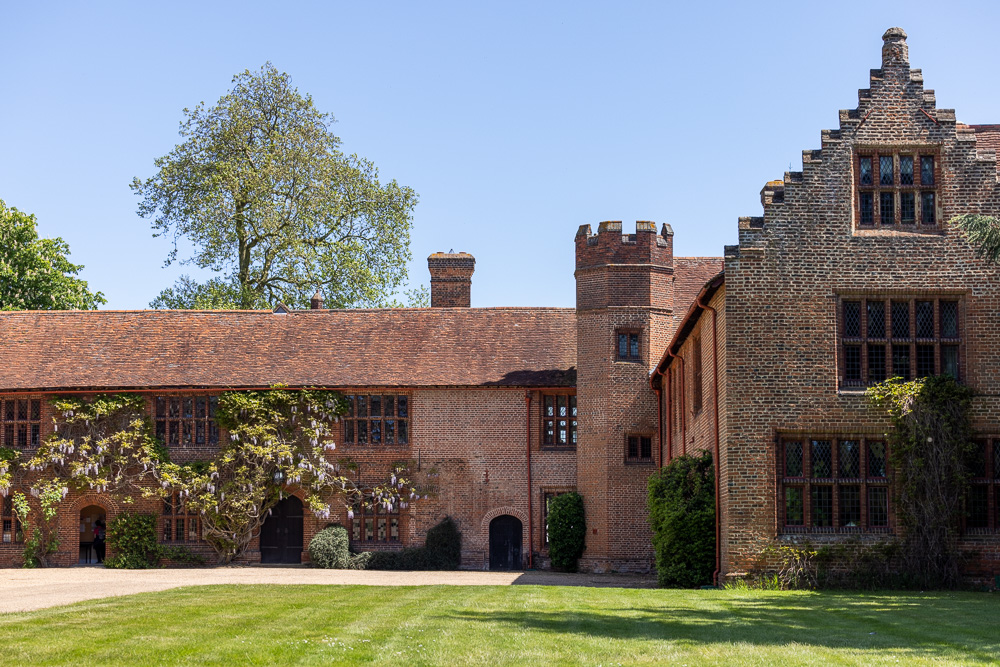
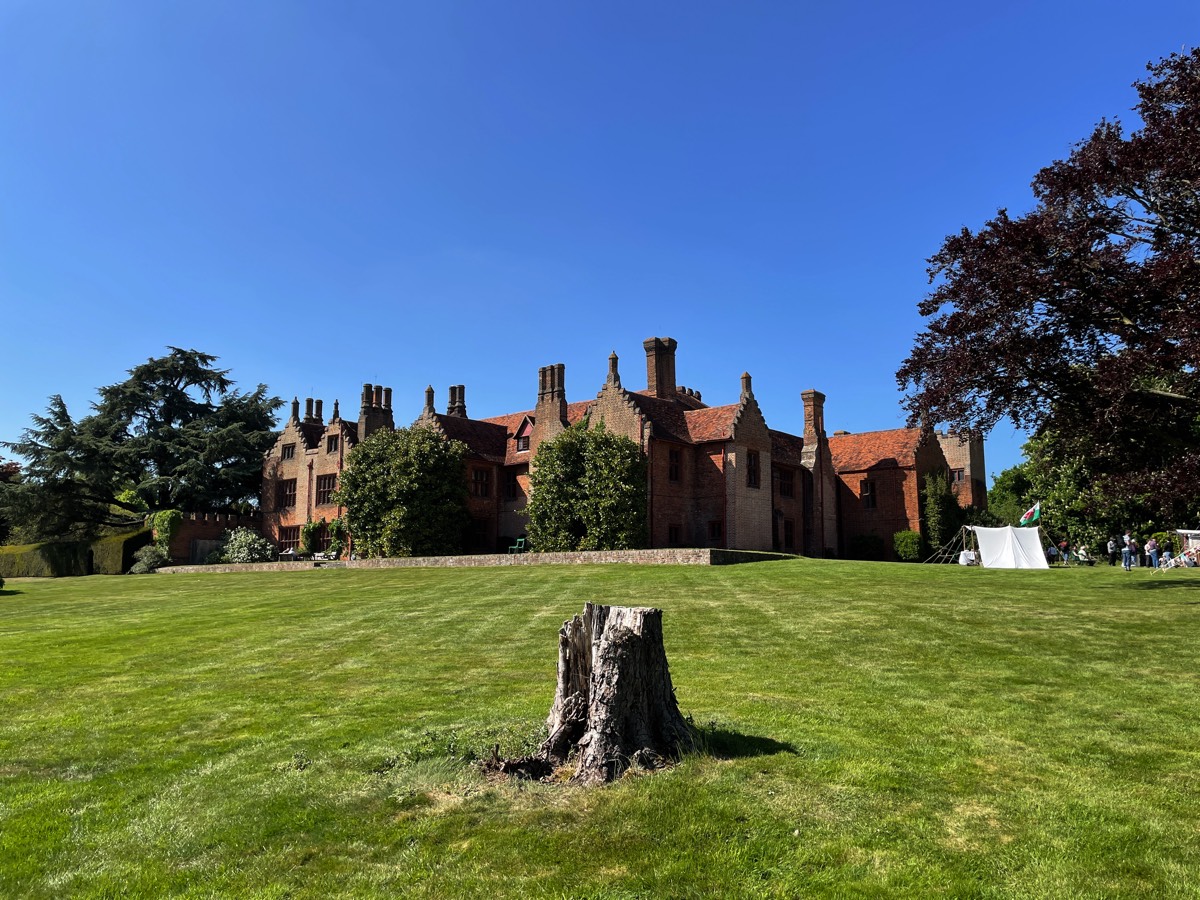
Ingatestone Hall is a 16th century Tudor manor house built by Sir William Petre (pronounced Peter) in 1535. At that time, William was a young lawyer from Devon working for King Henry VIII's Chief Secretary, Thomas Cromwell. They were tasked with visiting the monastic houses of Southern England with the aim of persuading the owners to surrender them to the King as part of the process known as the Dissolution of the Monasteries. William took a fancy to the manor of Ynge-atte-Stone and bought it, along with other properties which had been surrendered to the Crown. Now this could be construed as a bit of dodgy dealing, but Pope Paul IV exonerated William from any such charge provided that he endowed an almshouse foundation for the poor.
Sir William Petre was clearly a wily character, for he served as Chancellor to four kings and queens; Henry VIII, Edward VI, Queen Mary, and Queen Elizabeth. William, and his descendants, were devout Catholics so his survival during the reign of Protestant kings and queens was remarkable. In those days, catholics were not allowed to hold public office and had to keep their religion secret. Portraits of Sir William Petre and his descendants line the walls of the Stone Hall and the Long Room, but no photography is allowed inside the property.
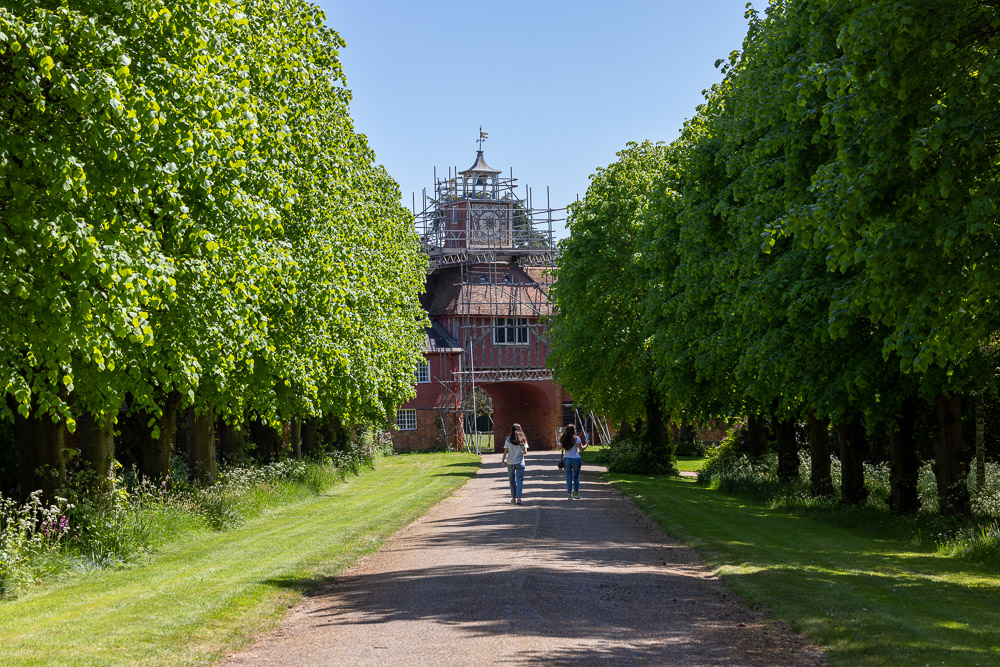
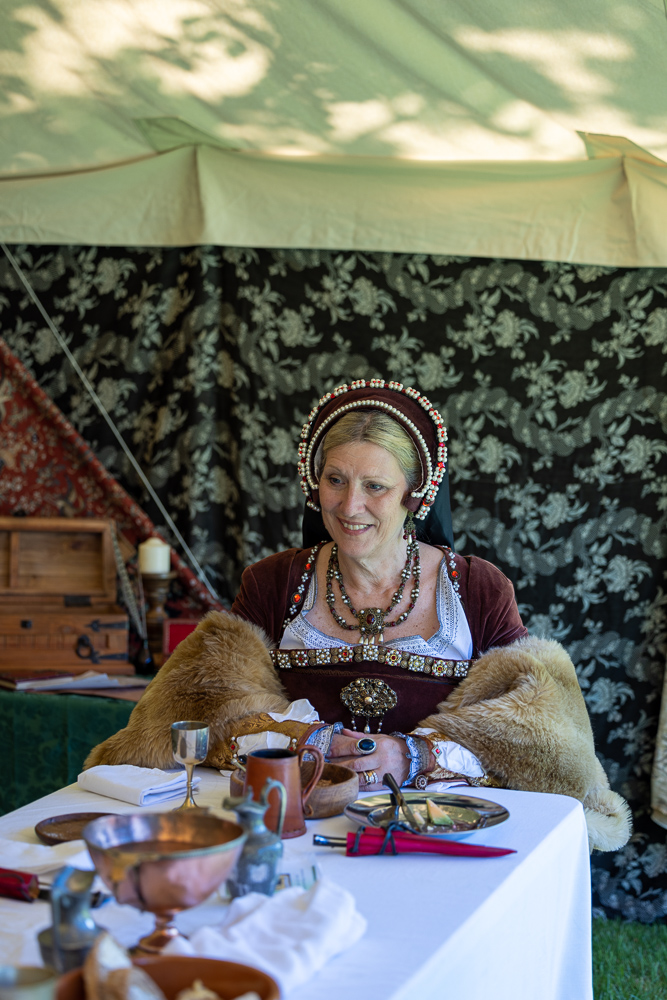
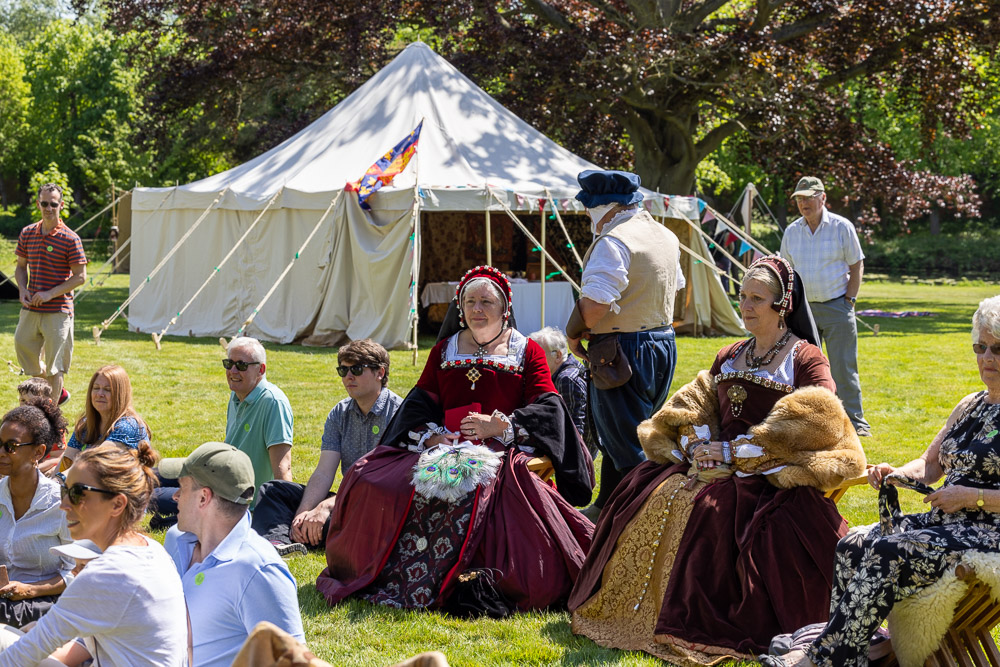
The entrance to the Ingatestone Hall is along an avenue of lime trees and through the gatehouse. And we visited the hall today to attend a Tudor Fayre in the grounds of the Hall. We chatted with three ladies of the court of Henry VIII, and they kept in character throughout the day, talking in the lingo of the day. It was our challenge to figure out who they were as they told us about their lives. The lady below was Ursula Pole, Baroness Stafford, and she was the senior lady of the group by marriage and by relation to Henry VIII. We learnt that they washed their hands in rosemary water before eating, they wiped their drinking chalices with a cloth (kept over their shoulder) before drinking, and they brought their own eating utensils with them (in the red leather pouches on the table). They used a knife and spoon for eating, and had recently come across a picker (a fork) as a novel way to take food from the plate.
This lady told us that the king had taken a shine to her daughter Jane, so we deduced that she was Lady Catherine Seymour.
The third lady (in red dress in photo below) remained a mystery to us. She provided plenty of clues but we failed to identify her.
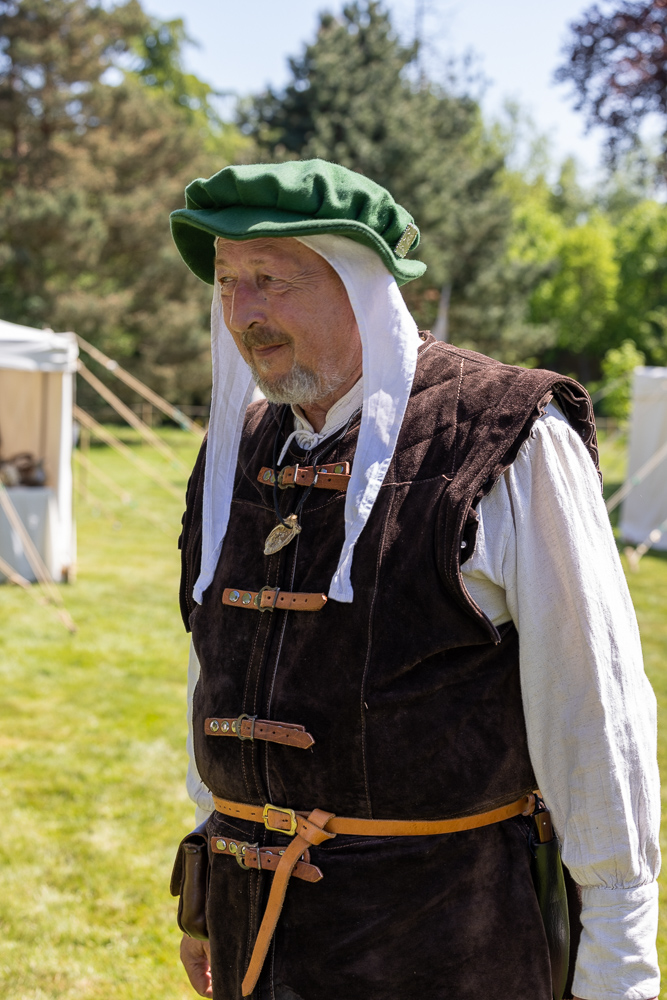
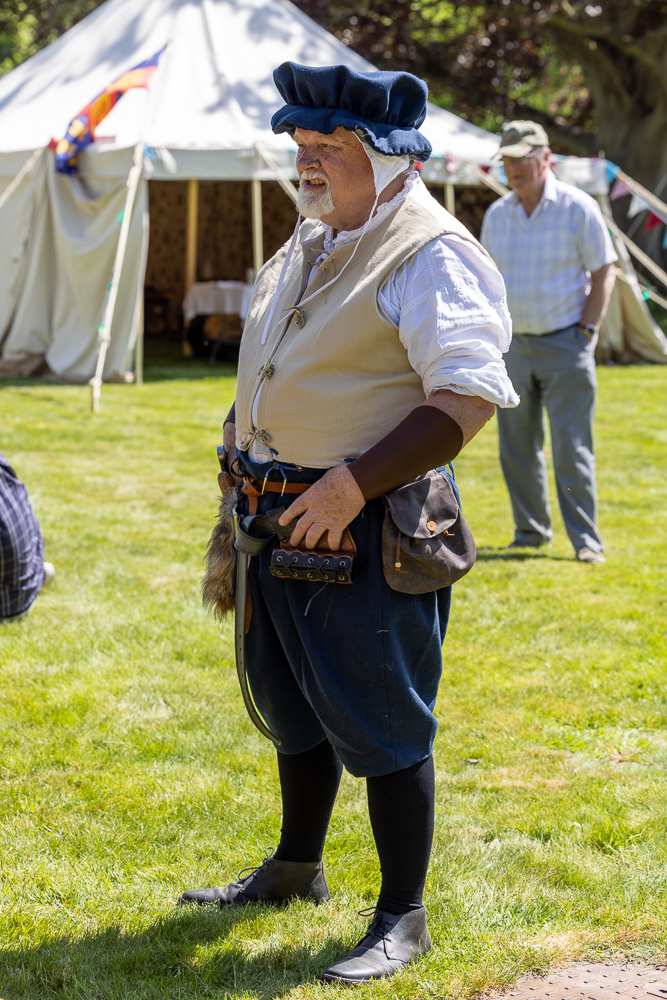
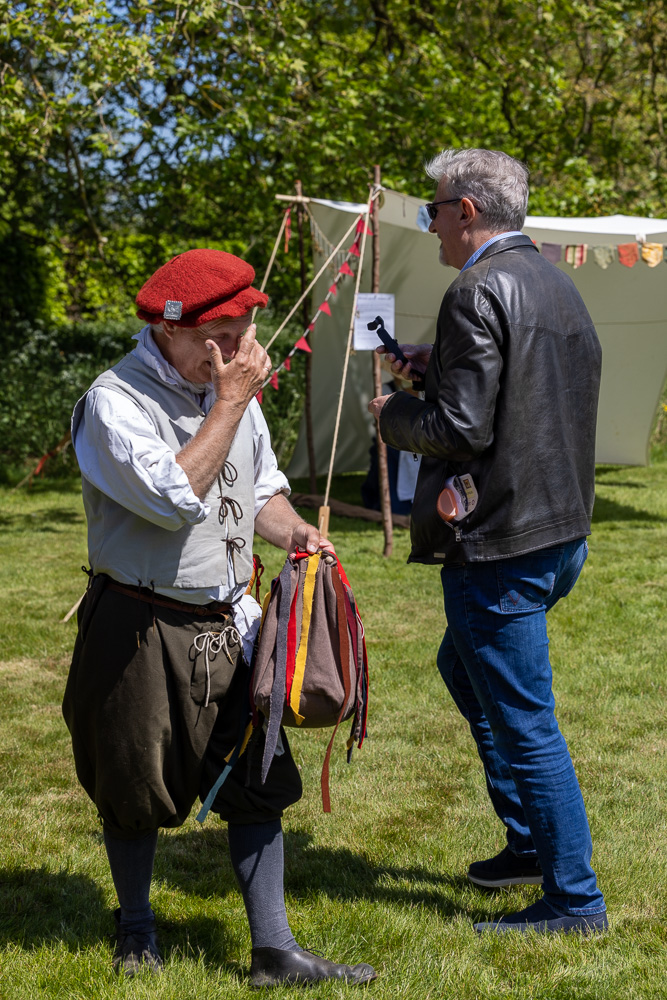
These re-enactments of life in specific historic times are a great way to bring history to life. The gentleman in the green cap below would not have called himself a gentleman. He was an armourer having started his career as a powder monkey on a fighting ship. The gentleman in the blue cap was an escort (guard) to the senior ladies. Both were wearing a white linen cap under their hats in order to prevent the spread of lice as they did not know how to kill lice in Tudor times.
We also met a physic who proudly showed us his chart of urine colours from which he could make a diagnosis! Regardless of his diagnosis, his treatment always seemed to be cutting a vein for blood letting!
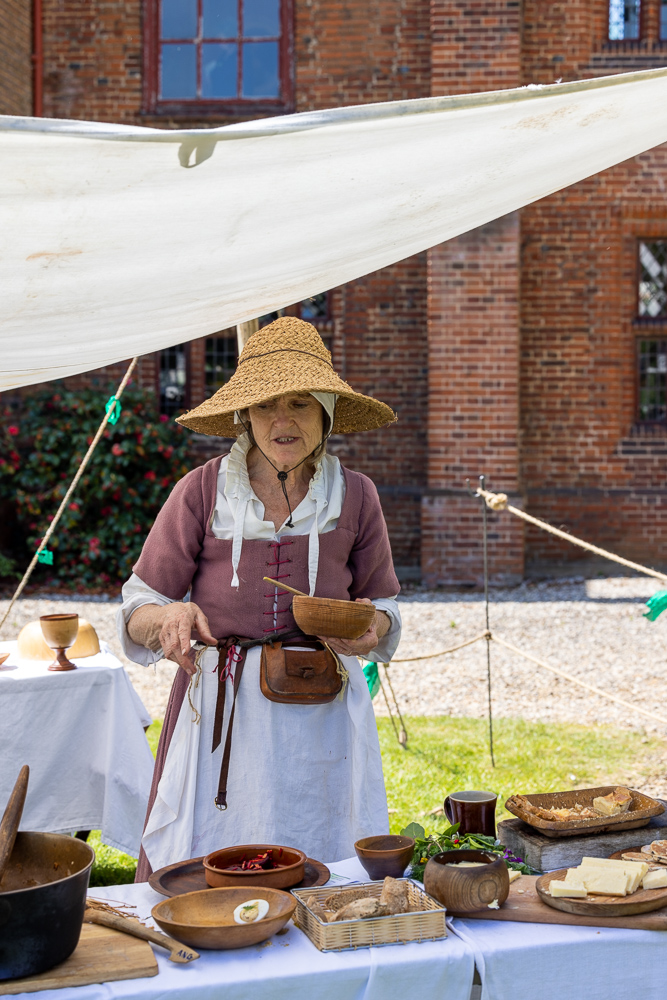
The food of the time was quite recognisable; I was hoping for a hog roast but apparently the visitors today were of insufficient status to warrant meat. Pottage was the food of the day… an ever replenished pot of soup with whatever 'bits' were available to add. There was brown bread but this was not cooked at home by the masses as few had an oven. There were open pies but one did not eat the pastry as that was tough and used only as a vessel to hold the food. Special boiled eggs were favoured (sodded eggs?) with the yolk being removed and mixed with herbs before putting back into the cooked egg white. We sampled a Welsh cake, as one of their Tudor friends had just travelled from Wales, and that was tasty. But unless you were rich and had access to meat, the Tudor diet was a little bland and repetitive.
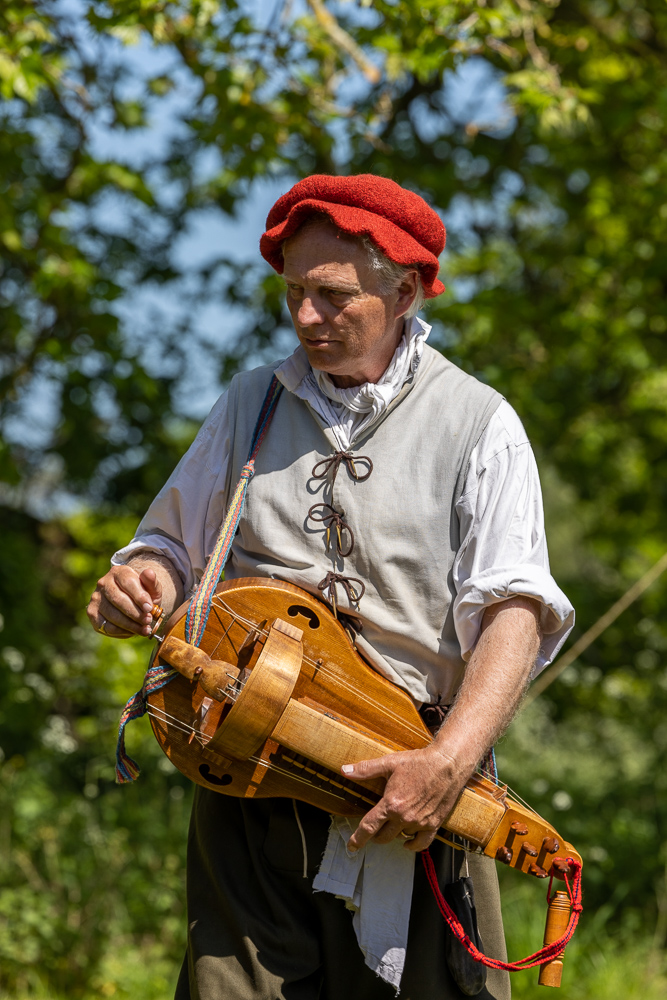
The traditional of puppet shows, with moral tales, goes back a long time in English history. Today's puppet master played a hurdy gurdy which provided a great atmosphere to his story telling. I think he was a little surprised when Lawrence came up to pick a wishing strip from his bag as his story was really aimed at young children with plenty of audience participation. He was very entertaining for children and adults alike on his glorious sunny afternoon.
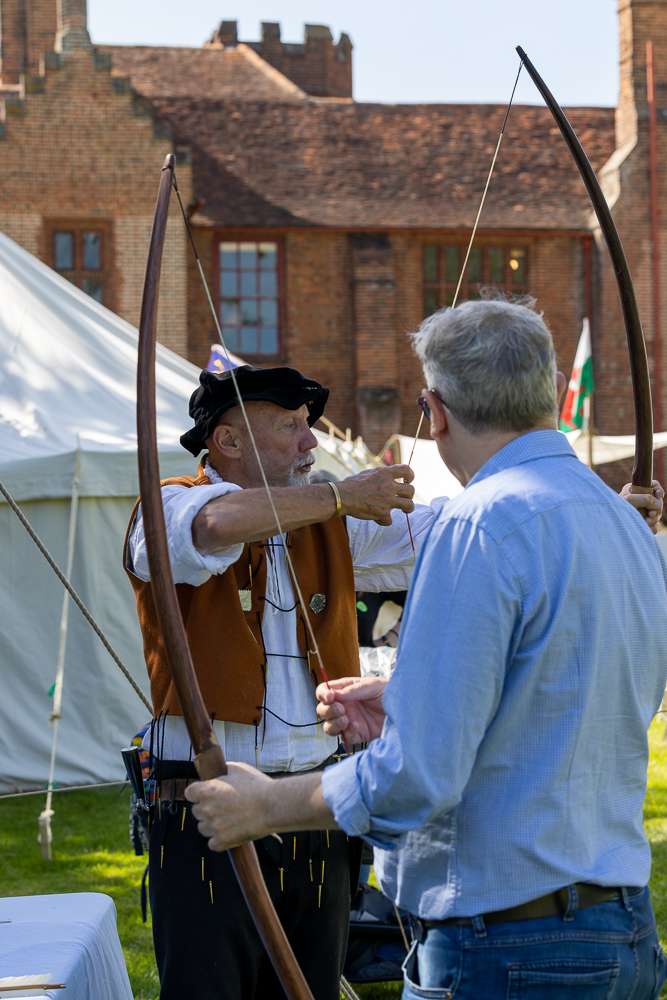
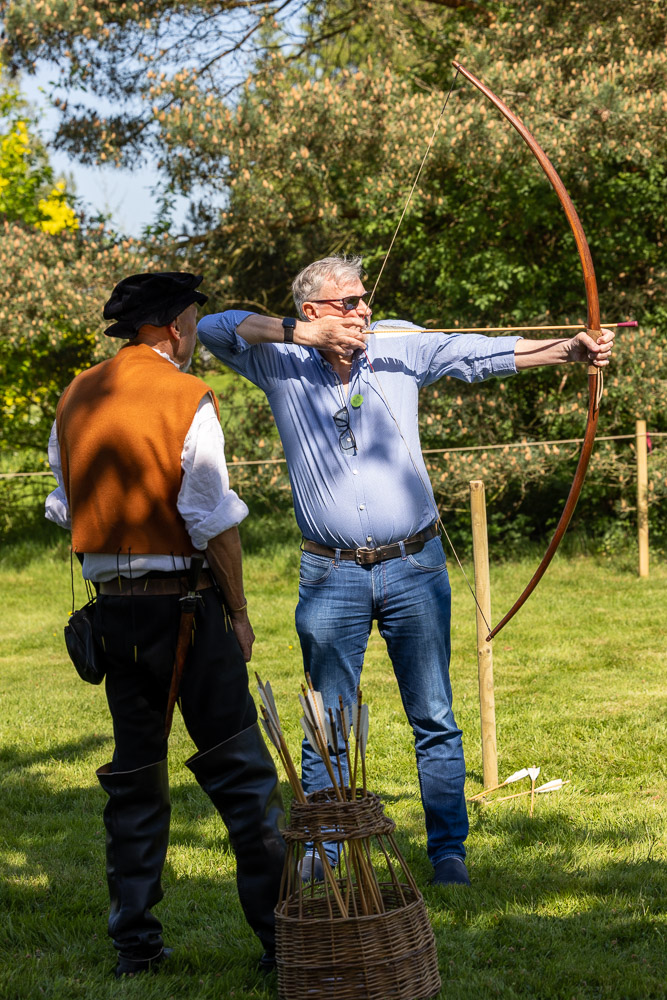
One of the most popular events today was archery. We missed the main demonstration but Lawrence received a lesson in using a longbow and thoroughly enjoyed the process. In Tudor times, archery was a compulsory lesson for boys of all ages and status. This way they were all trained and proficient in the use of the bow when their King/Queen demanded. It turns out that the arrows were more valuable than the bows, in part because of the skill in making an arrow that will fly straight. The wood has to be bendy to get around the bow and revert to its initial shape to fly straight, so the source of wood was crucial. And there were no lathes at this time to turn the wood, so every arrow was laboriously hand crafted. Then of course one had to get the right tip made by the blacksmith and find the right feathers. But English longbowmen were some of the most feared fighters of the time so it was clearly worth all the effort.
And so ended our exploration of Tudor life at Ingatestone Hall. The hall itself is still inhabited by the descendants of Sir William Petre but some of the rooms are open for the public to visit during the summer months. The grounds too are spectacular and well worth a visit on a sunny day. You can learn much more about this place at www.ingatestonehall.com