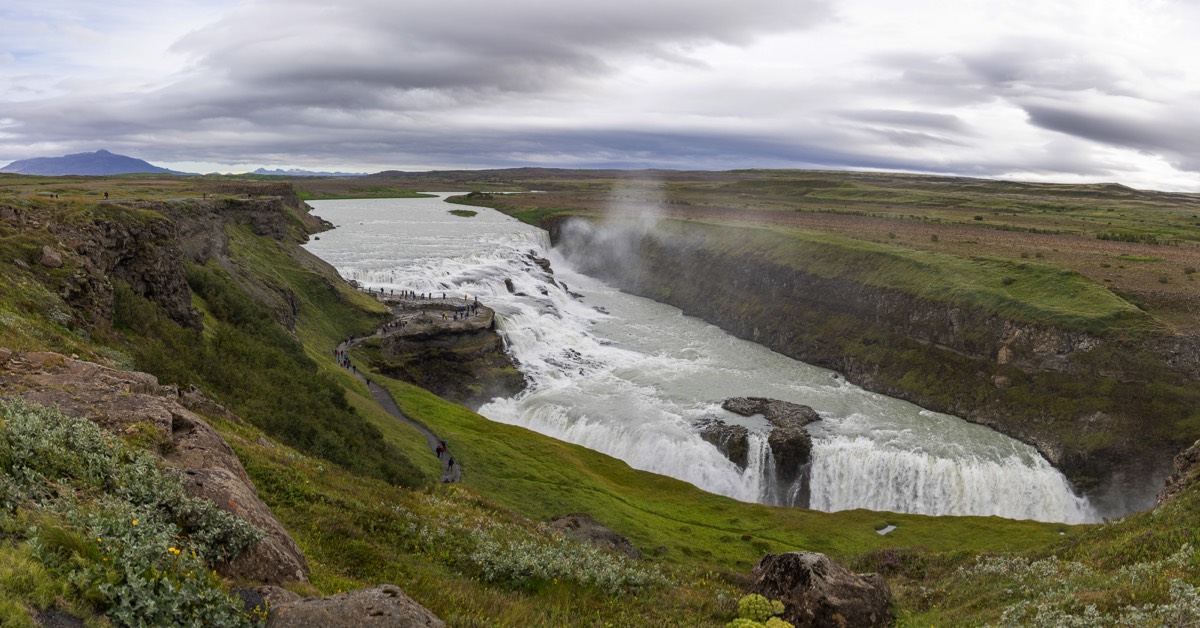
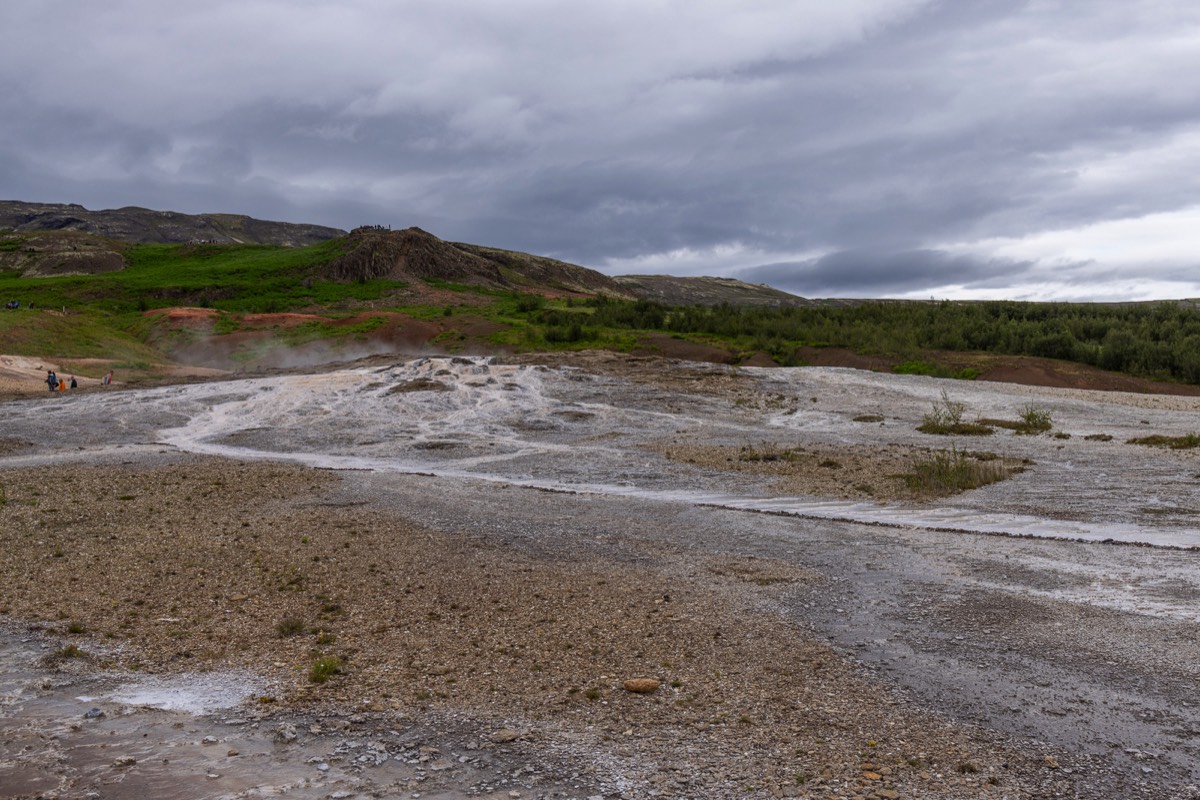
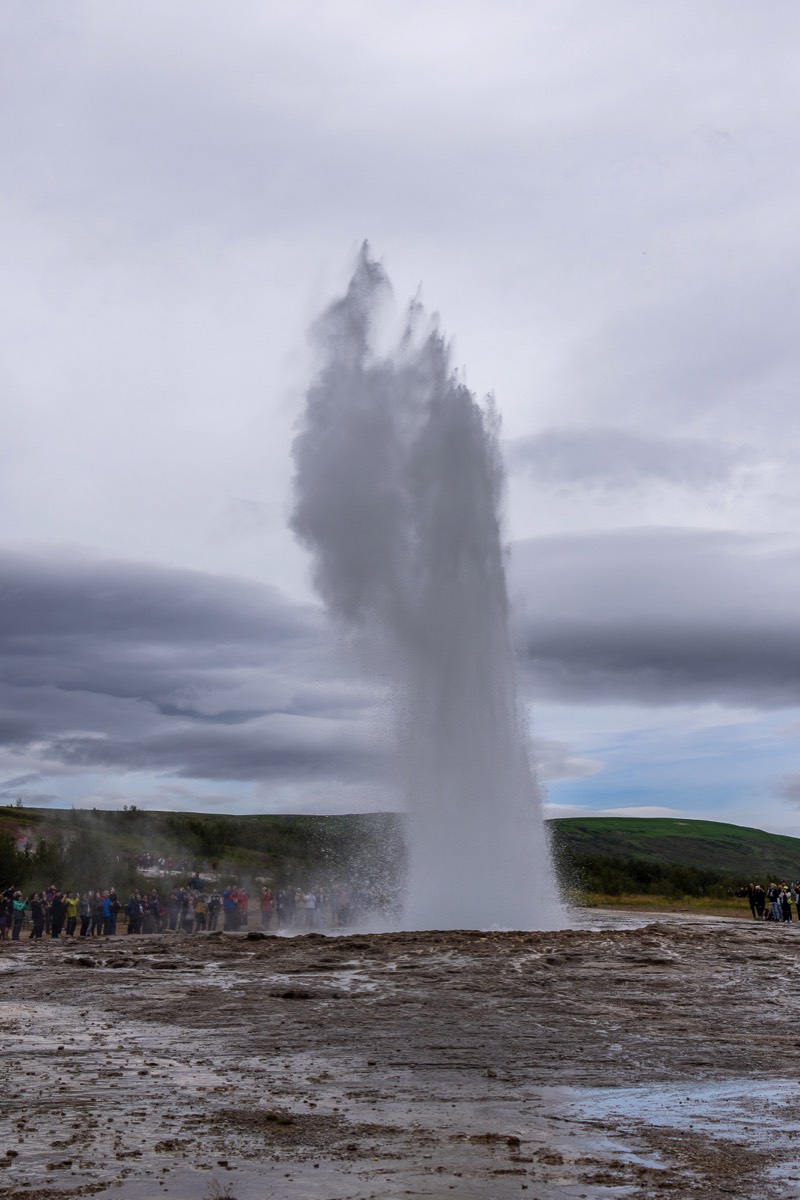
The grey and windy weather continued today as we arrived at the must-see waterfall called Gullfoss. This location is part of the Golden Circle route which tourists can do as a day trip from Reykjavik if they are short of time. Needless to say it was very busy here but we did not stay too long as the howling wind made it unpleasant being outside. In this wind I would not have been able to use my tripod anyway to try some long exposure shots of this famous waterfall, but the flooring of the lookout points were metal grids so there would have been no firm ground on which to stick the tripod legs. I guess experienced photographers bring a mat with them? The great size of this waterfall and the roar of the water are all things which cannot be capture in photography.
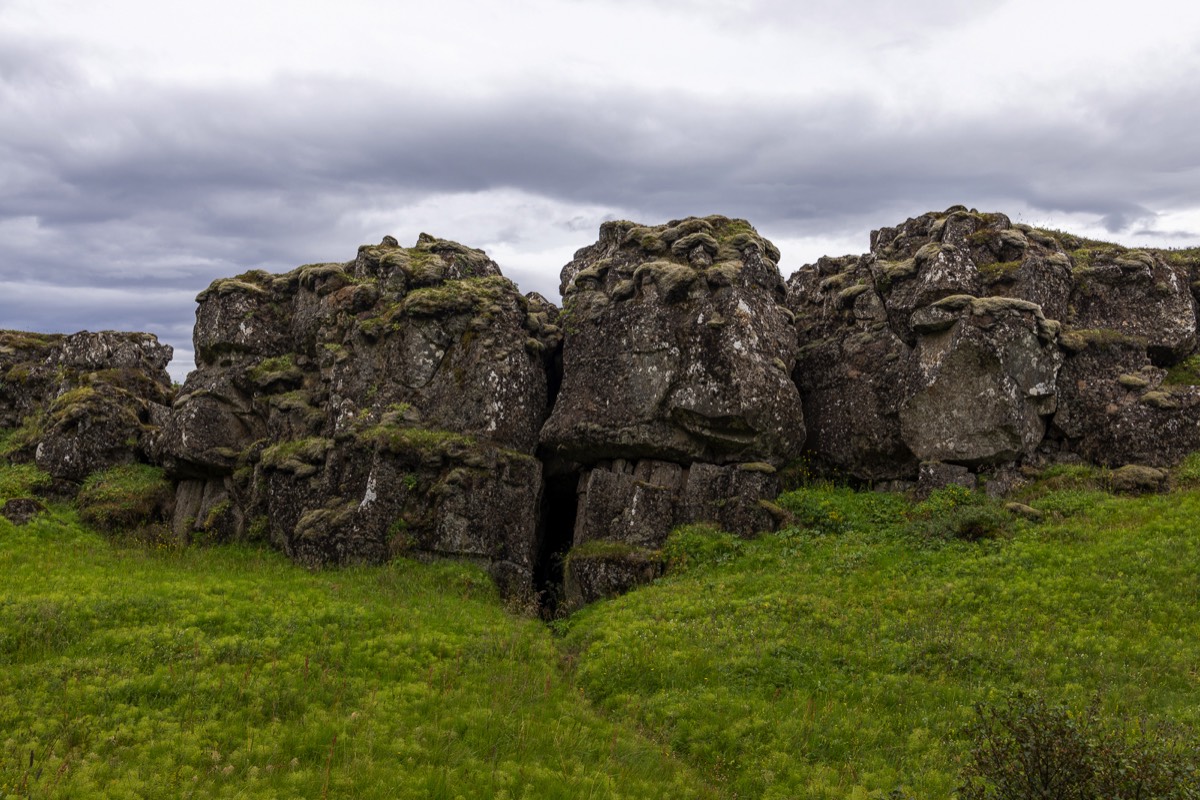
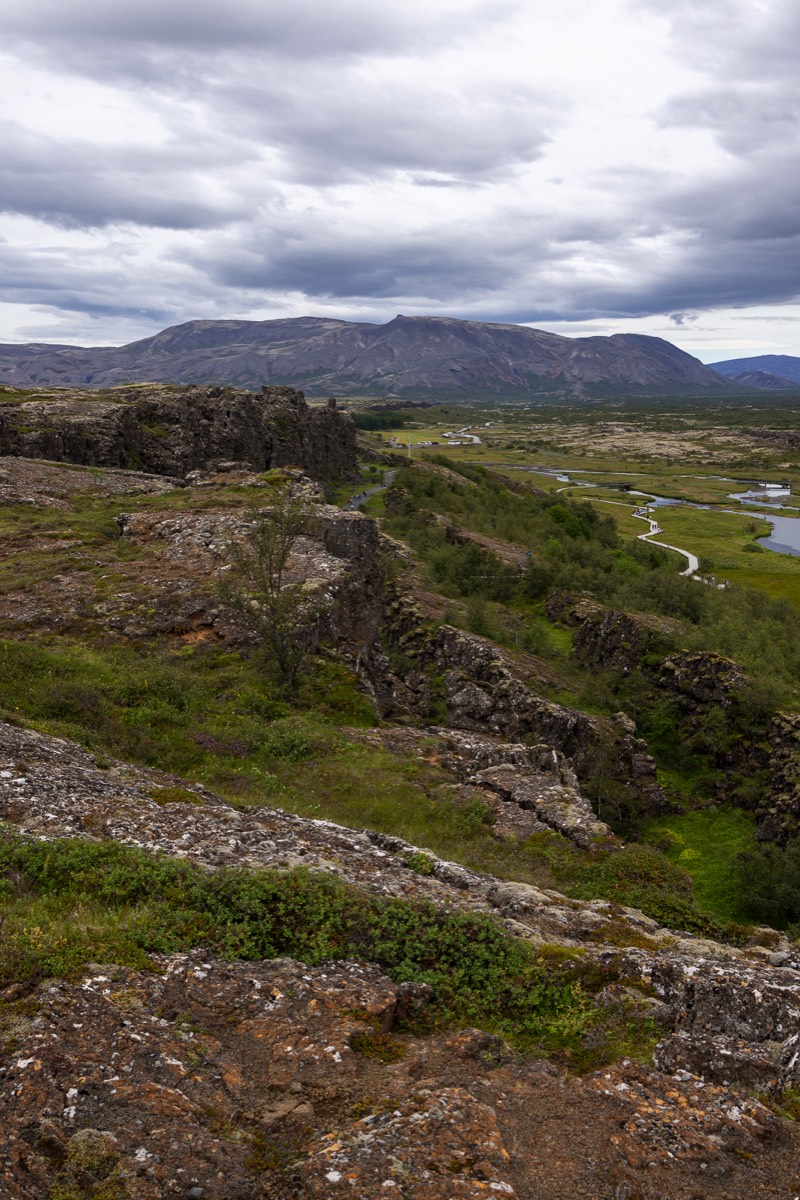
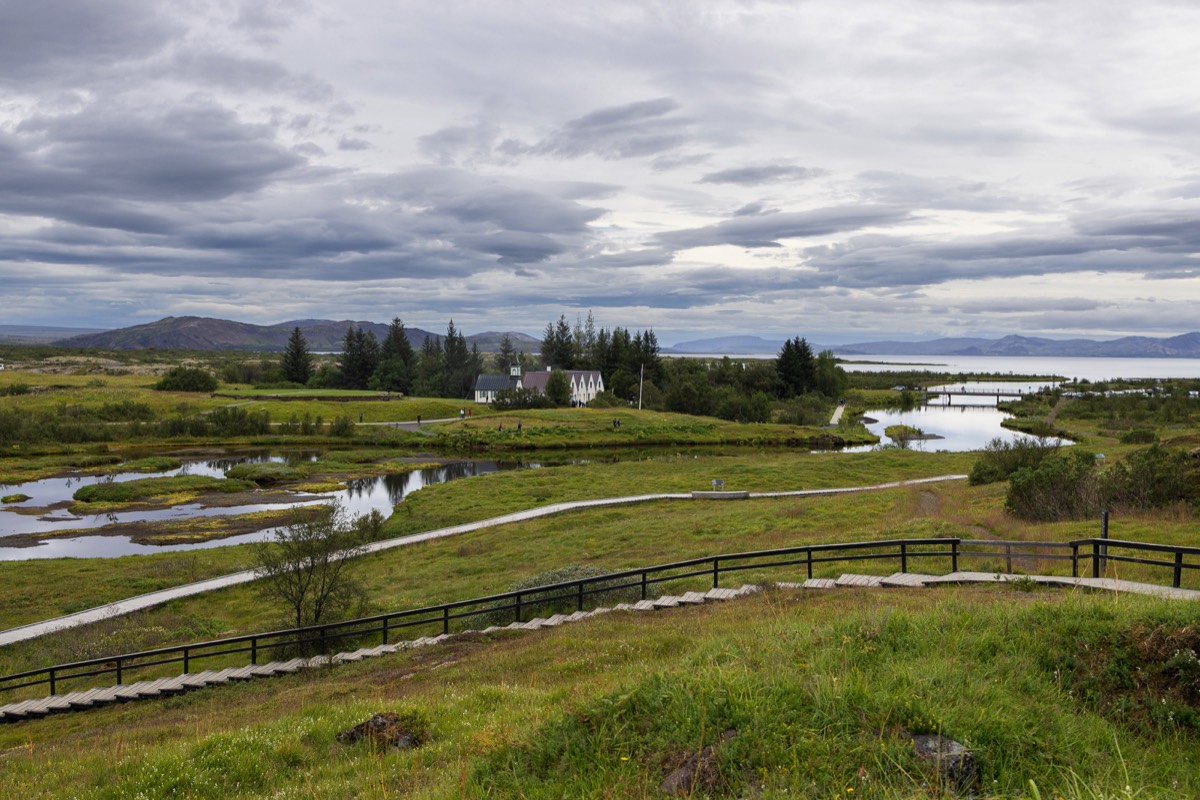
But the Thingvellir National Park is much more than this as it was the site of Iceland's parliament from the 10th to the 18th centuries. The Iceland flag flies beneath the massive rock wall to mark the place where chiefs would meet to discuss national affairs. Local matters would be discussed at Thingi's and then the chiefs would gather at least once a year for the Althingi. The first session of the Althing began on a Thursday in June in 930 AD. Thursday, named after the Norse god Thor, was a holy day and thus auspicious. The gathering had a strict protocol and the most important person was the Lawspeaker who had to recite all the laws without notes. Storri Sturluson, who we learnt about in Reykholt at the start of this trip, was the most famous of the Lawspeakers. This aural tradition continued until the 12th century by which time written books took over as records.
Iceland has the longest tradition of democracy in the world and it is here that the independent republic of Iceland was declared on 17th June 1944. In 1262, Icelanders had relinquished sovereignty to the King of Norway, much in the same way as the Outer Hebrides off the west coast of Scotland. But with the lack of a Norwegian male royal line, Iceland became part of a union between Sweden and Denmark. Denmark became the dominant ruler and strictly controlled trade to/from Iceland, subjugating the people and impoverishing the country. Slowly a nationalist movement built momentum, but it took the two world wars for Iceland to be allowed to come of age and achieve full independence from Denmark.
In the days of the Althingi, this area would have been full of merchants and entertainers, all coming together at this location via the network of rivers. Today, the summer residence of the Prime Minister of Iceland is found here, and he/she certainly has some wonderful views. It is worth spending some time in the visitor centre here to learn about the history of Iceland.
Tonight's destination was the Grand Hotel, Reykjavik, which had the advantage of being easy to drive too and park, but otherwise was the most disappointing of all the hotels we stayed at. But after spending so many days driving, it was nice to be able to walk into the city centre, even if that walk was 20 mins.