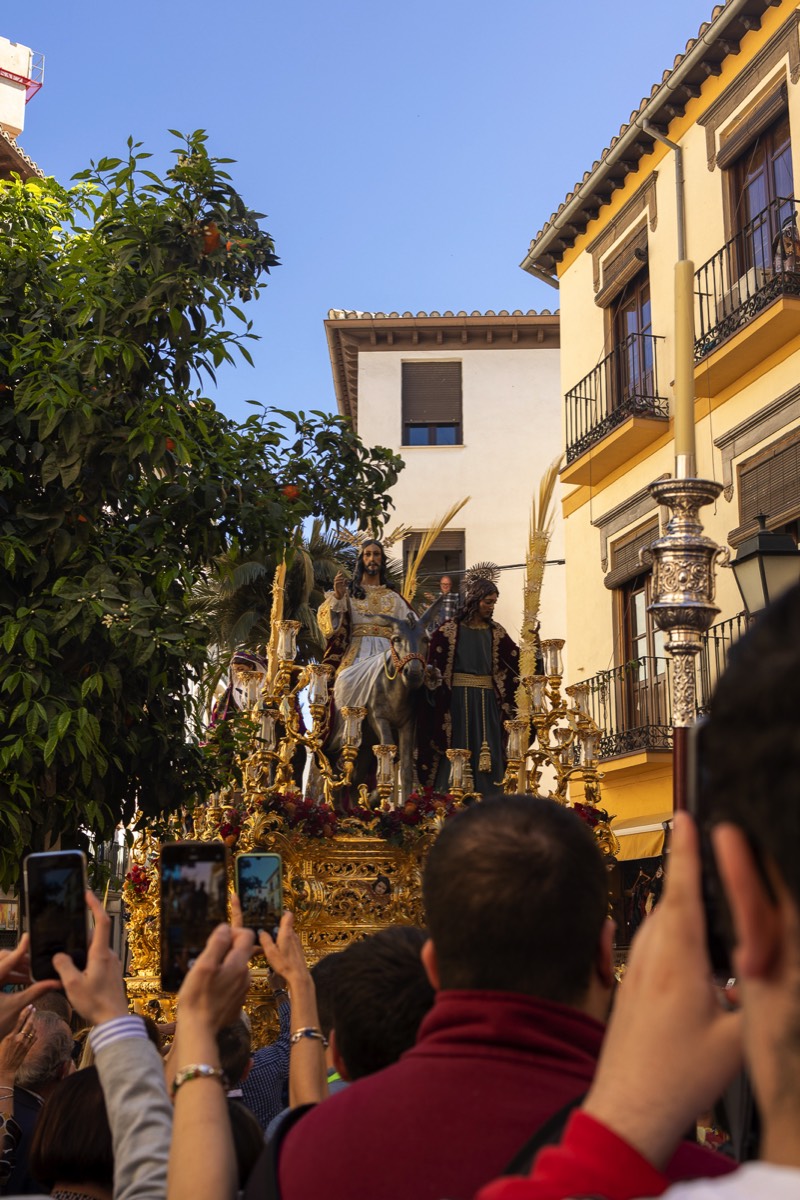
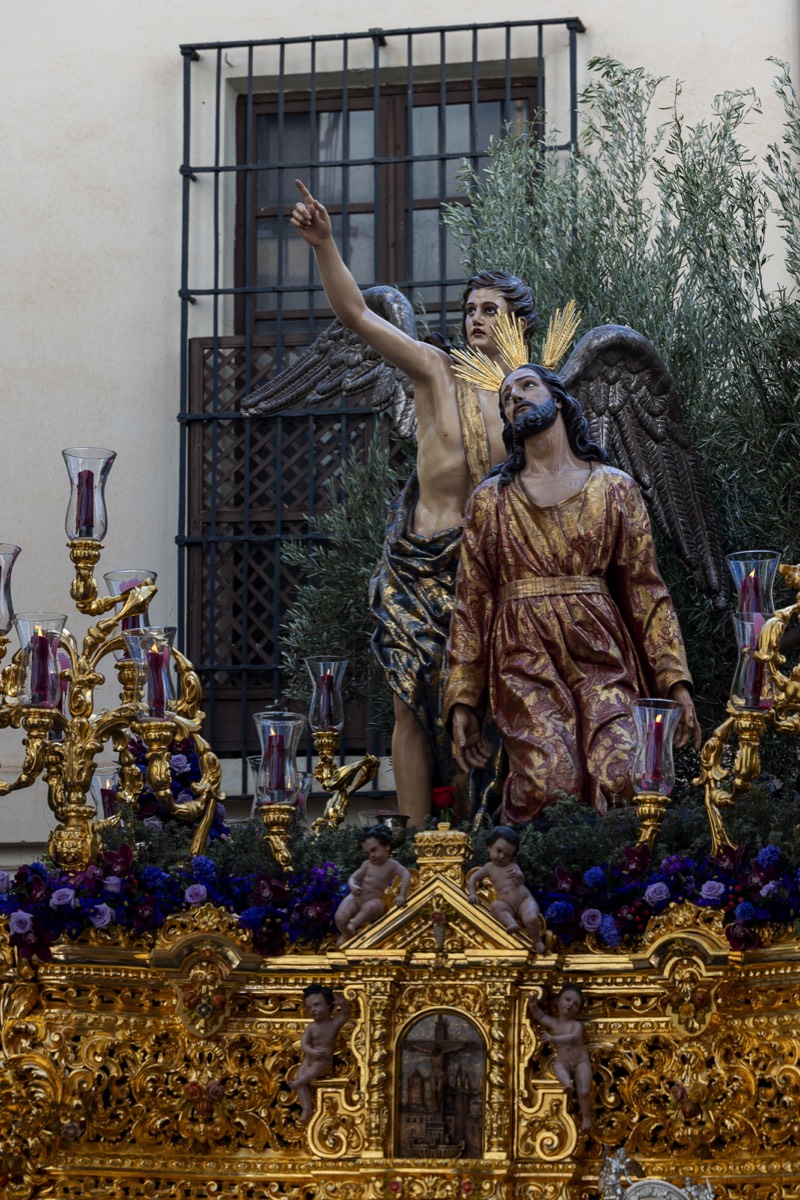
We had chosen to visit Andalucia in late March/early April in order to see the processions associated with Easter week, celebrating the crucifixion and respiration of Jesus Christ. In Spain the Holy Week is known as Santa Semana and is a tradition dating back to the 16th century. The Roman Catholic Council of Trent had convened in 1545-1563 in response to the threat posed by the Protestant Reformation, headed by Martin Luther. So street processions became a very visible display of the Catholic faith. In Andalucia, three organisations (cofradias) were formed, one of which was the Penitenciales. The Penitenciales cofradias are responsible for the Santa Semana processions and have their roots in the 14th century flagellants, hence the covering of their heads in hoods and walking barefoot through the streets.
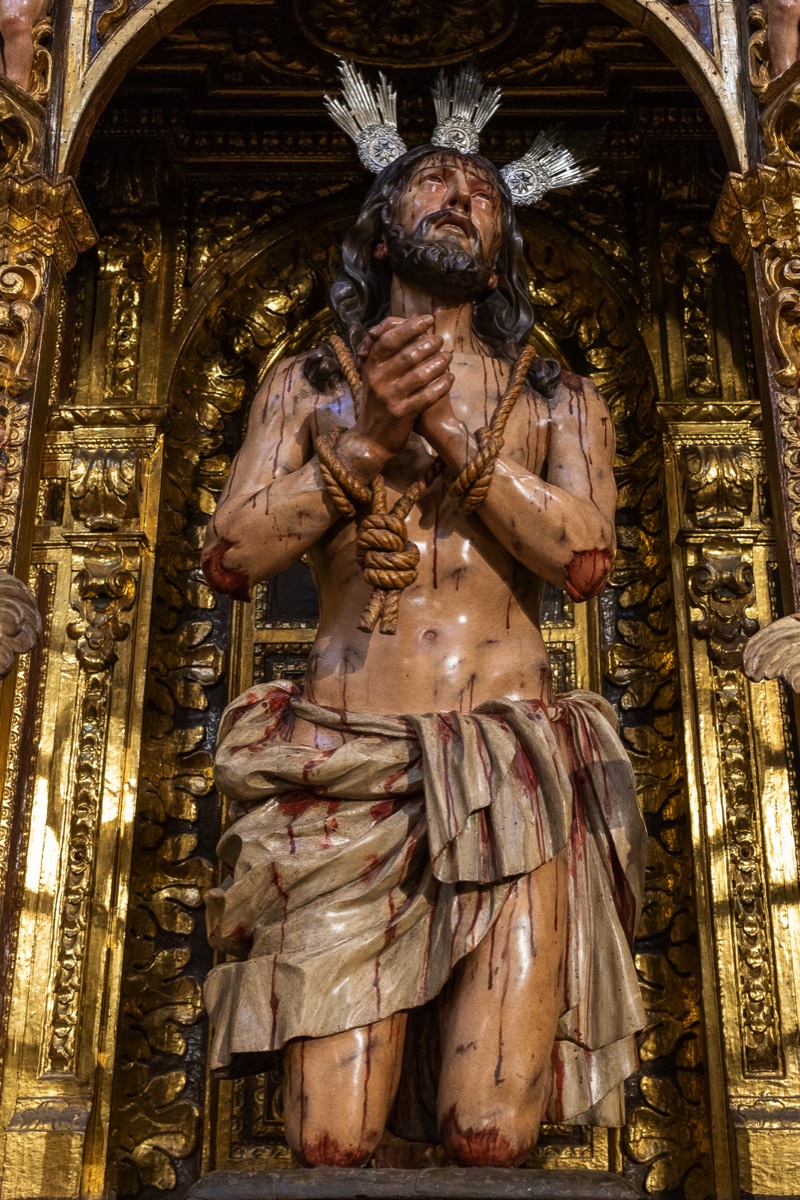
During Santa Semana week, the statues of Jesus and Mary are brought out of their churches and paraded through the cities, towns and villages. In the cities the statues process to the cathedral for a blessing before returning to their home church. As such, a complicated traffic control system is in place as many processions occur simultaneously in all parts of the city, and day and night.
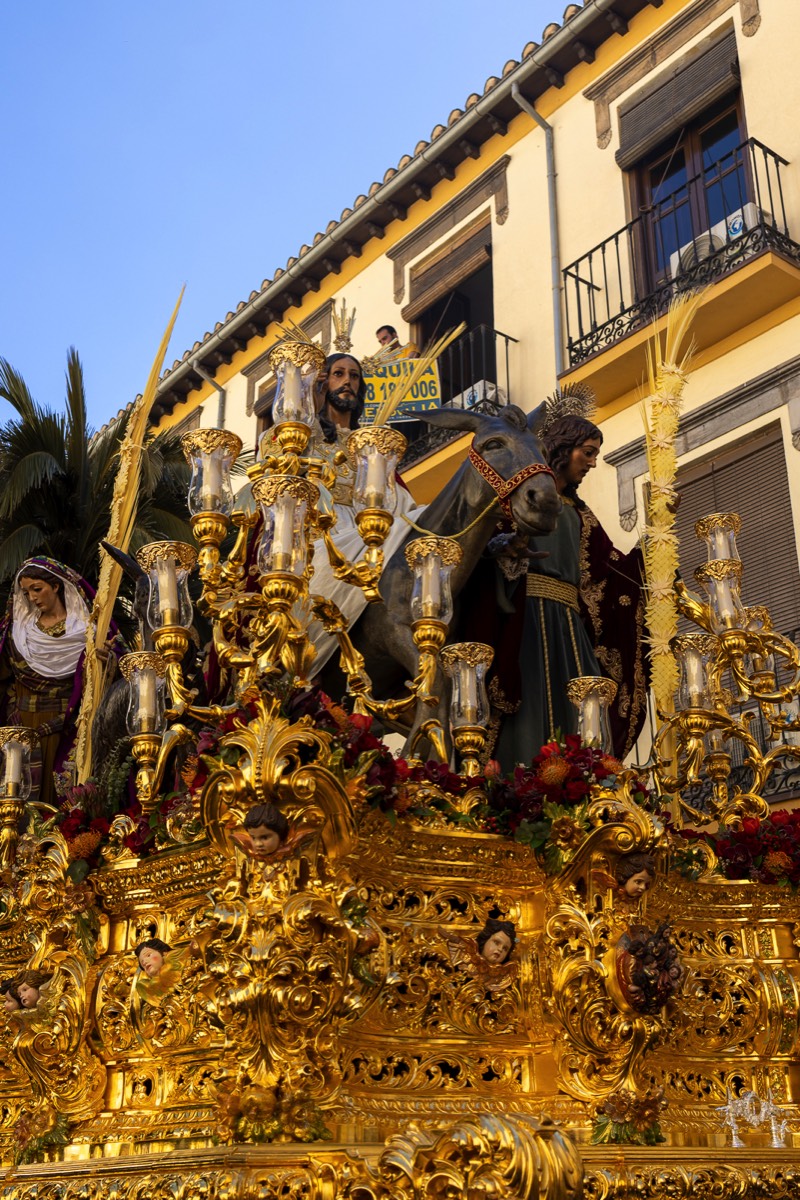
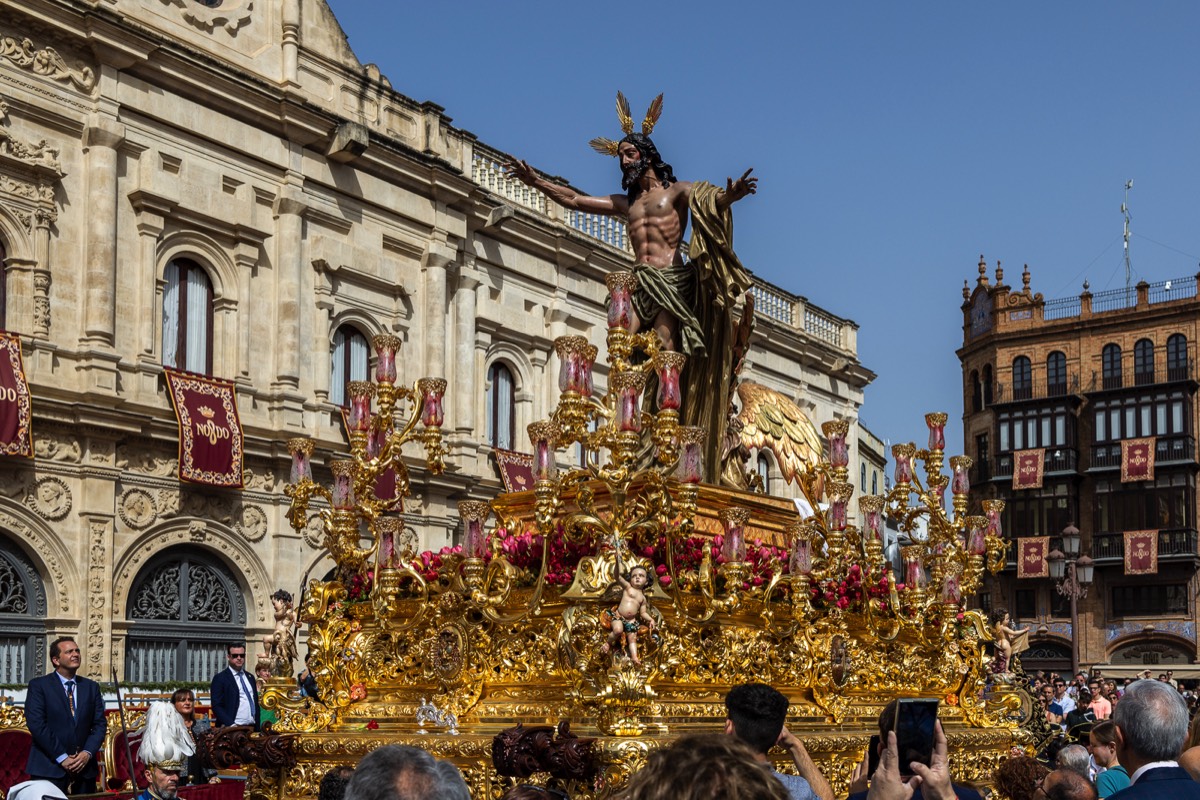
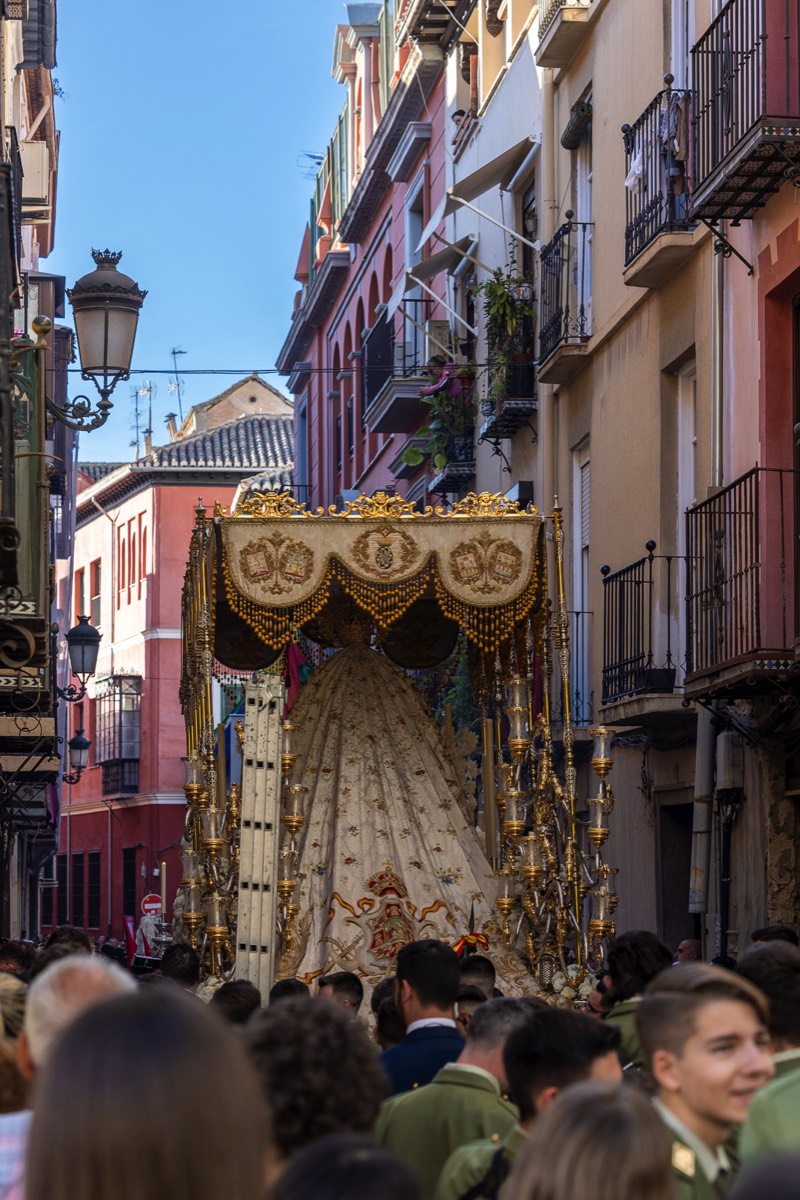
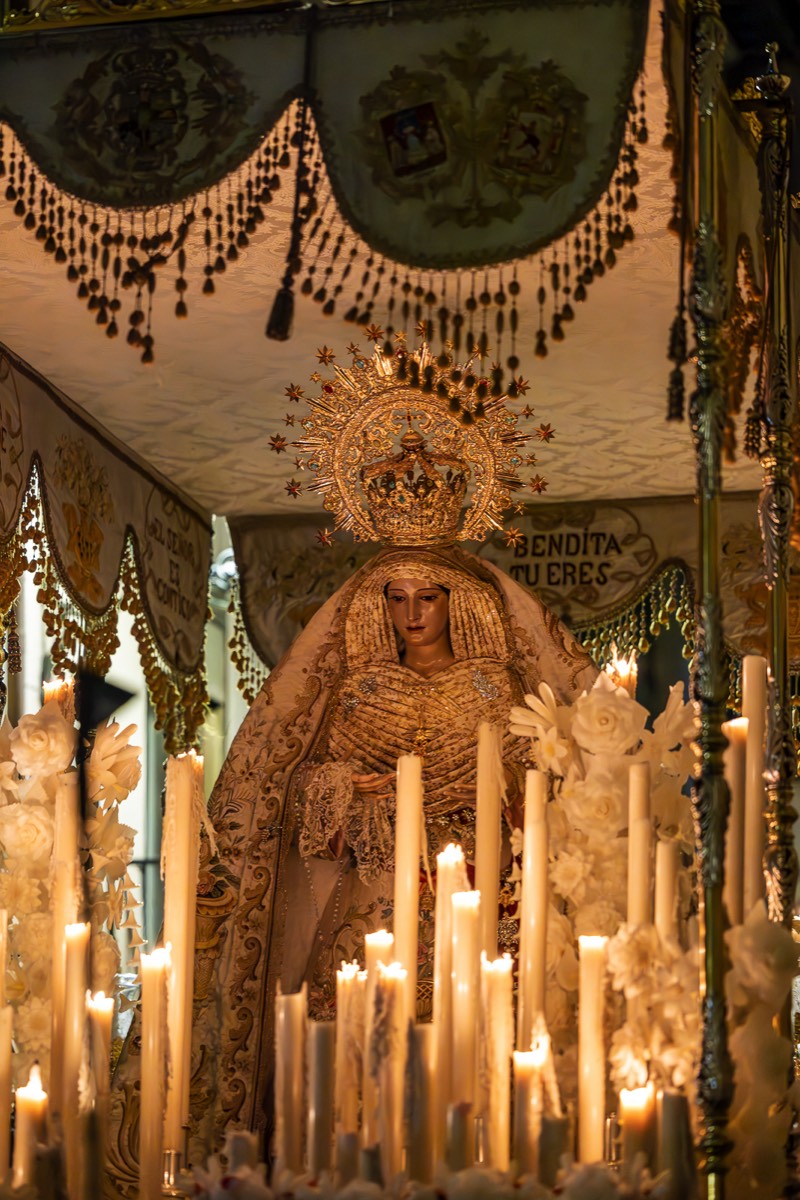
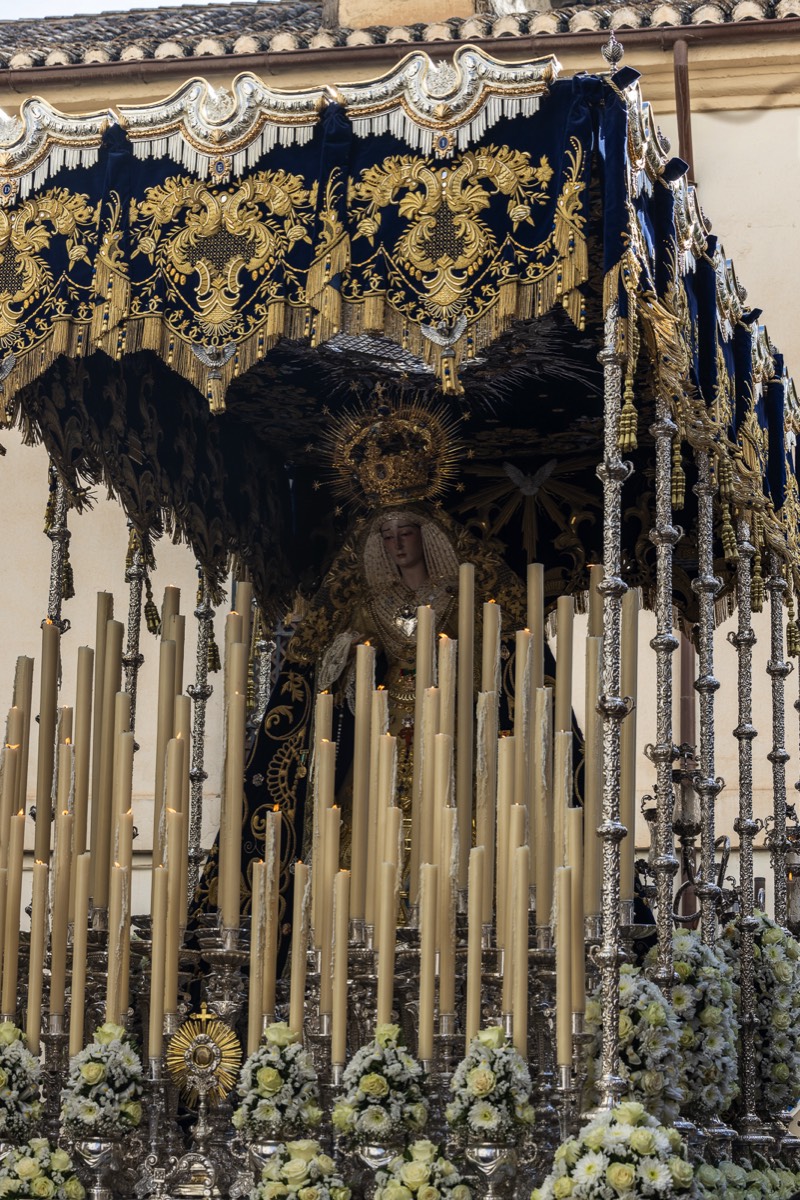
The floats are called 'paso' and some weigh up to six tons. Jesus rarely travels alone on his paso but Mary is always solo, surrounded by flowers and candles.
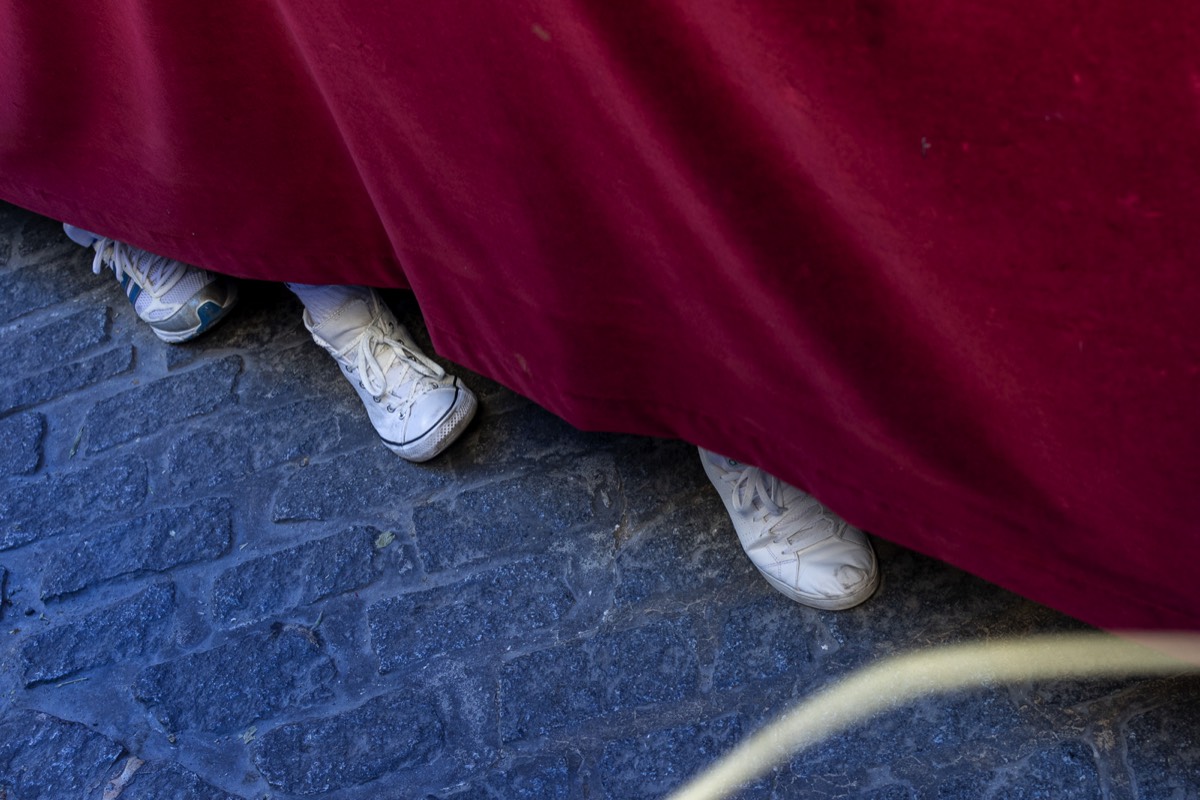
The 'costalero' are hidden below the canasta and they carry the paso on their shoulders. All you can see are their white shoes. They train for months for this task as it takes a high degree of coordination.
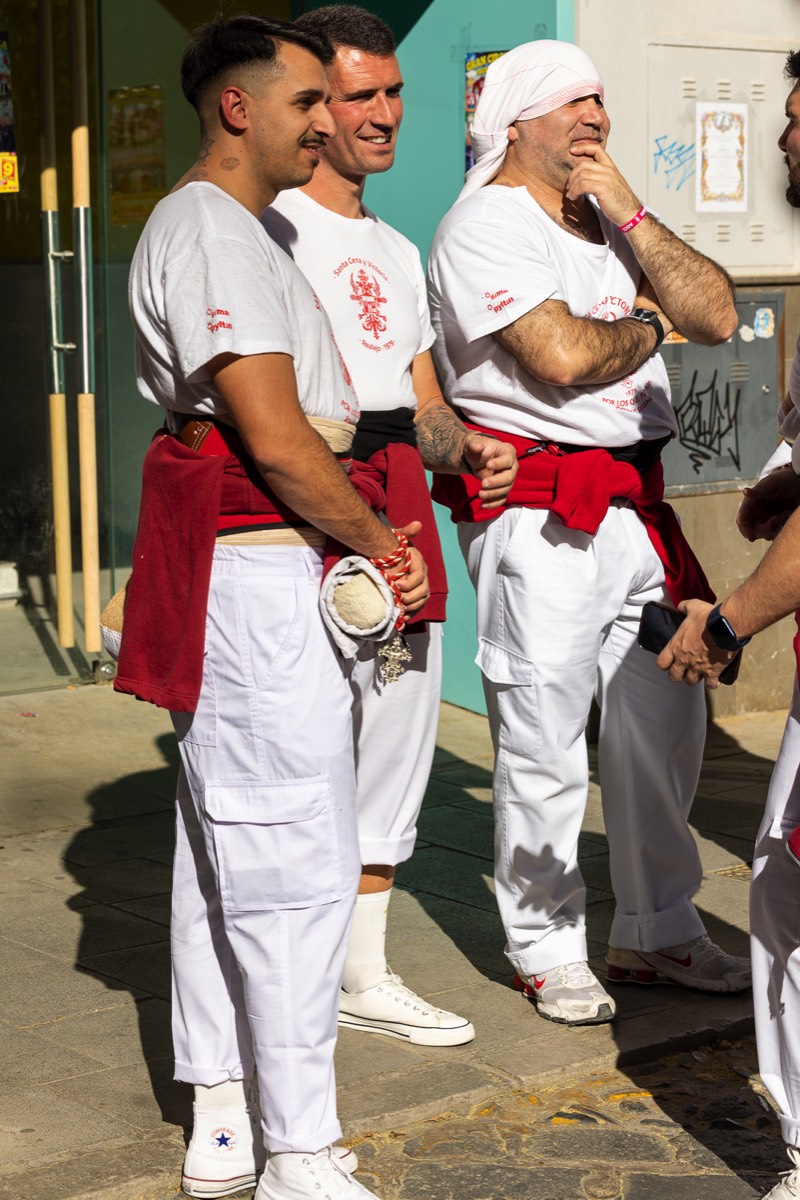
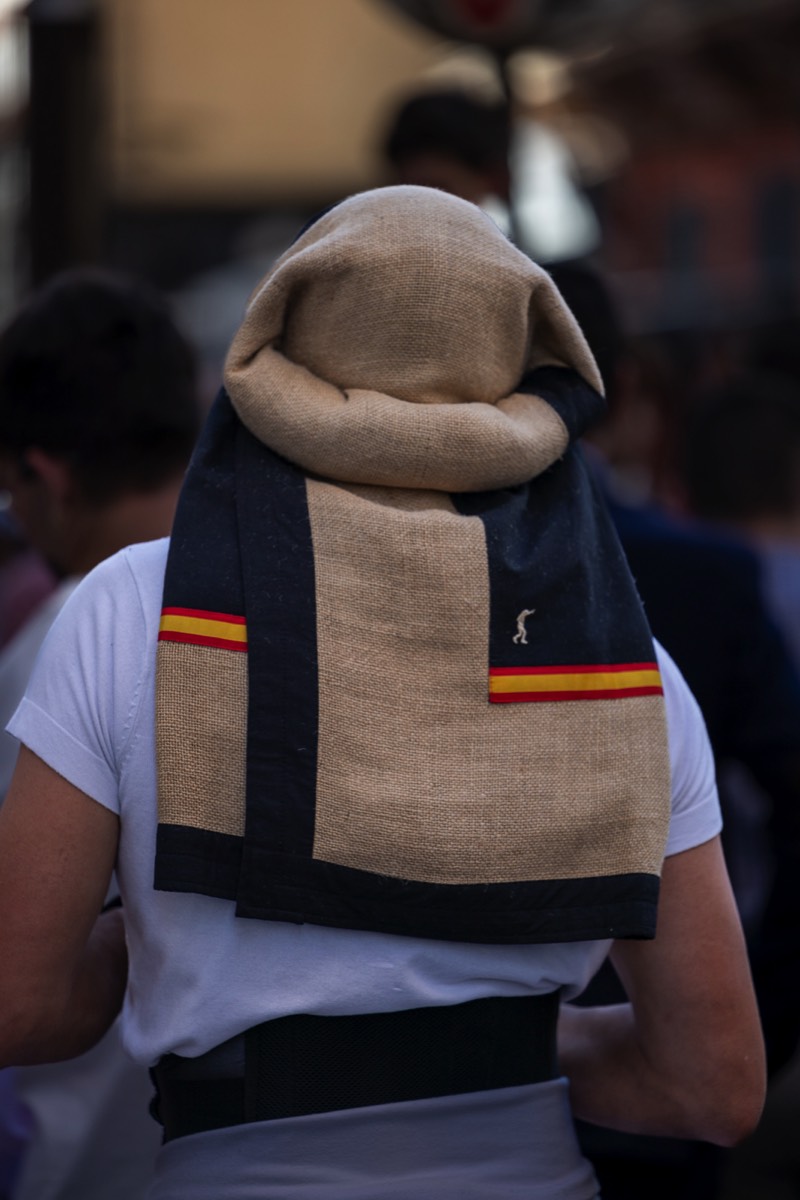
The costalero wear a 'faja' or wide belt to protect their backs, and a 'costal' or turban-like piece of clothe on their heads.
As the paso processes along the very narrow streets, it stops before certain landmarks and is lowered to the ground. At this time the costalero may change shift as the whole procession can last for six hours. In Granada it was notable that great applause was given to the paso when it was then raised in one smooth movement, and great silence was found when the paso came out of its home church. Such reference and response we less obvious in Seville.
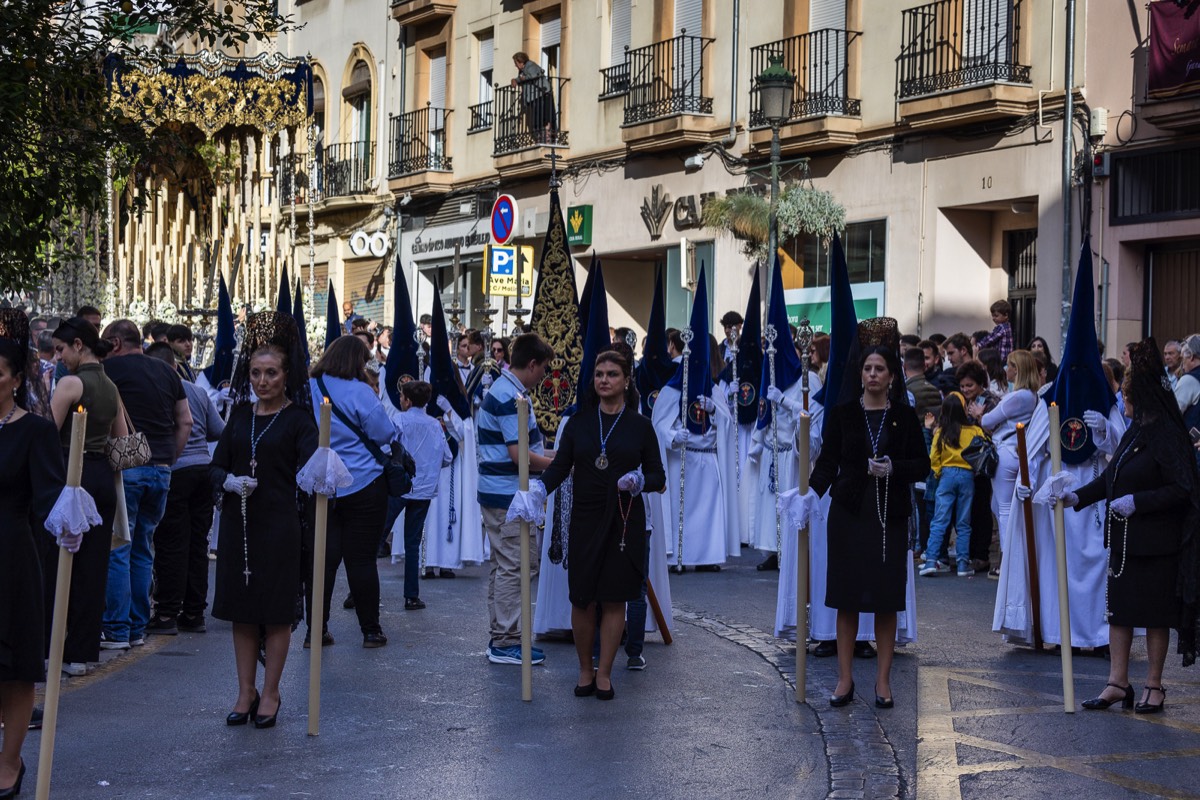
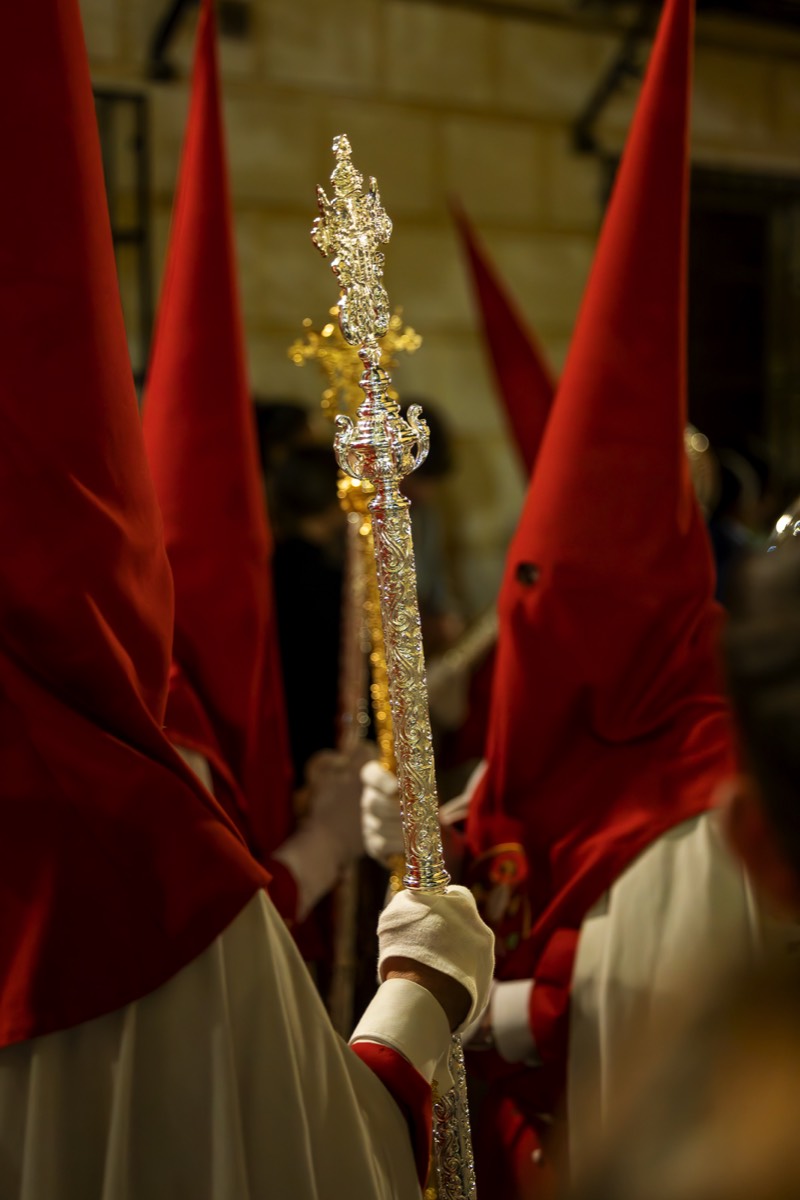
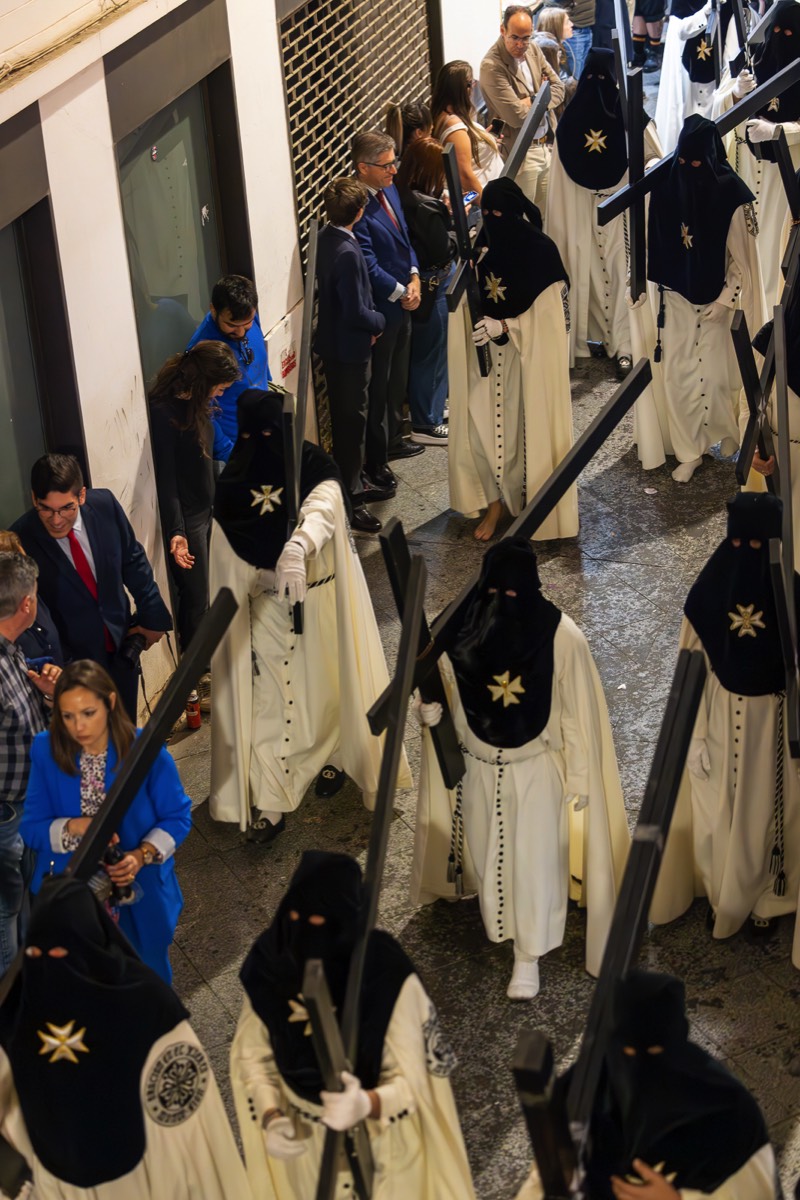
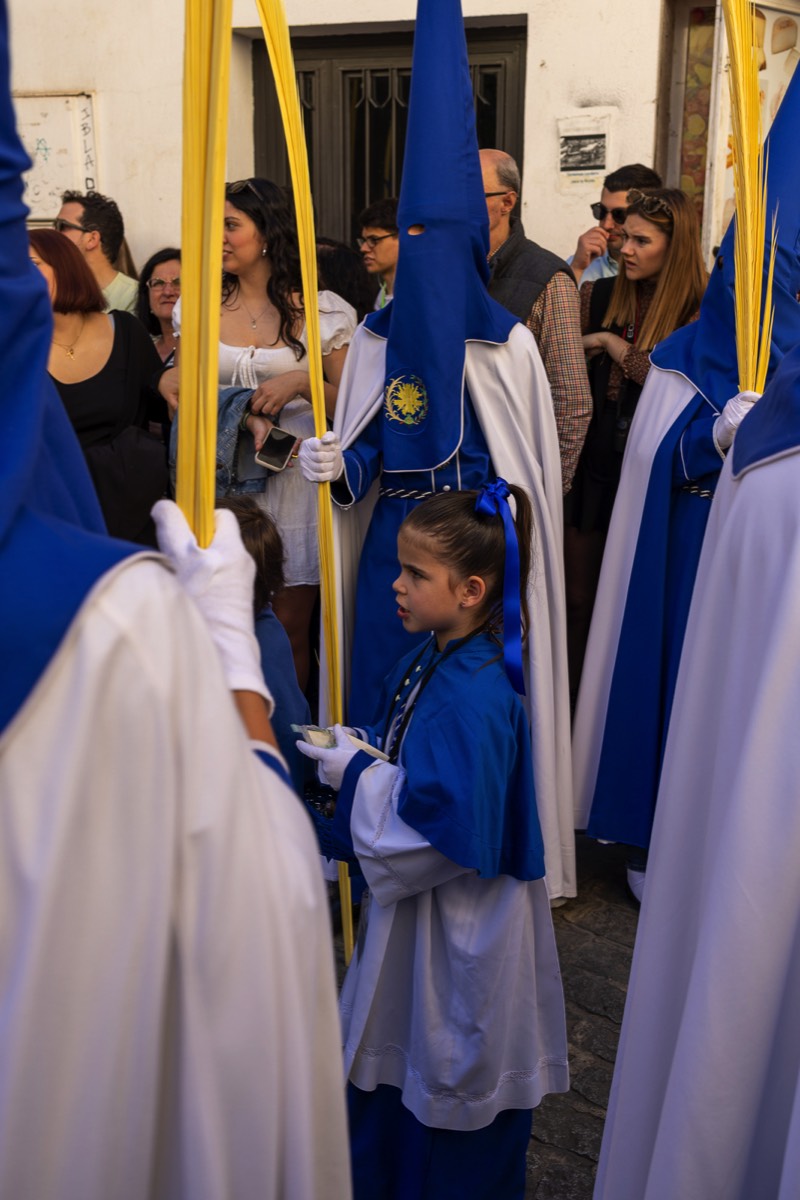
The nazarenos wear hooded caps to provide disguise and some go bare footed as part of then penitence. The colours of the hoods and caps, as well as the insignia, all depict different church groups. Some will be carrying church regalia and huge silver crosses and mace. Everyone looked solemn and none talked to each other.
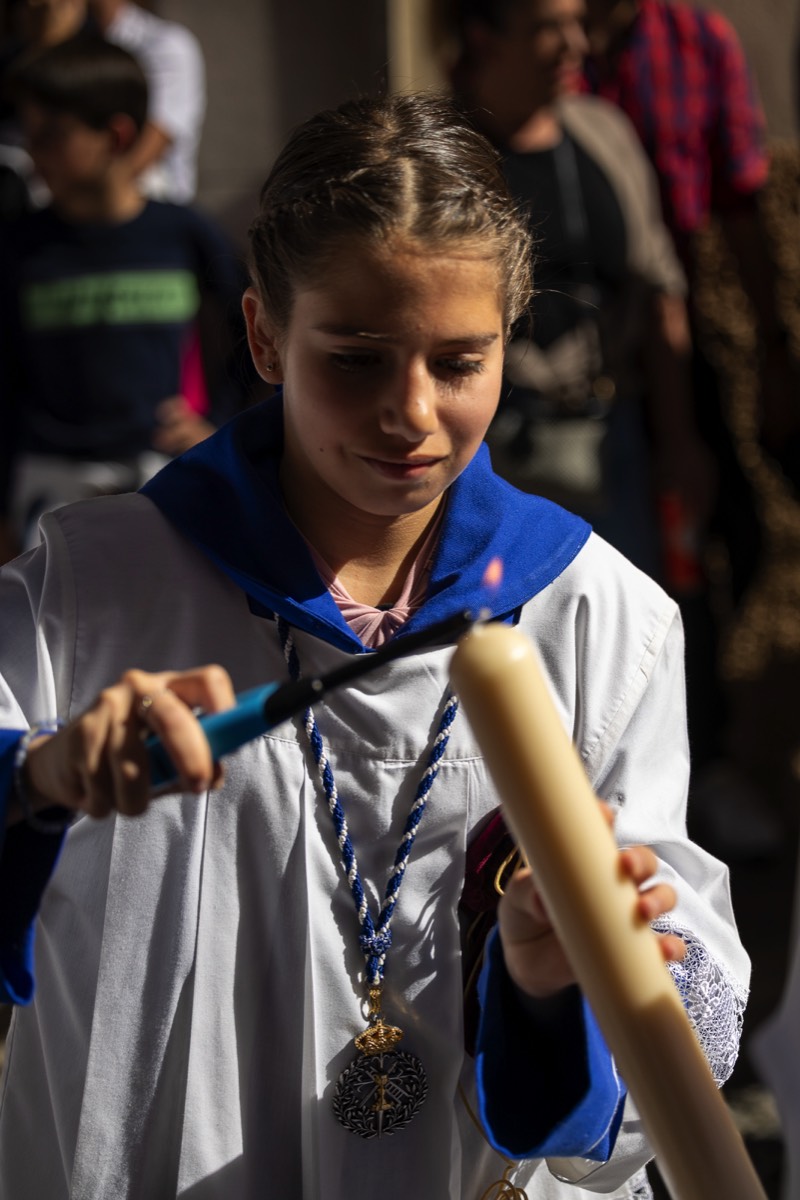
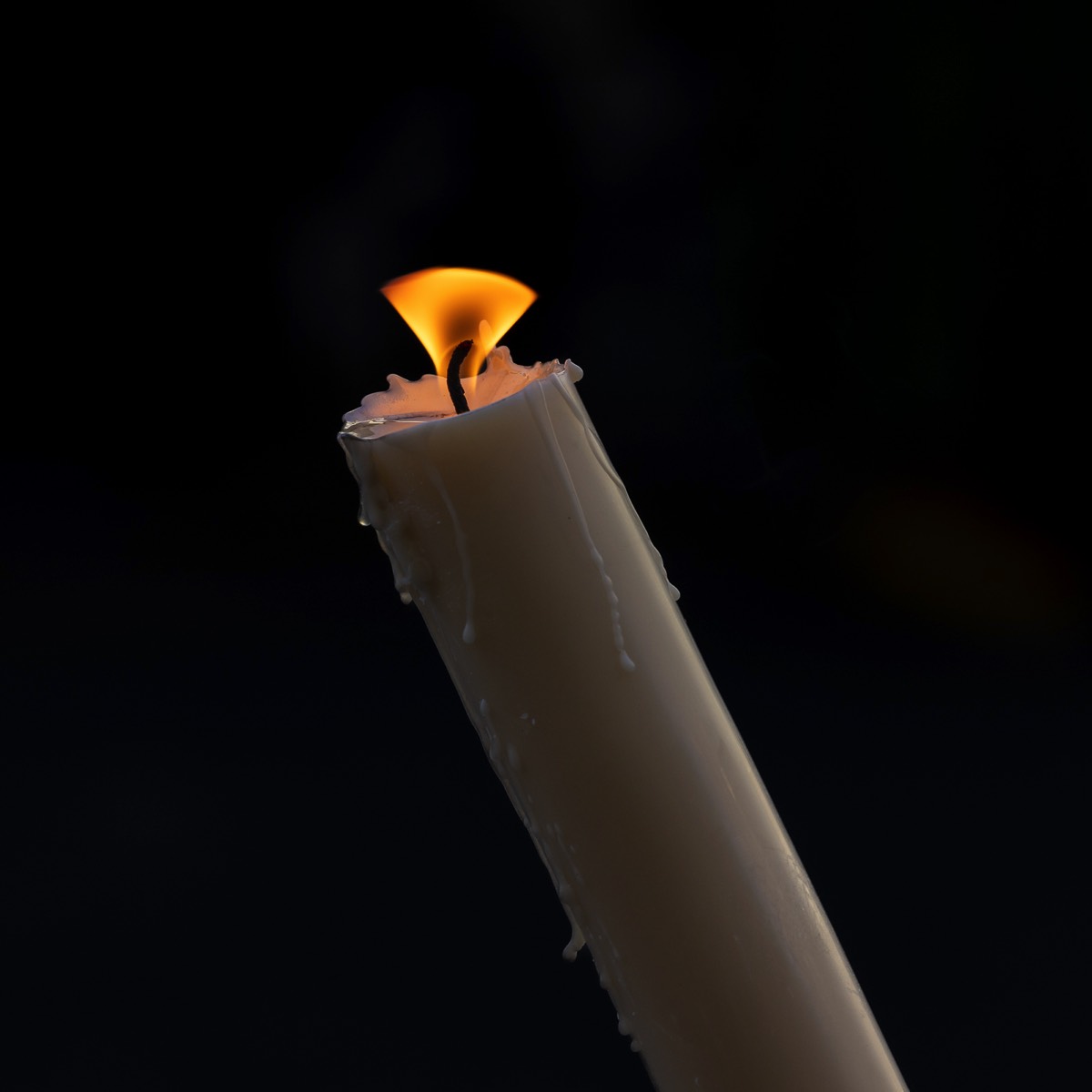
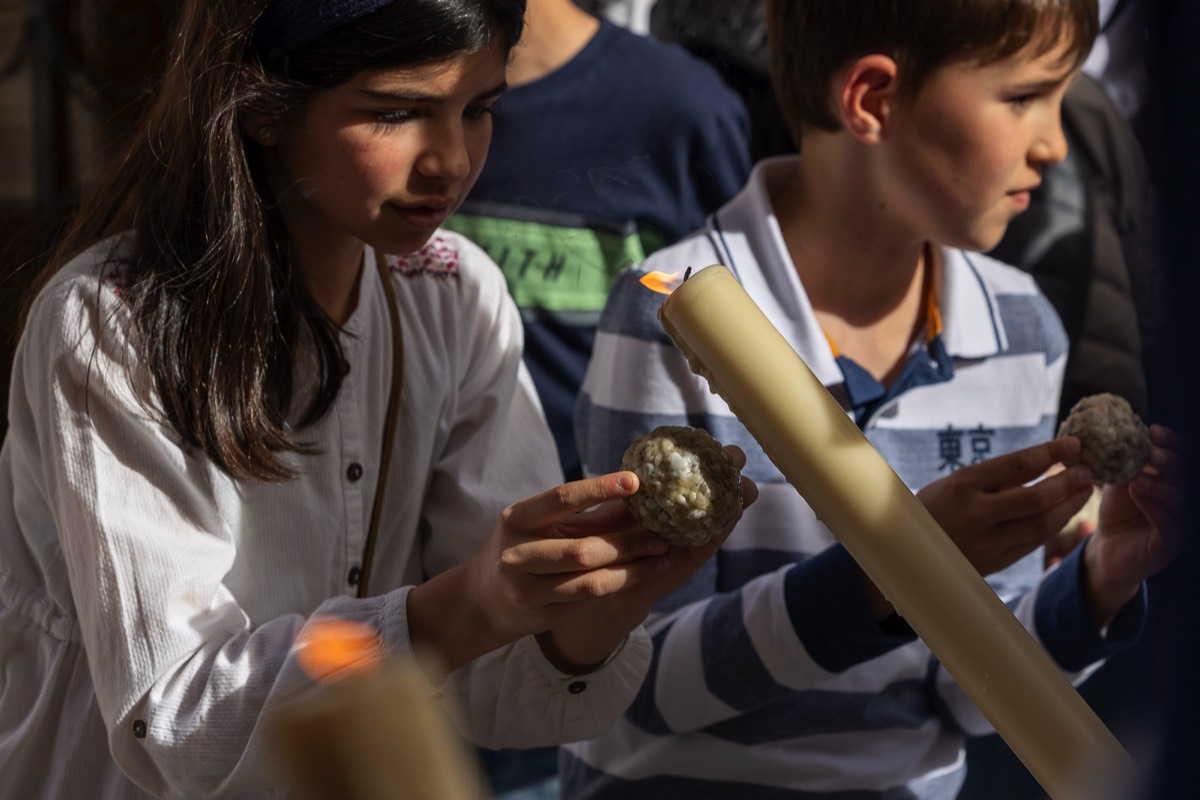
Most of the participants simply carried huge candles and seemed to find it difficult to keep them lit. Children along the procession route help collect the melting candle wax by forming it into balls.
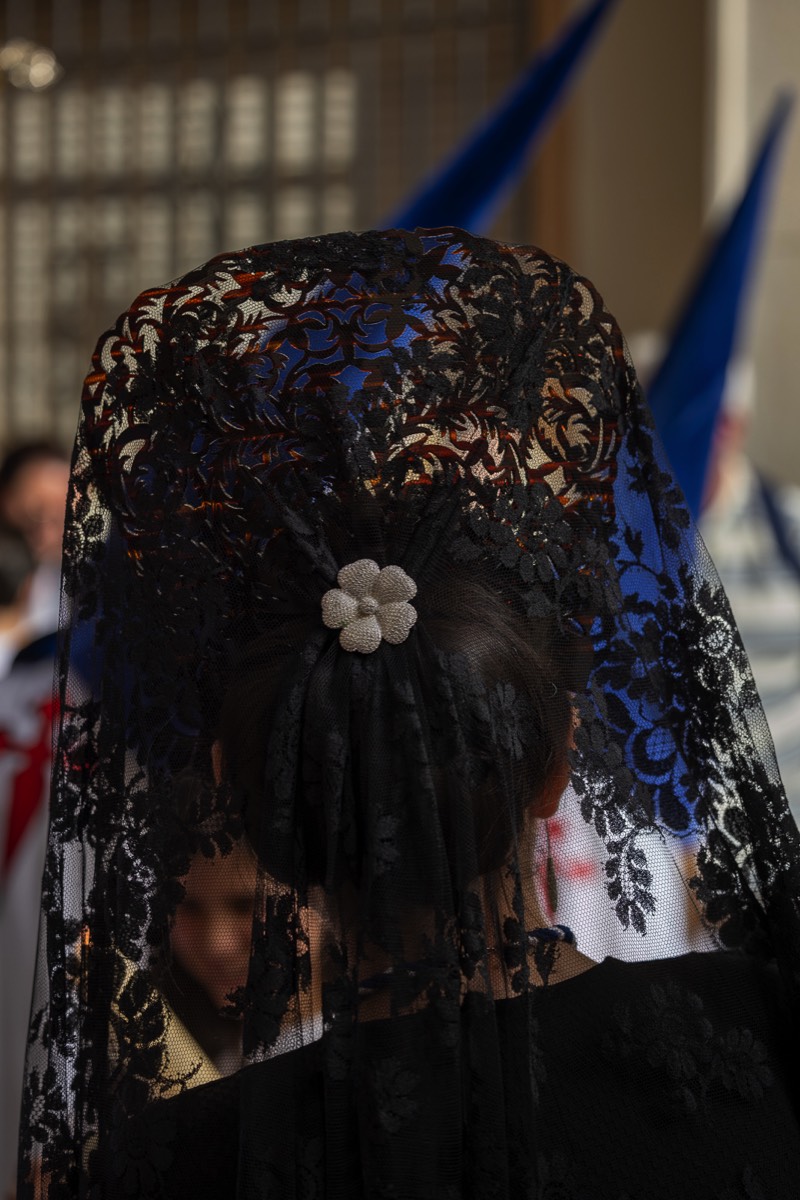
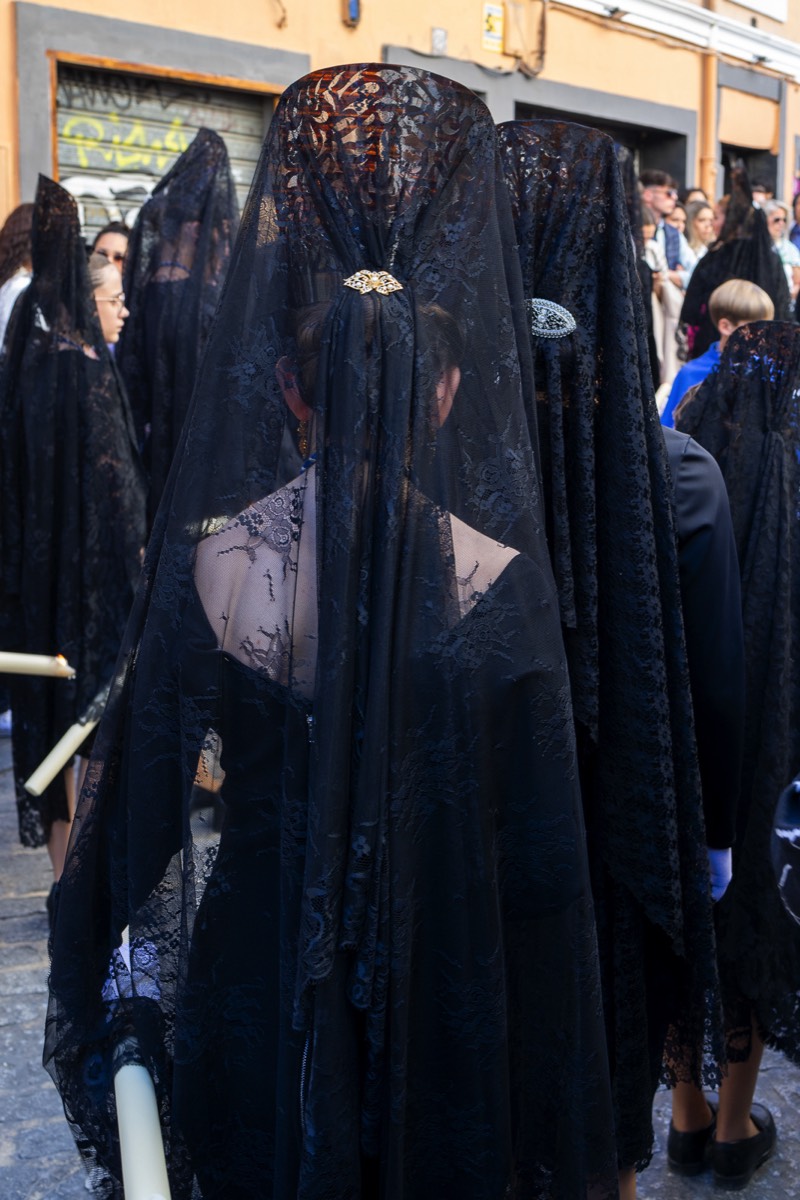
Although there were a few young girls wearing hoods in the processions, the role of women seemed to be to dress in black mourning clothes to accompany the Virgin Mary during the processions. The mantilla (or veil) is worn over the head and shoulders as a symbol of reverence to God's will.
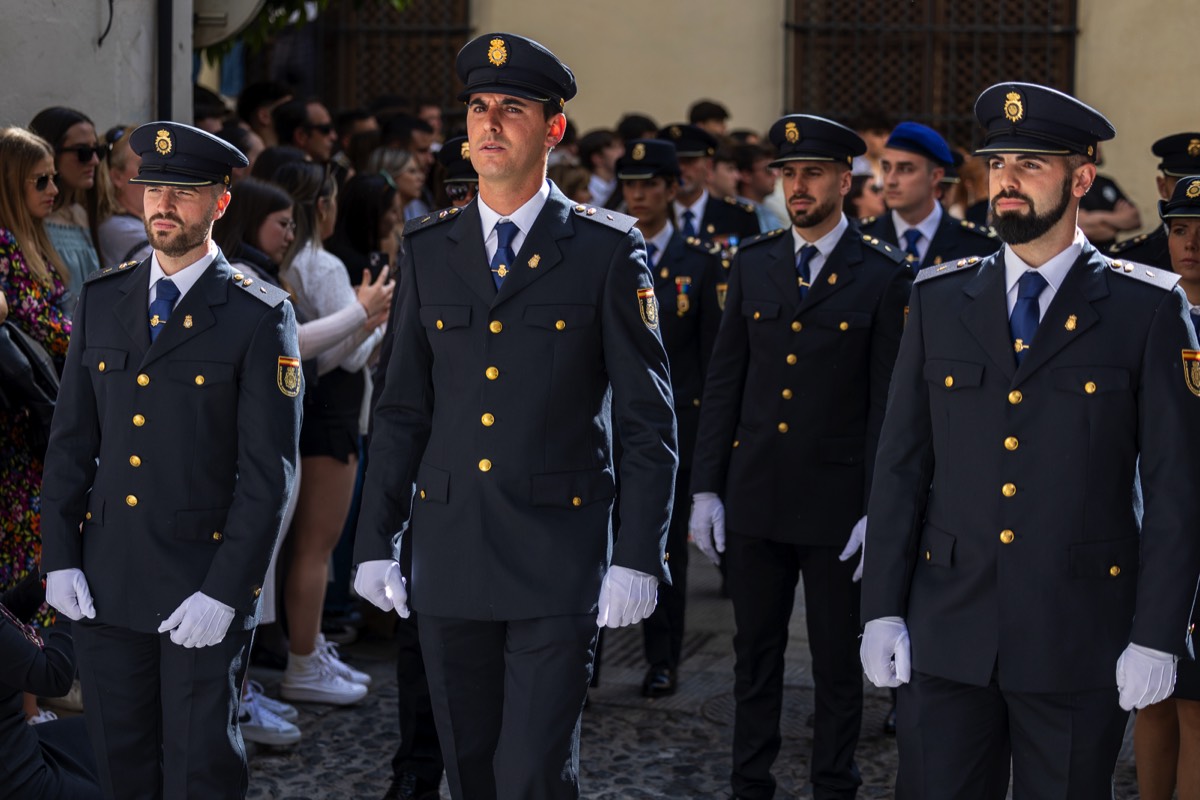
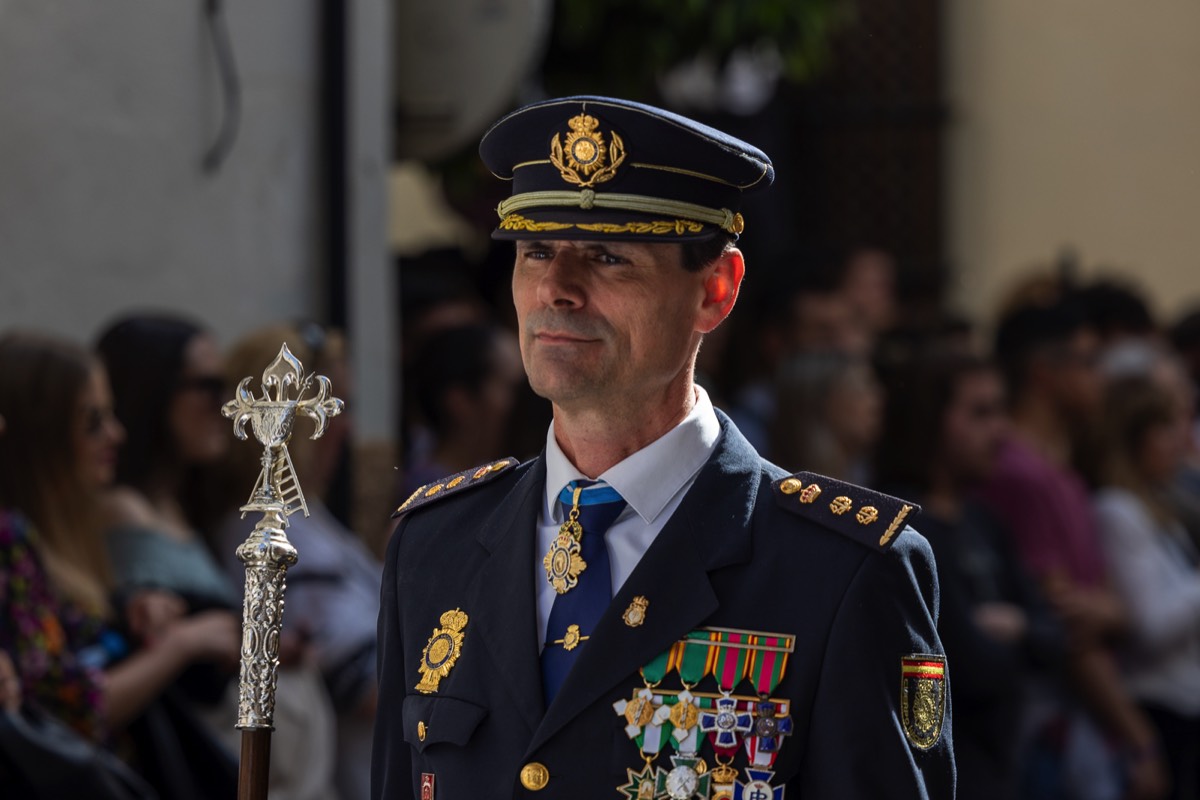
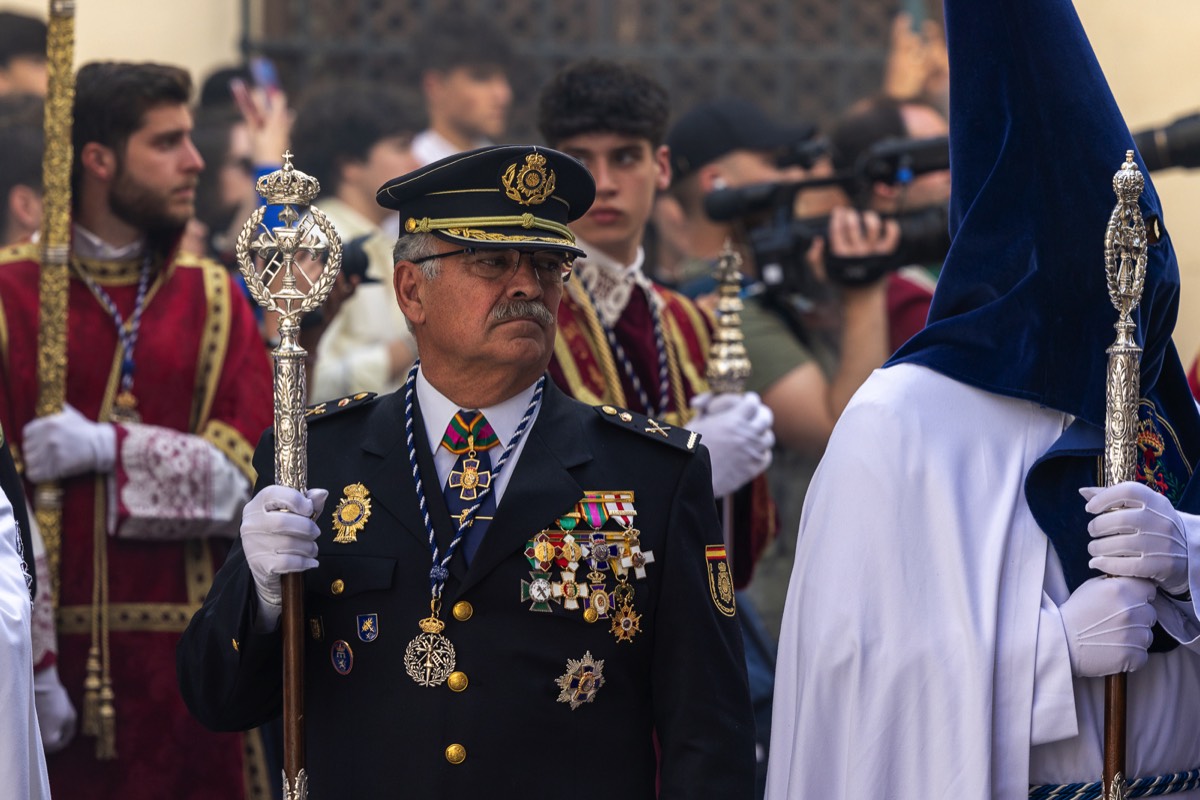
Also in the processions were members of the police force and other civic groups. The gentlemen on the right below was clearly of importance as he was accompanied by armed guards! Anyone who was anyone had to be in a procession!
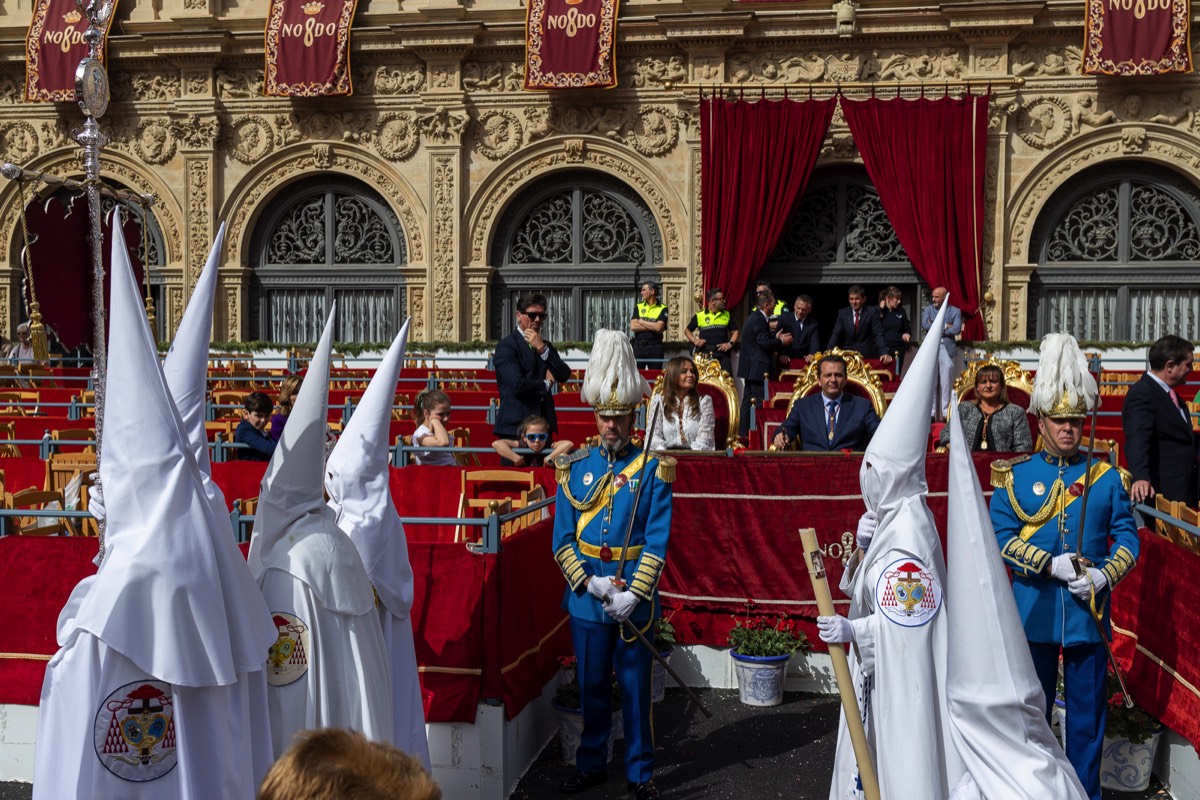
And when the paso passed by City Hall in Seville, the well protected Mayor stood to attention.
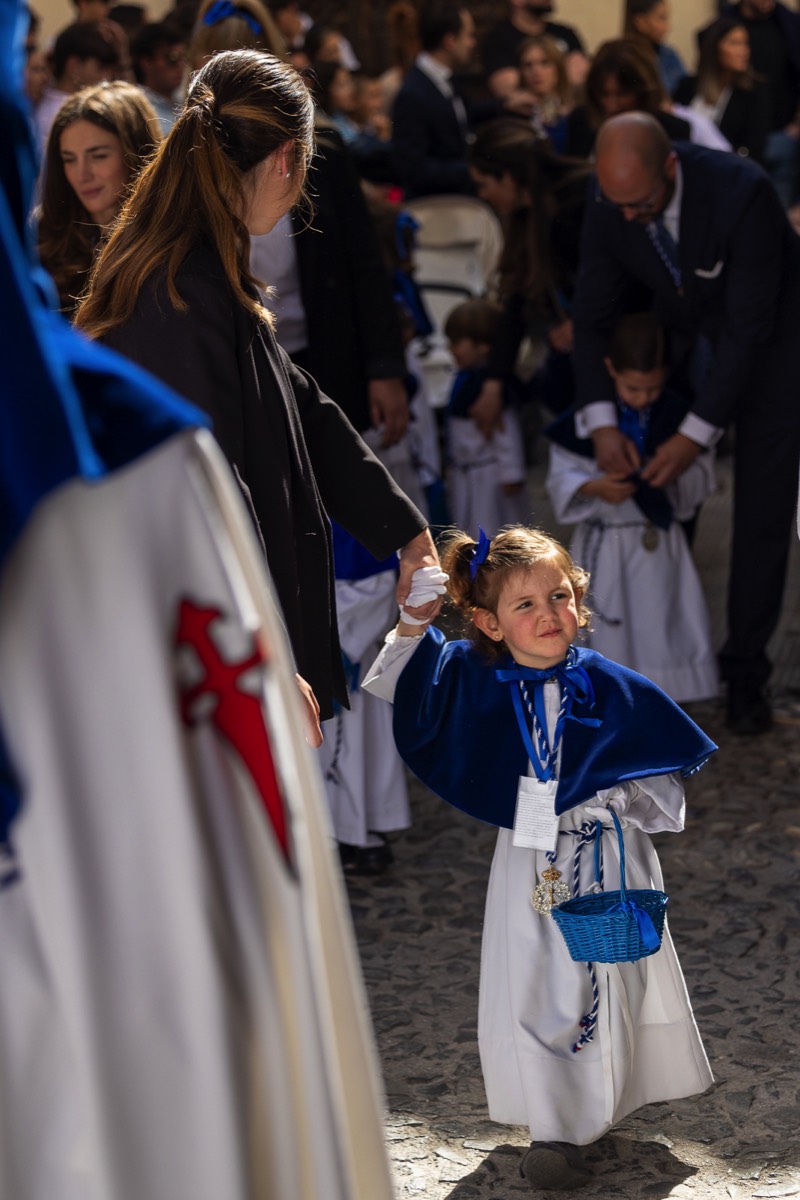
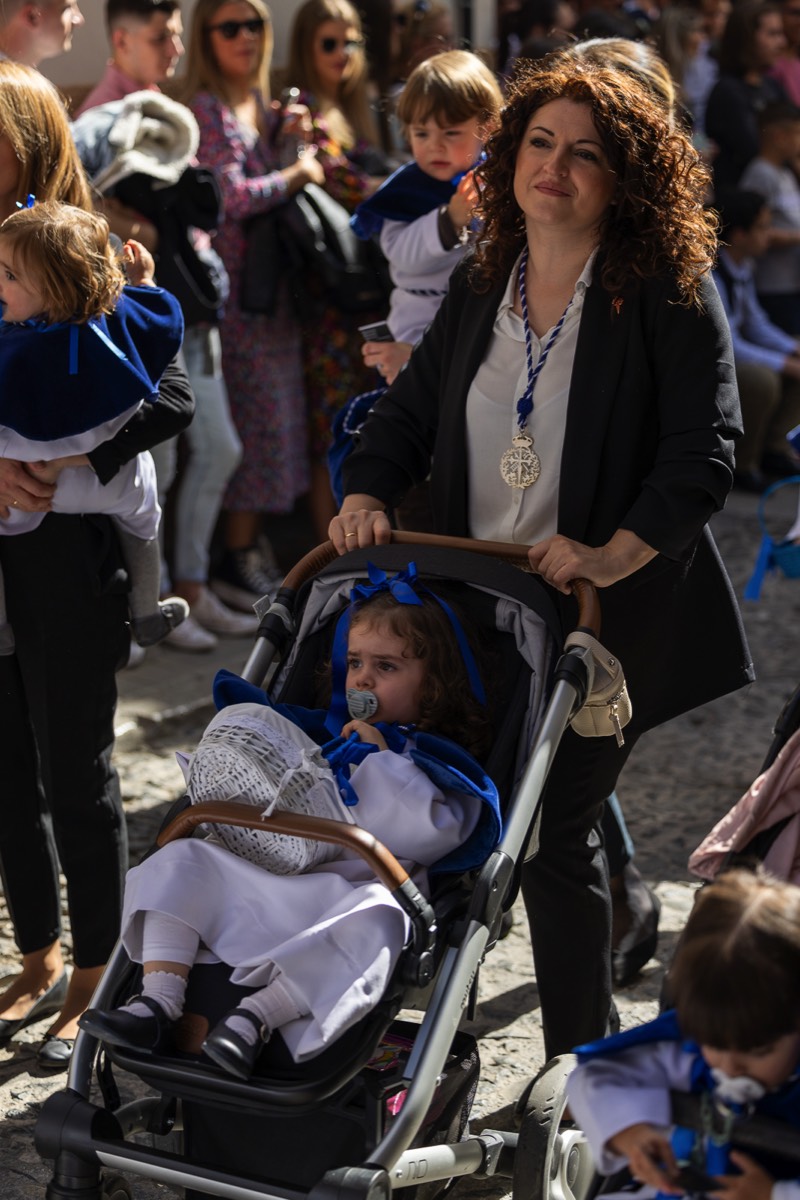
And no-one was excluded, even babes-in-arms were dressed in the appropriate colours of their church group and joined in the procession in some way or another.
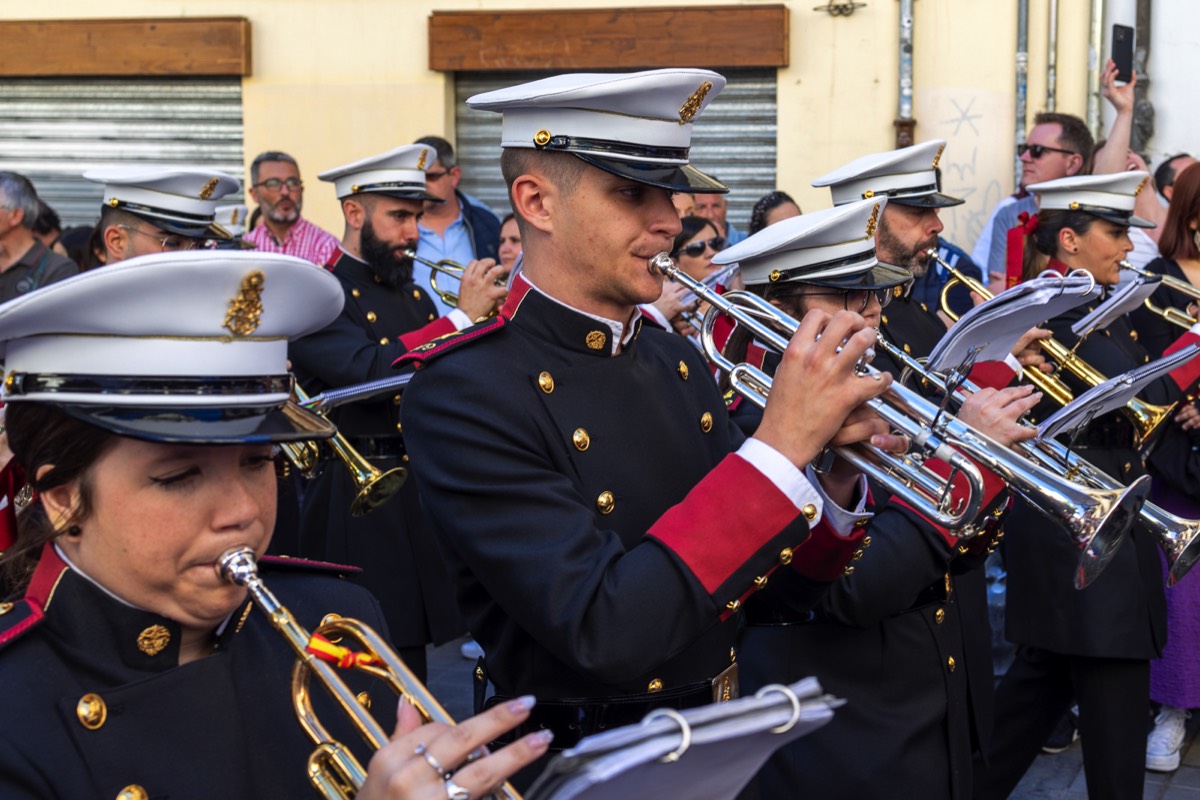
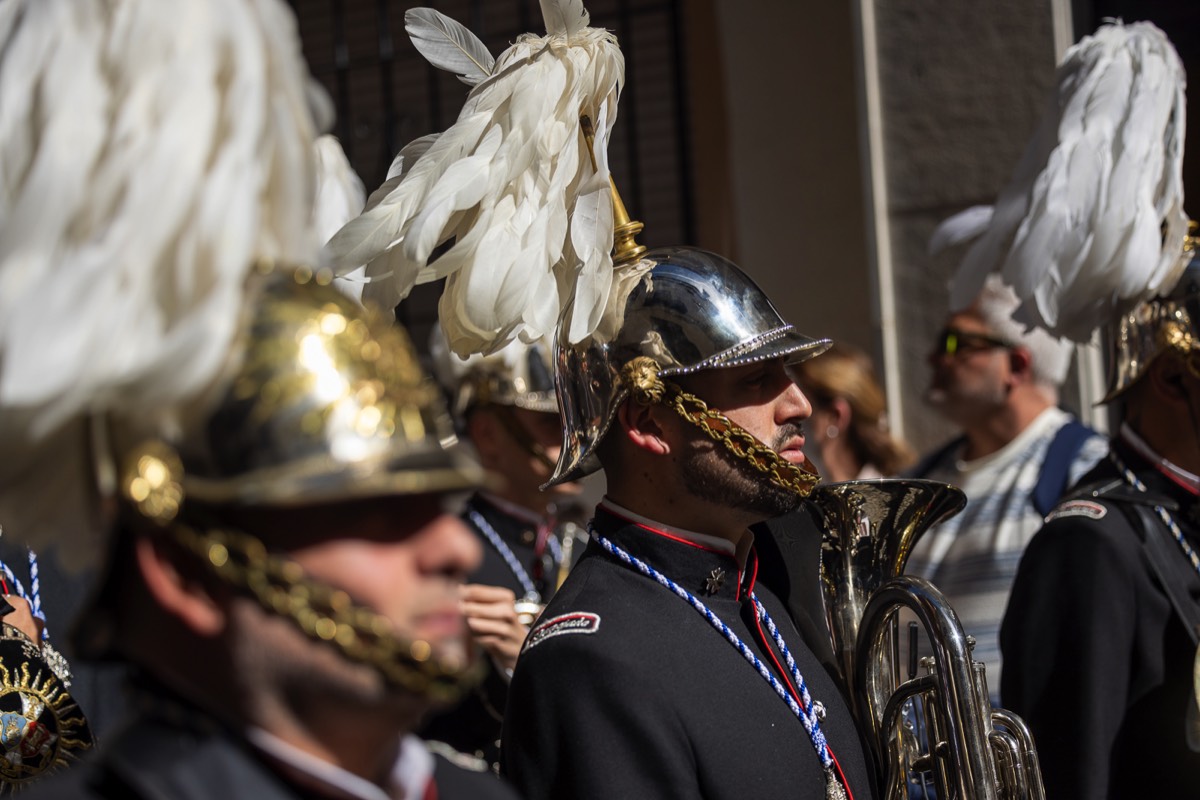
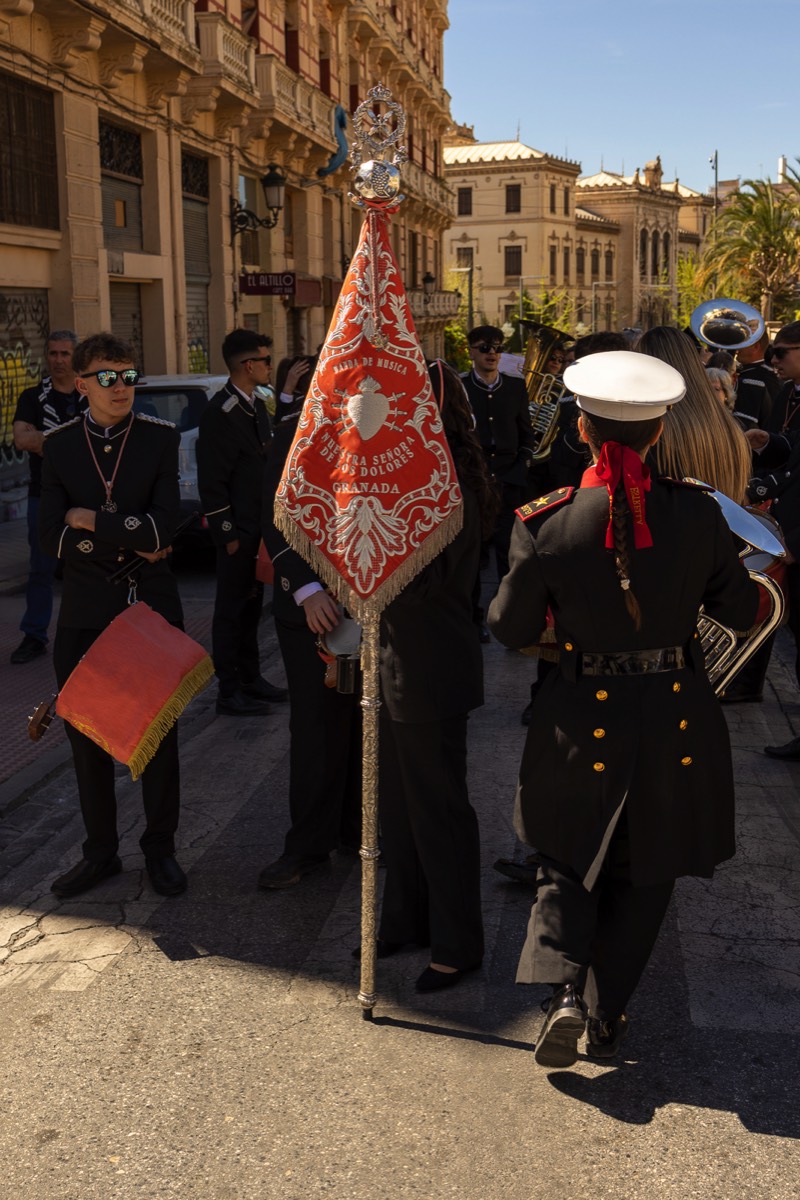
And something I was not expecting was that the processions were accompanied by marching bands. The skill of these musicians was to be marvelled at and made such an impact in the processions. Only one procession is silent and that occurs on Good Friday in recognition of Christ's cruxifixion.