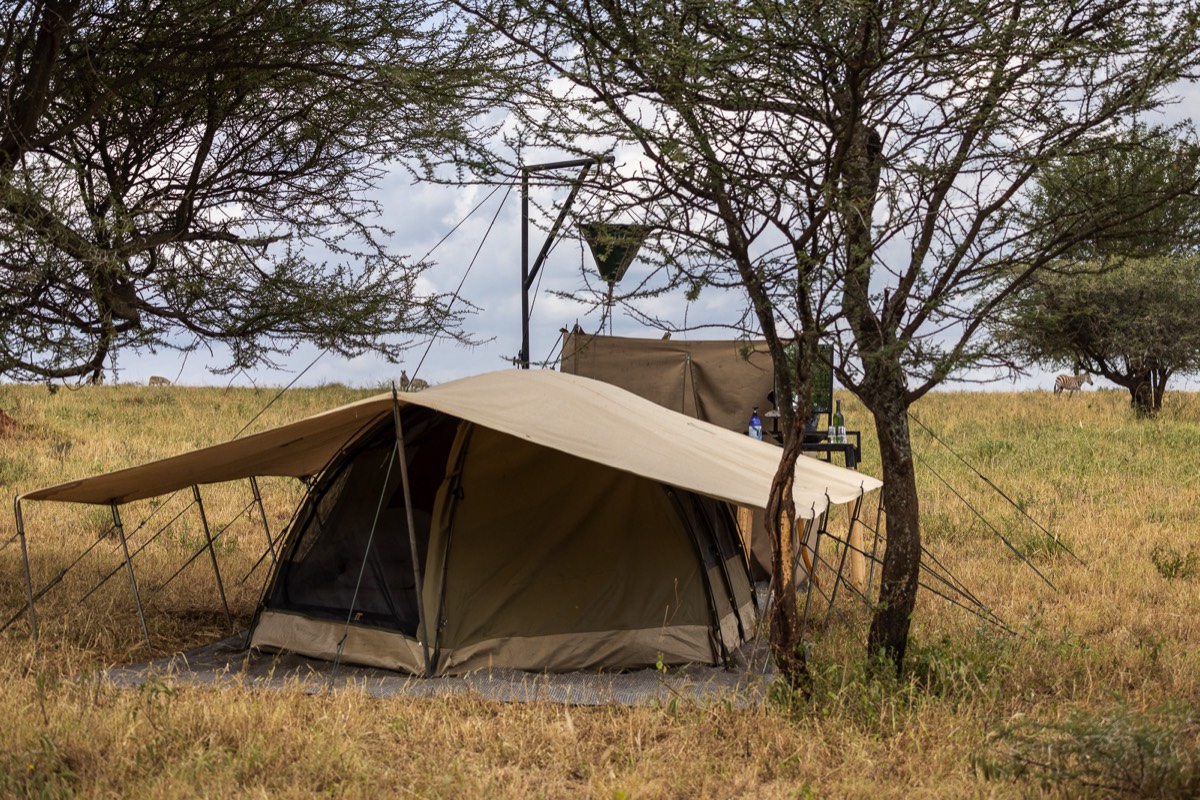
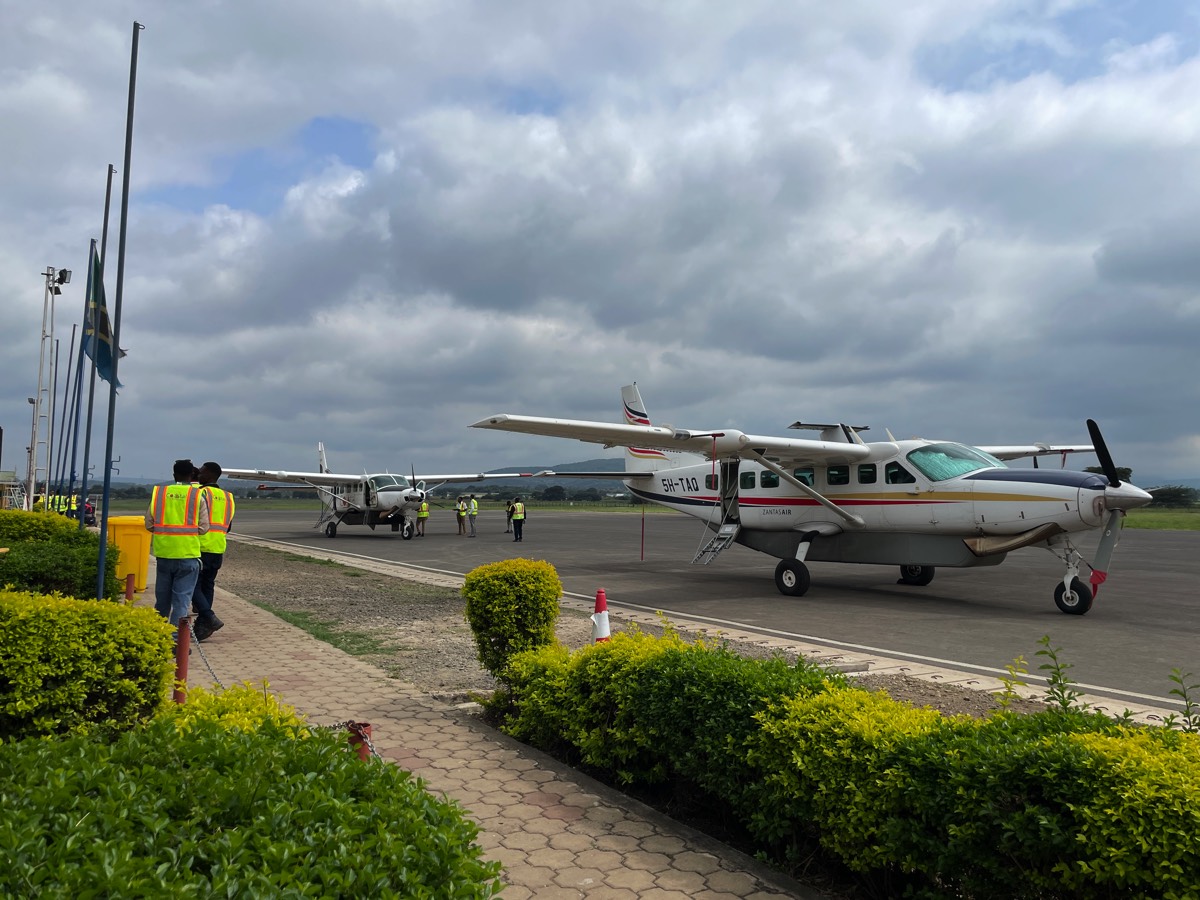
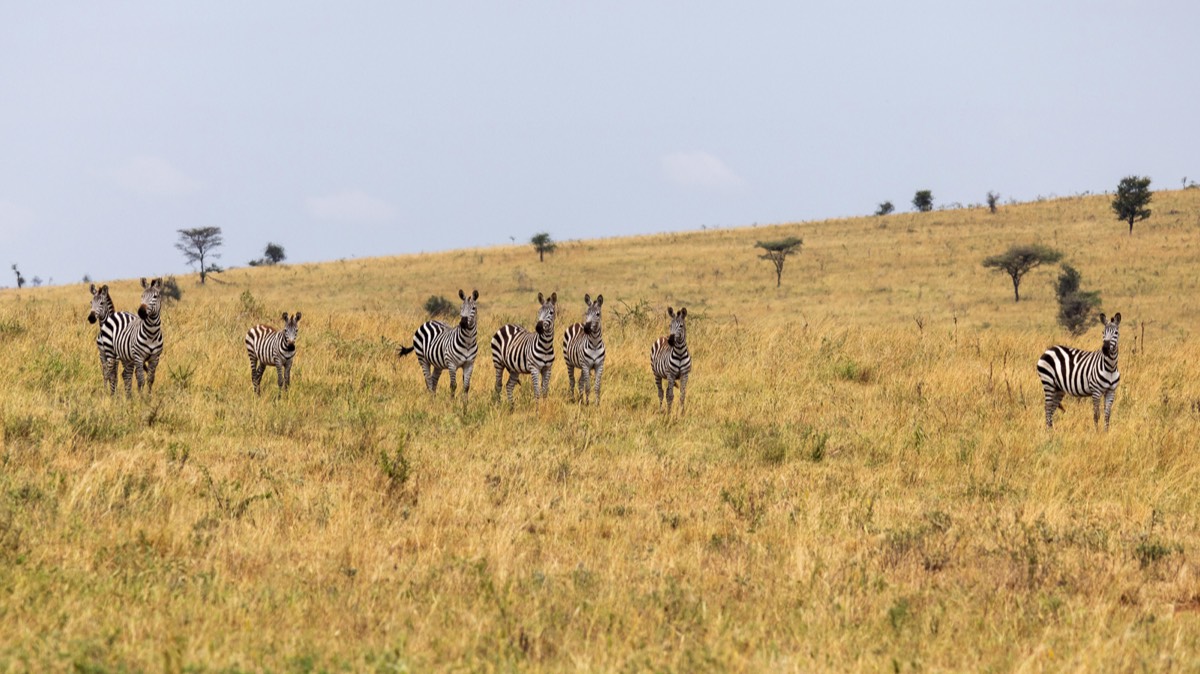
We flew from Arusha airport to Seronera airstrip in the central Serengeti, and there we were met by our guide John who drove us northwest to our first campsite. We had a very comfy airbed and a powerful torch to scare away any animals on our nightly walks to use the toilet. You might be able to see the zebra on the hill behind the tent? They were very talkative first thing in the morning! We also heard lions on our first night, and had to tell ourselves that sound travels far here and the lions were (probably) far away!
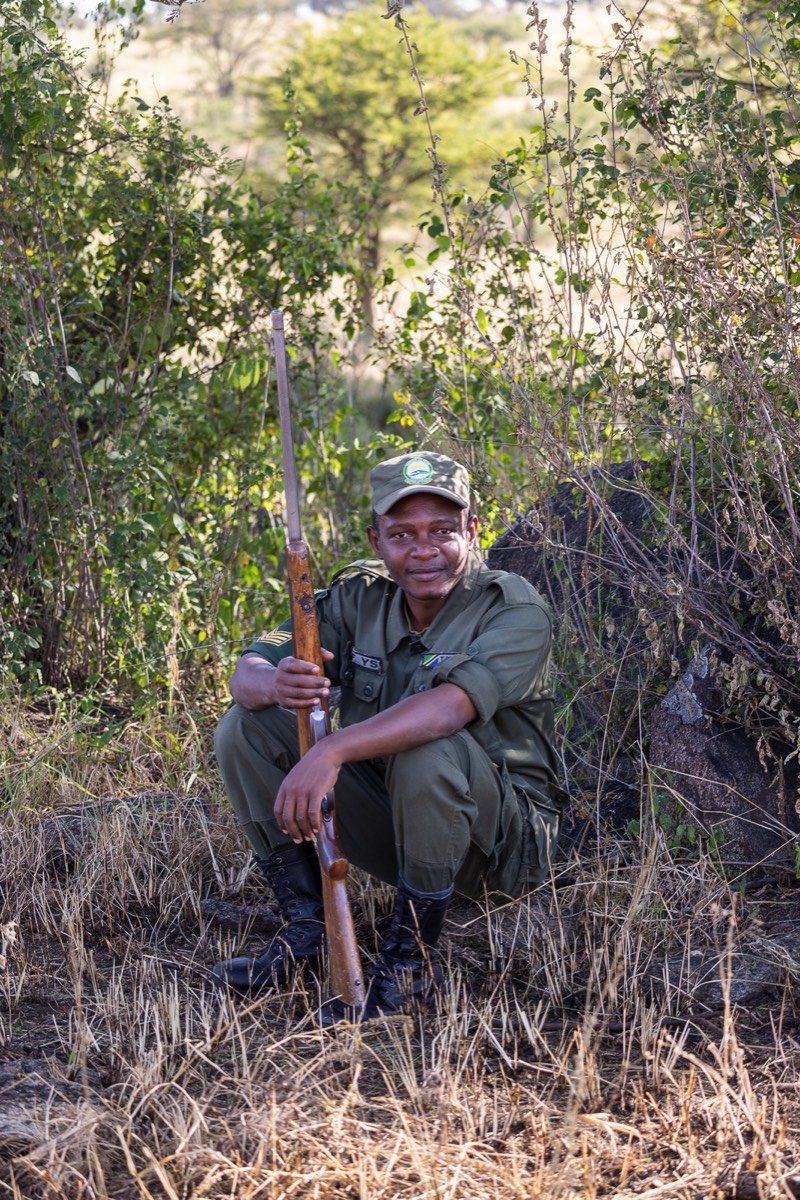
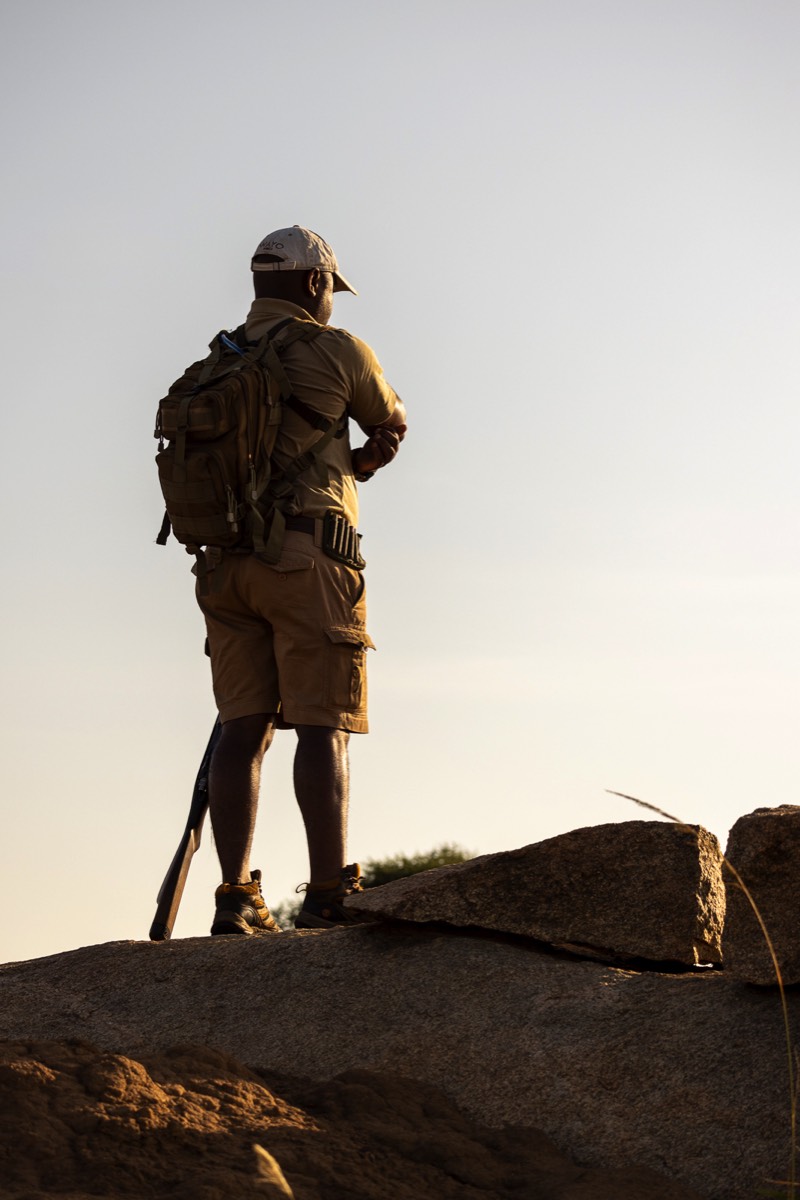
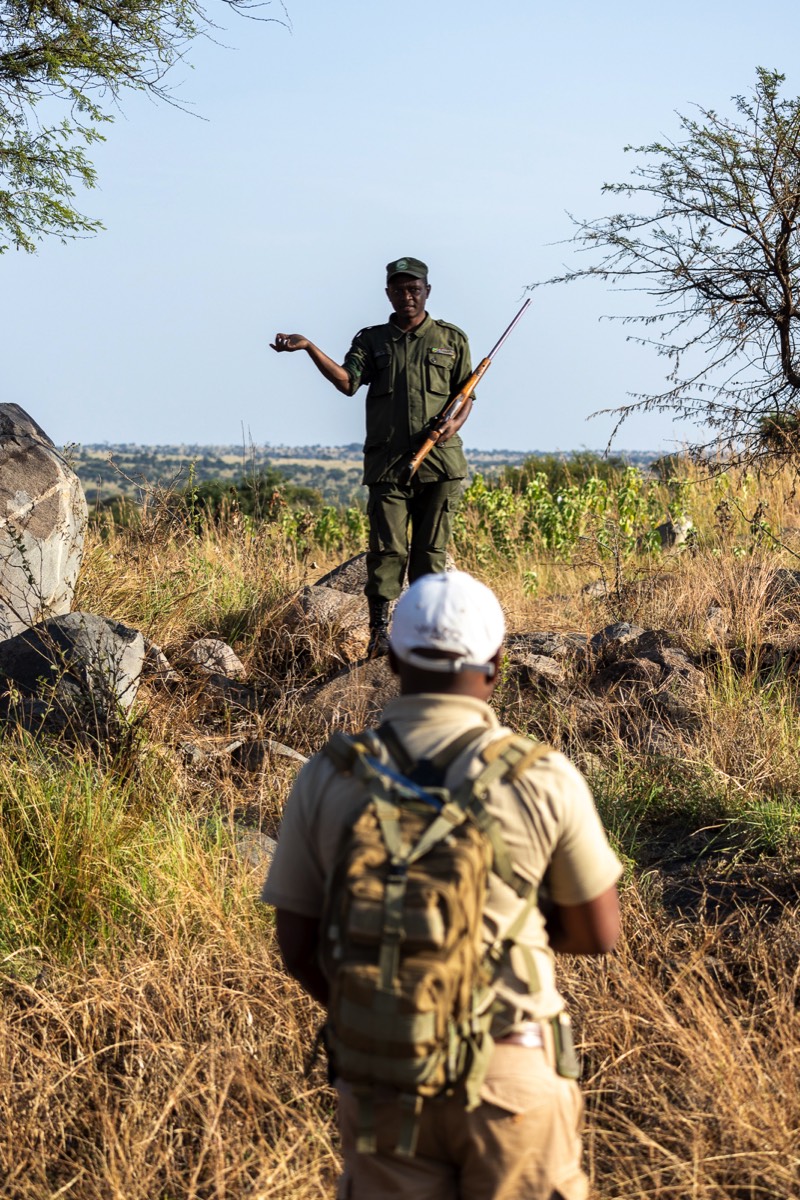
The protocol for a walking safari is designed for your safety. You walk in a single file with no chatting and follow the guide's hand signals. The main guide walks ahead of the file with his rifle in hand. Then there was Lawrence and myself, followed by the assistant guide with binoculars. And after him was the Park Ranger with his rifle in hand. It is compulsory to have a Park Ranger so that the group is not mistaken for poachers and shot! We would stop whenever the guide saw something of interest, or to simply rest briefly under the shade of a tree. The morning walks lasted just over four hours, arriving back at camp for lunch. Then after a brief rest, we were out again for a couple of hours before dinner. The camp staff would have hot water ready for us so we could have a bucket shower before eating. Food was plentiful and delicious. And by 9 pm were were asleep! After two nights in one site, everything was packed up and moved to another site for two days, and our long walk took us to the new location.
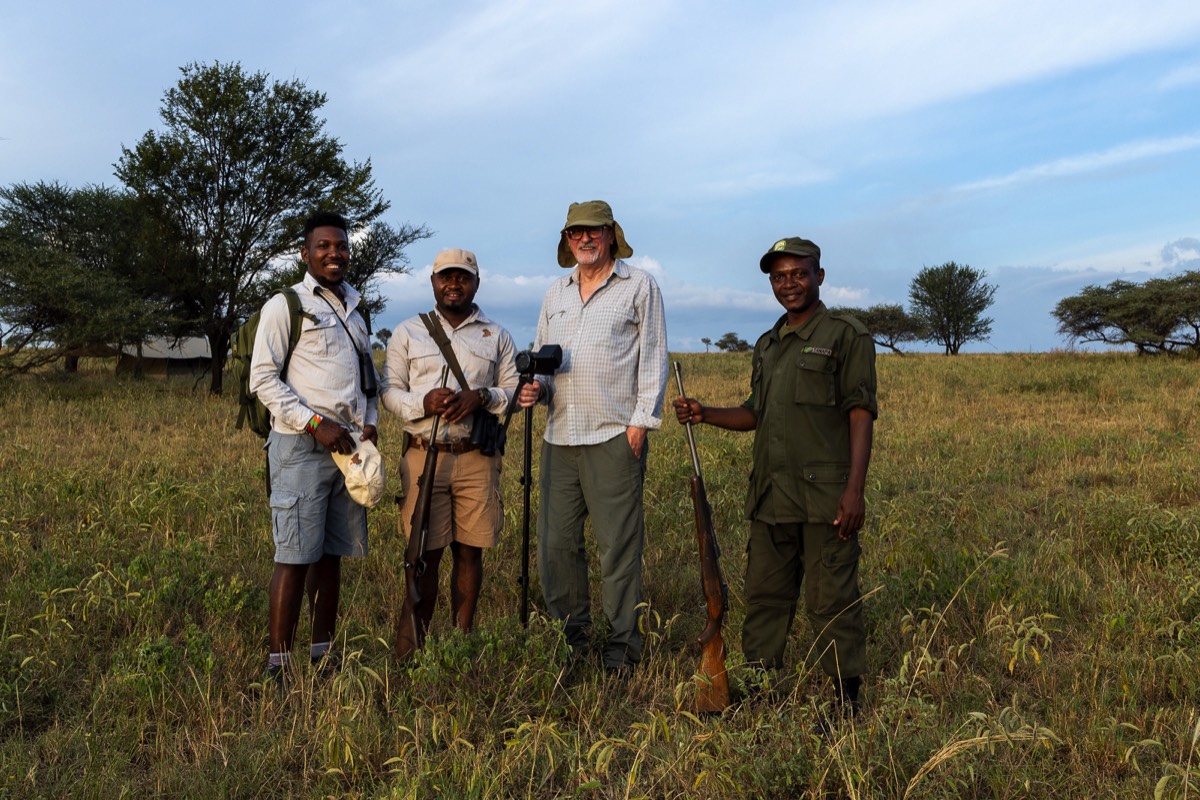
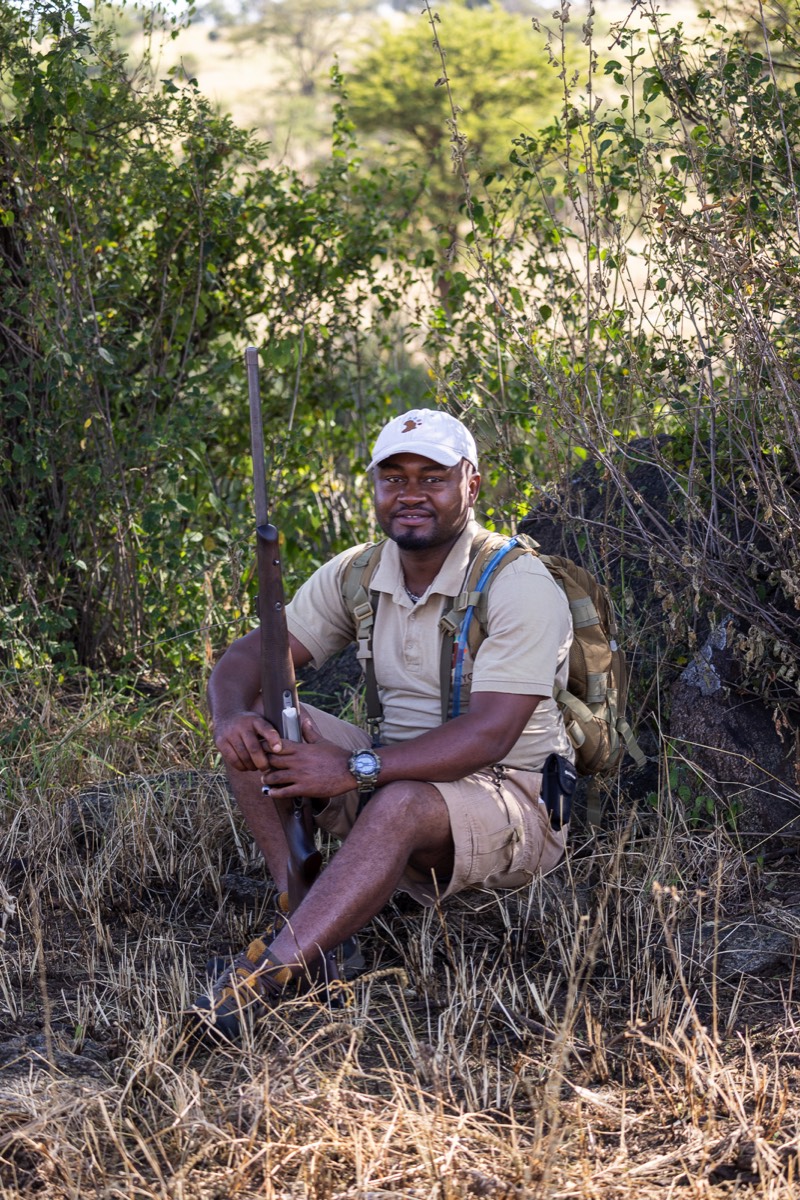
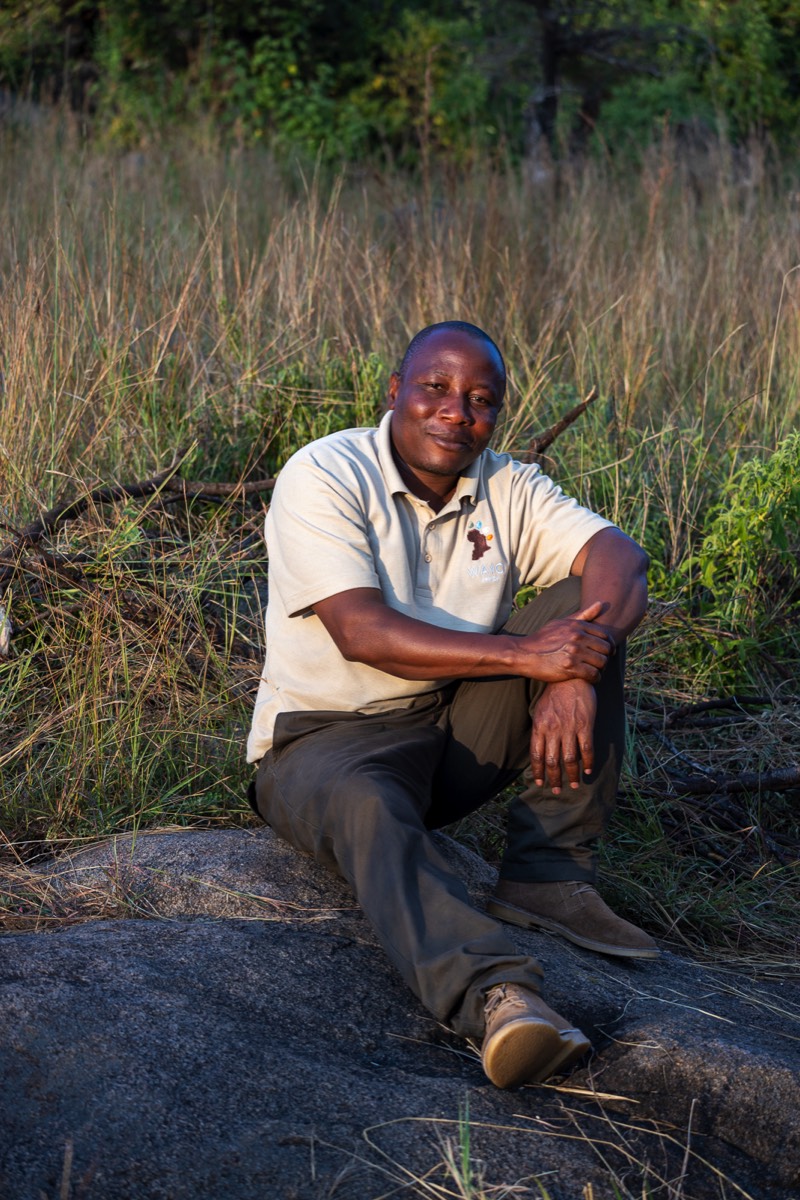
This photo shows Zakhi (assistant guide), John (chief guide), Lawrence, and Saif (Park Ranger).
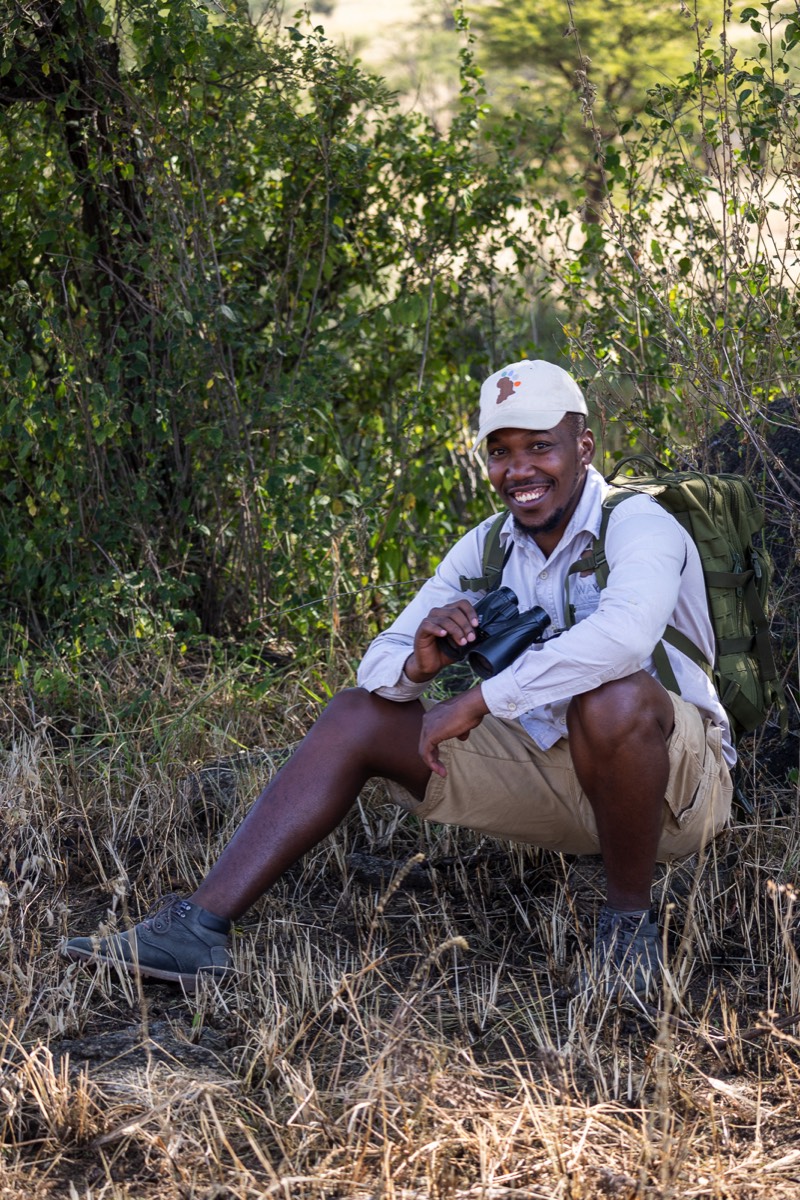
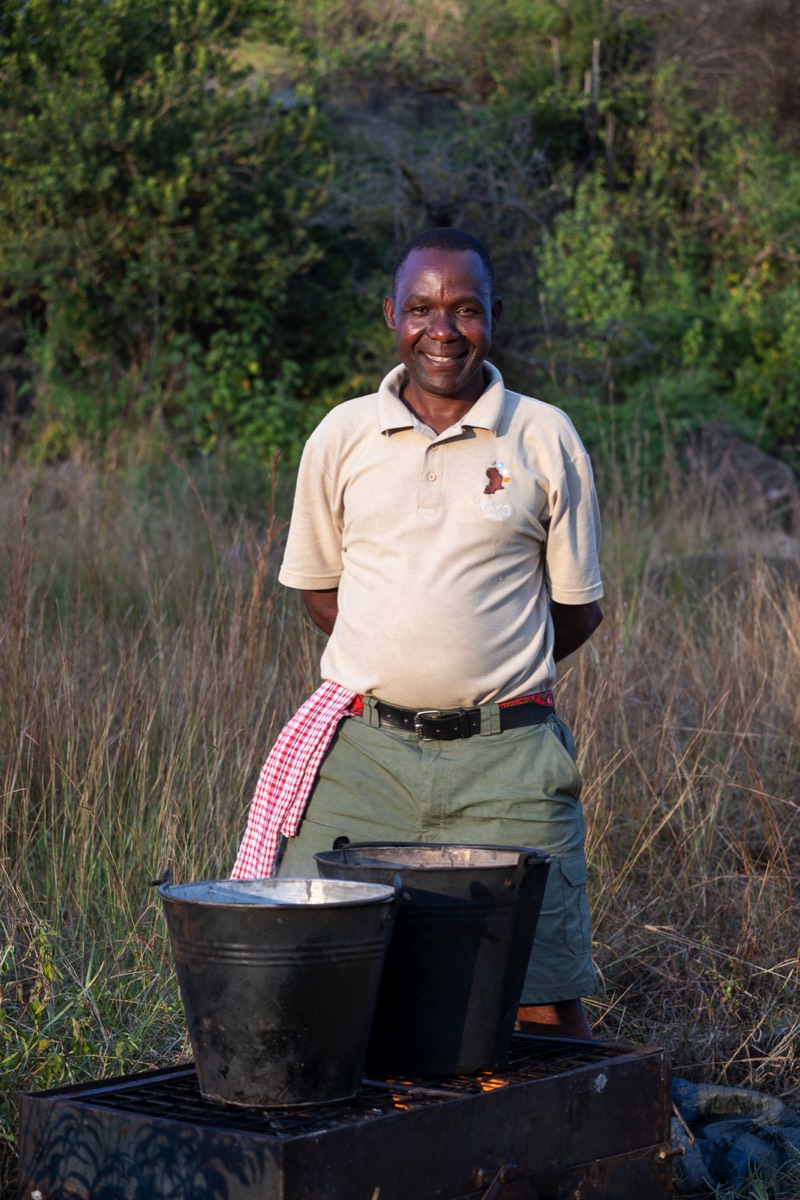
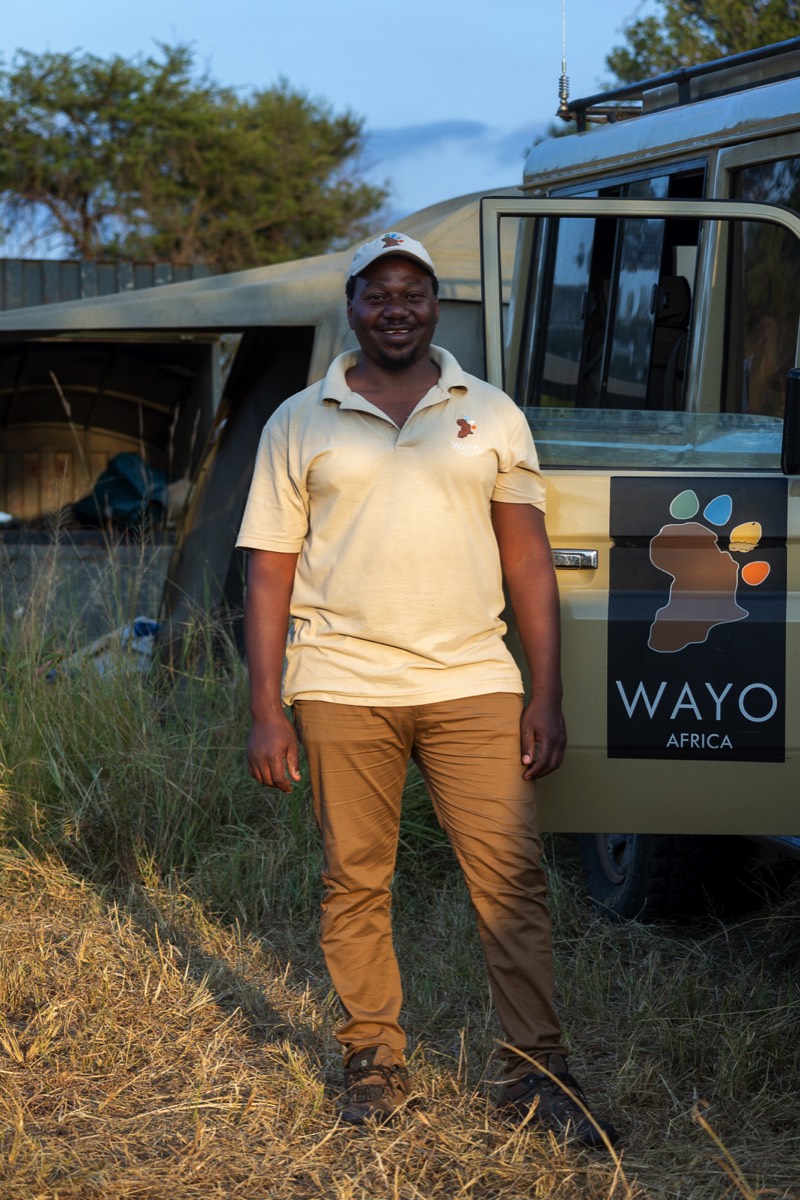
These guys were so photogenic that I had to take the opportunity to get some photos.
And then we have Stephen the cook, and Hippo and William the camp staff. Although this job took them away from their families for months at a time, they all loved living in the bush.
A walking safari gives you a quite different experience to being in a safari vehicle. The animals are not used to humans so they tend to run away very quickly. But you notice the sheer number of different bird songs and the noise of animals talking to each other across vast distances. You also notice that the grasslands aren't simply grass! You have to watch were you are walking to avoid slipping on all the broken rocks, and of course you try and avoid walking into the piles of wet dung everywhere. Eventually you learn how to recognise the source of the dung and you look out for footprints in the softer animal trails. Our guide preferred that we didn't walk in the paths used by the animals, so we worked our way through the long and sticky grass.
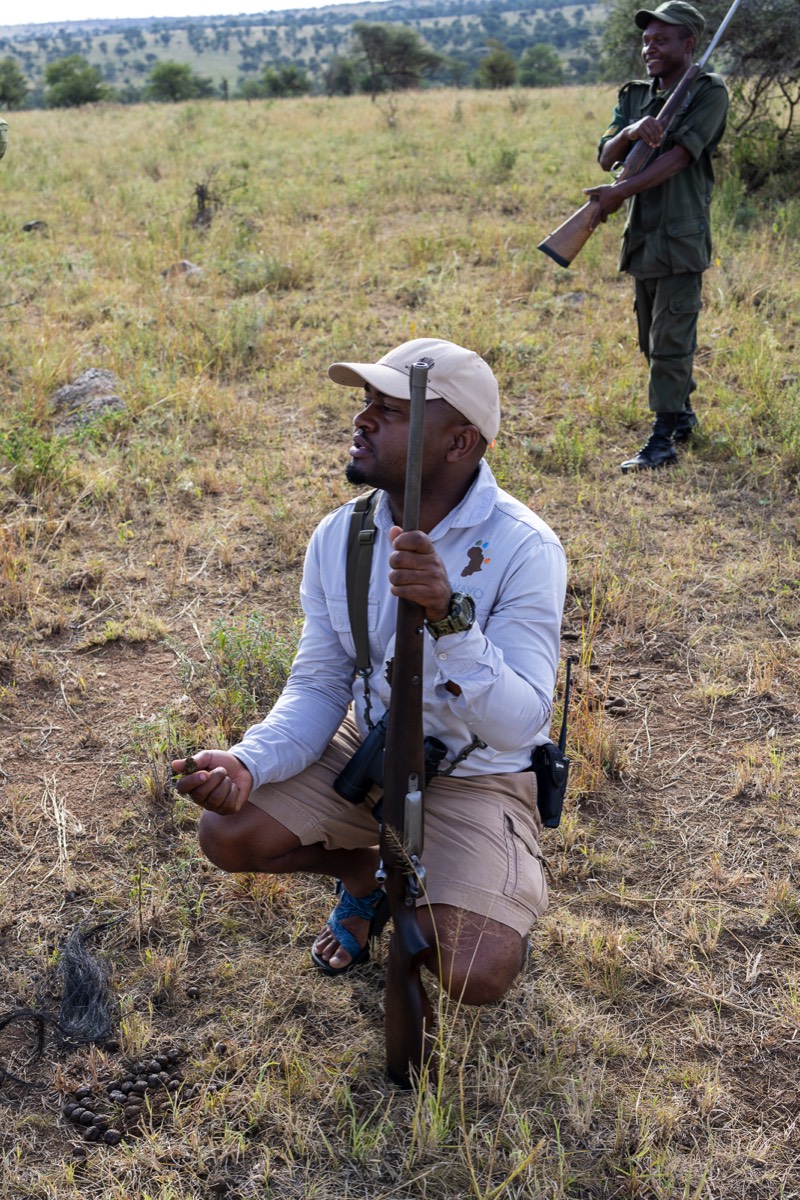
Here we are being introduced to giraffe dung which is small and hard. Drinking is a dangerous time for giraffes as their low necks by the water's edge are vulnerable to attack by lions. So they get most of their water from their food and conserve as much as possible. In contrast, zebra don't digest their food very well and produce rather sloppy dung piles. The dung of a hyena is easy to spot as it is white due to the consumption of bones by these scavengers. And of course elephant dung is easily recognisable by its huge size! Now the tiny antelope known as a dikdik returns to poop in the same place in order to make his pile of dung seem that it comes from a larger animal! Fascinating stuff!
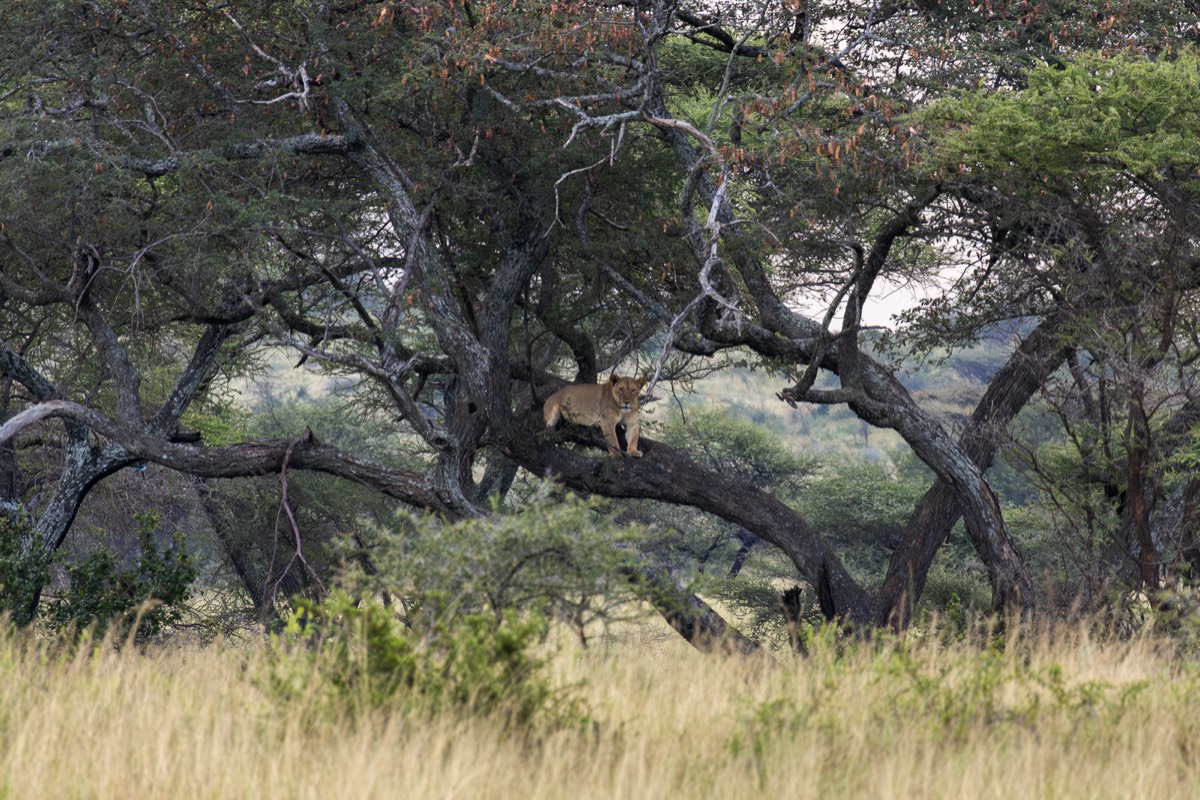
On our first afternoon walk, Zakhi spotted a lion in a tree in the far distance. Much to our surprise, John said we should try and get closer to the lion. This involved walking across a stream, so the guides moved some rocks into place so we could get across. By this time the lion had moved down from the tree, but we still waited a while in case she was not alone. It was a lovely walk back to the camp in the golden light of the evening, and having seen a lion in a tree!
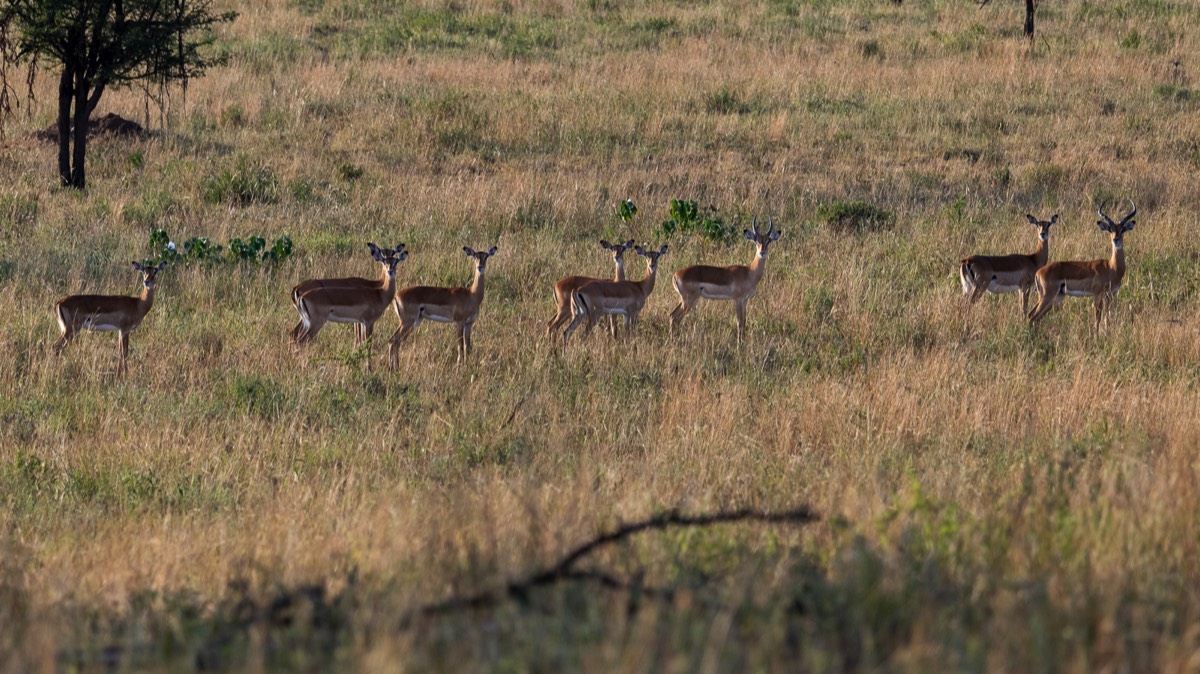
Here you can see how, once detected by animals, they all stop and stare at you before running away. In our safety briefing we were told to stop and not run away if we perceived a dangerous animal ahead.
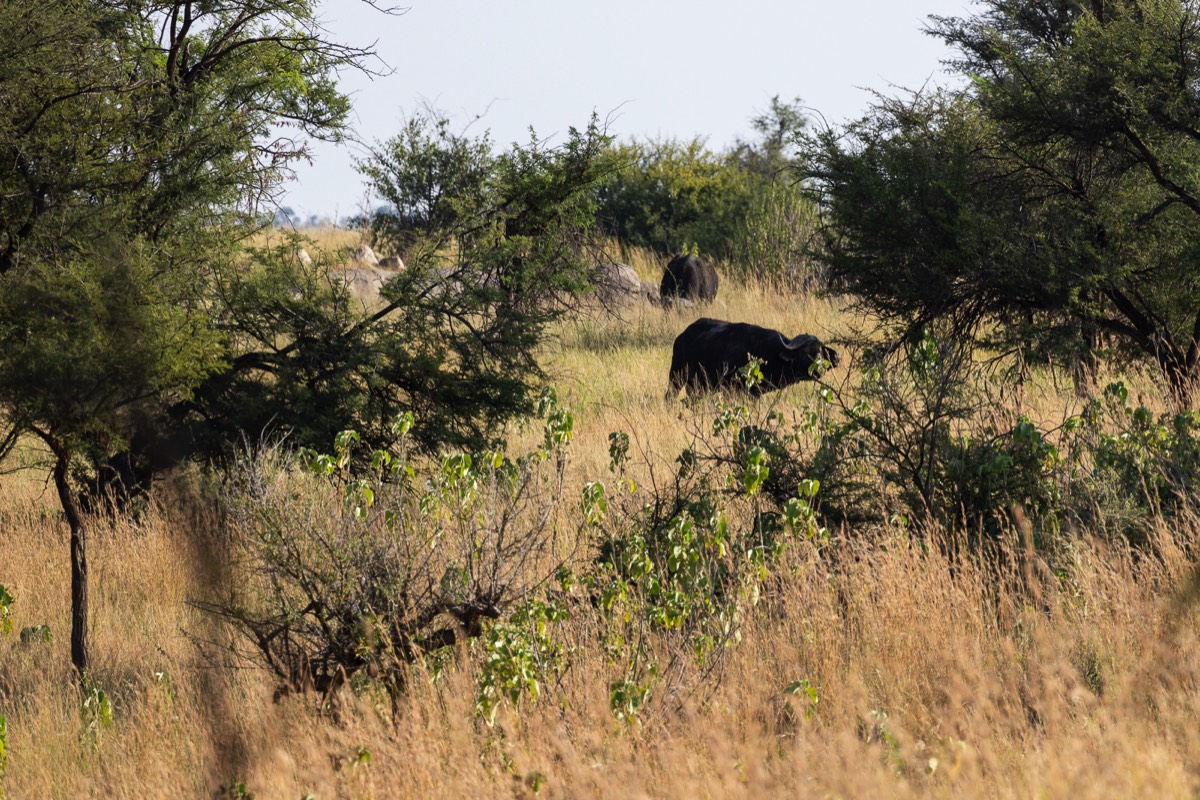
On the day of our walk to the second campsite, we had two occasions to put our safety training into play. We found our route over a hill was occupied by two lone old buffalos and we were signalled to stop and get low while the guides investigated the situation.
When old, buffalo detach themselves from the herd. If they notice something unusual, they panic as they do not have members of the herd for protection. A panicking buffalo is the most dangerous of the Serengeti wildlife as they charge very quickly and have lethal horns. Well, it was decided that we were safe for the moment as they hadn't detected us. Buffalo have poor eyesight, and with the sun behind us, we would have been difficult to see. Buffalo have a better sense of smell, but we were downwind of them, so that also helped us. The Park Ranger showed me his tools of defence; a whistle to scare the buffalo, and a sling shot with a stone in his pocket! The rifle was always the last resort. In the end it was decided that we would have to make a detour, but since we had no idea where we were going, the extra bit of walking made little difference. But we were learning about animal behaviour and it was stimulating all the senses!
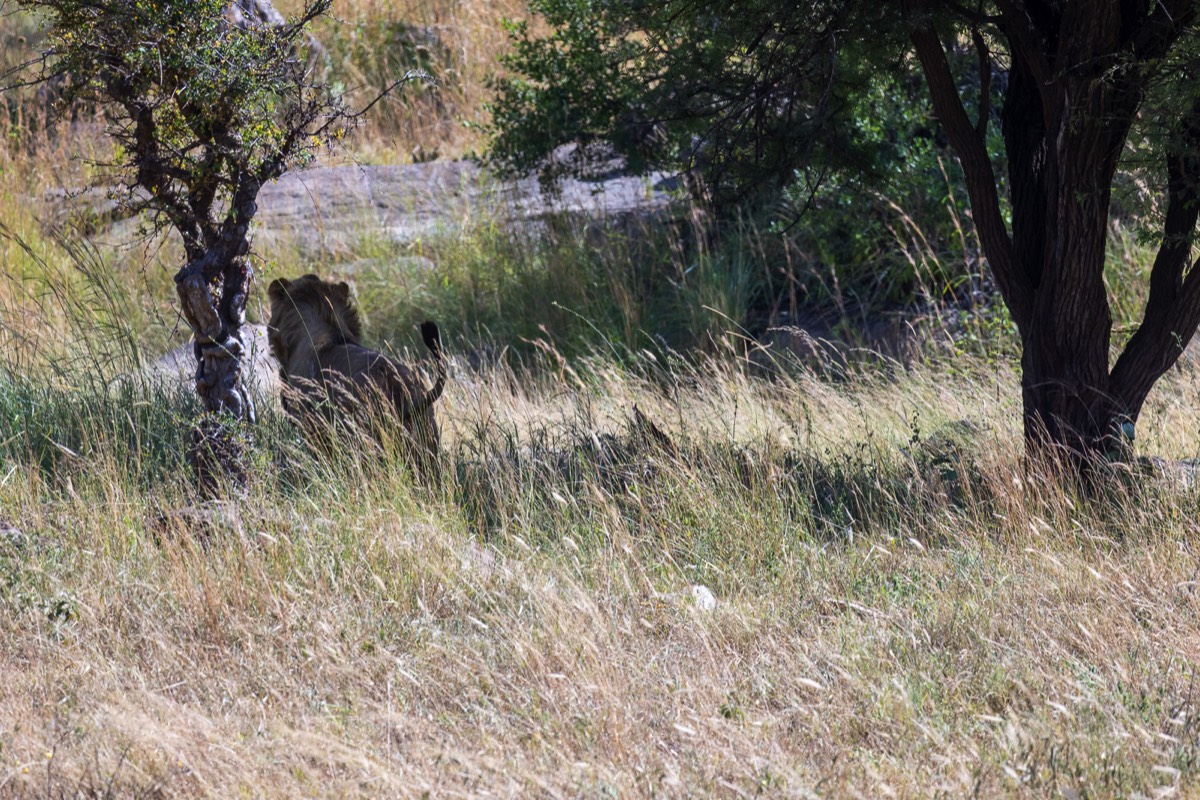
And then something happened which shocked us to our core… we had been walking for about four hours by now and suddenly heard the roar of lions! And these were not miles away, they were about six feet away!!! Three adult lions had been sleeping under a bush when we walked by and presumably woke them up. They got up, roared, and two of them ran away. The third lion stared and roared a little longer and our guide decided to bark at it and shoo it away. Thankfully that worked! Naturally I have no photo of the situation, and only just managed a photo of one of the first lions to run away. Our guide said the situation met the criteria for shooting the lion, but that really was the last resort and we were so glad it hadn't come to that. Once it was deemed safe, we all looked at each other in disbelief that none of us had seen these three lions given that we were so close to them.
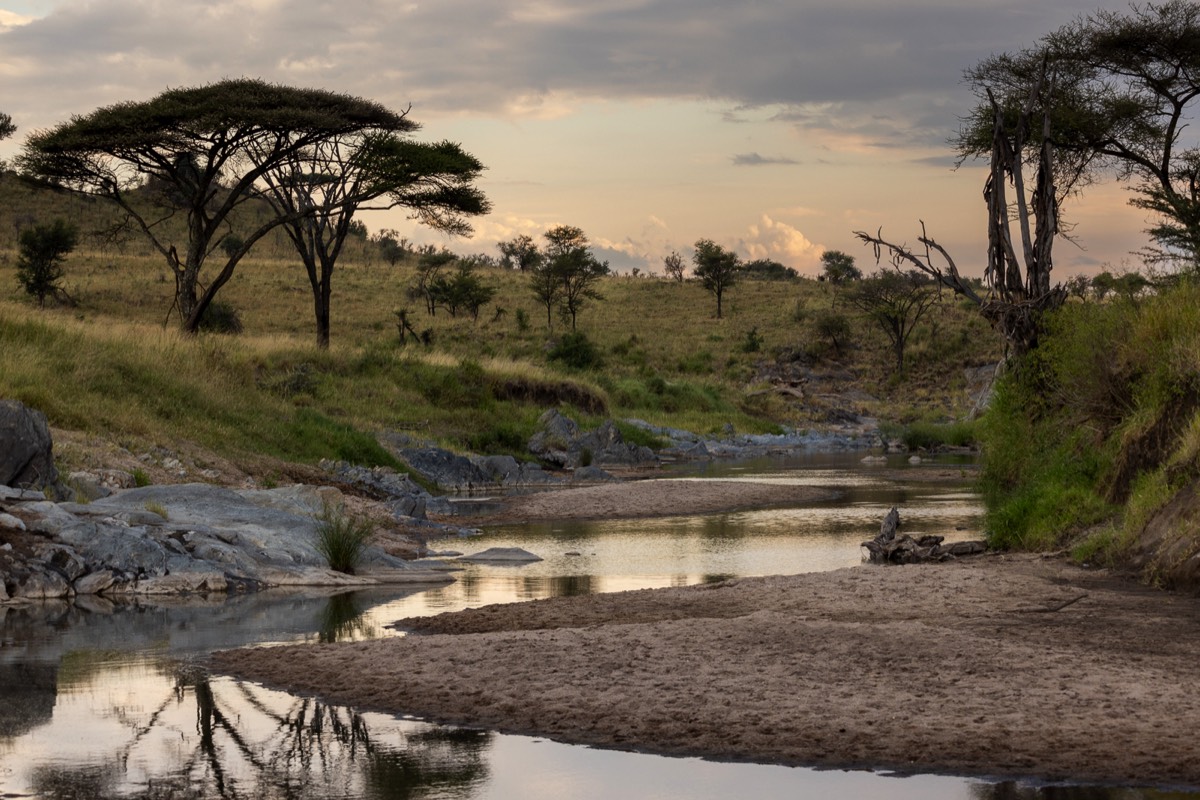
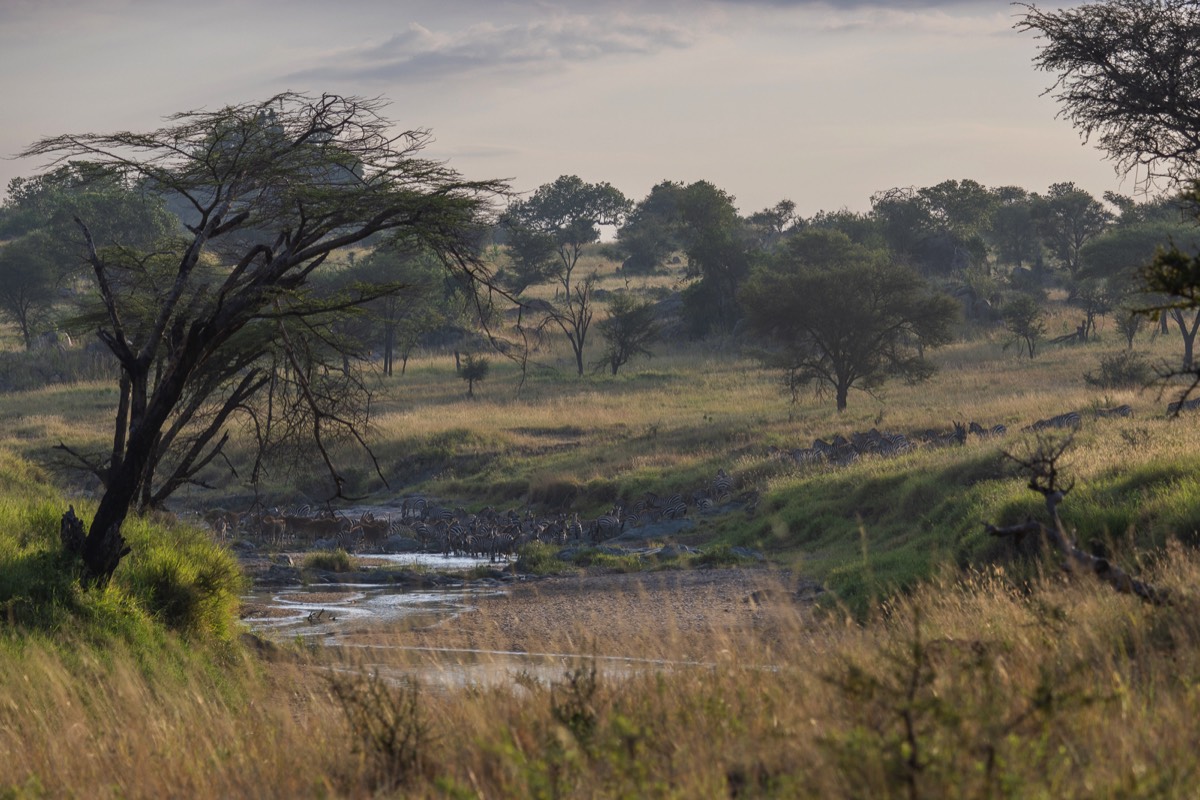
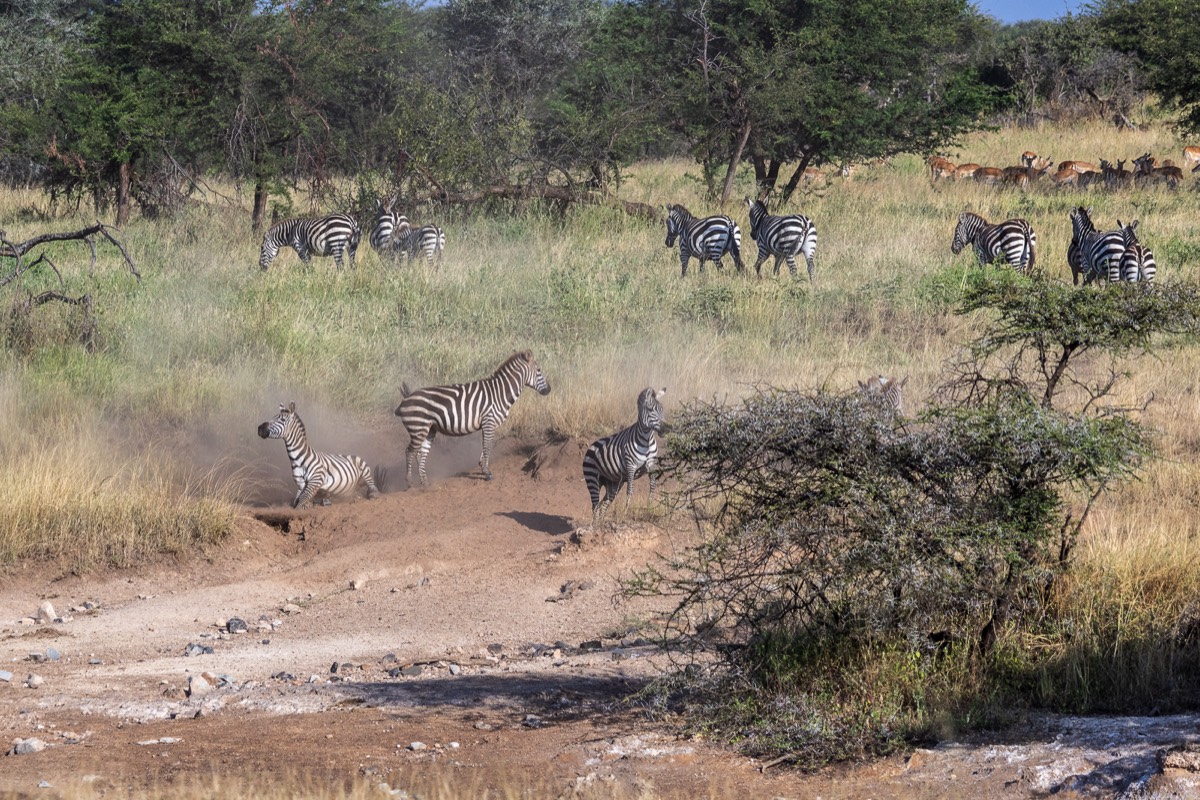
Now in our new location we could get close to a small stream where animals were coming down for their morning drink. And after drinking, then a dust bath was in order.
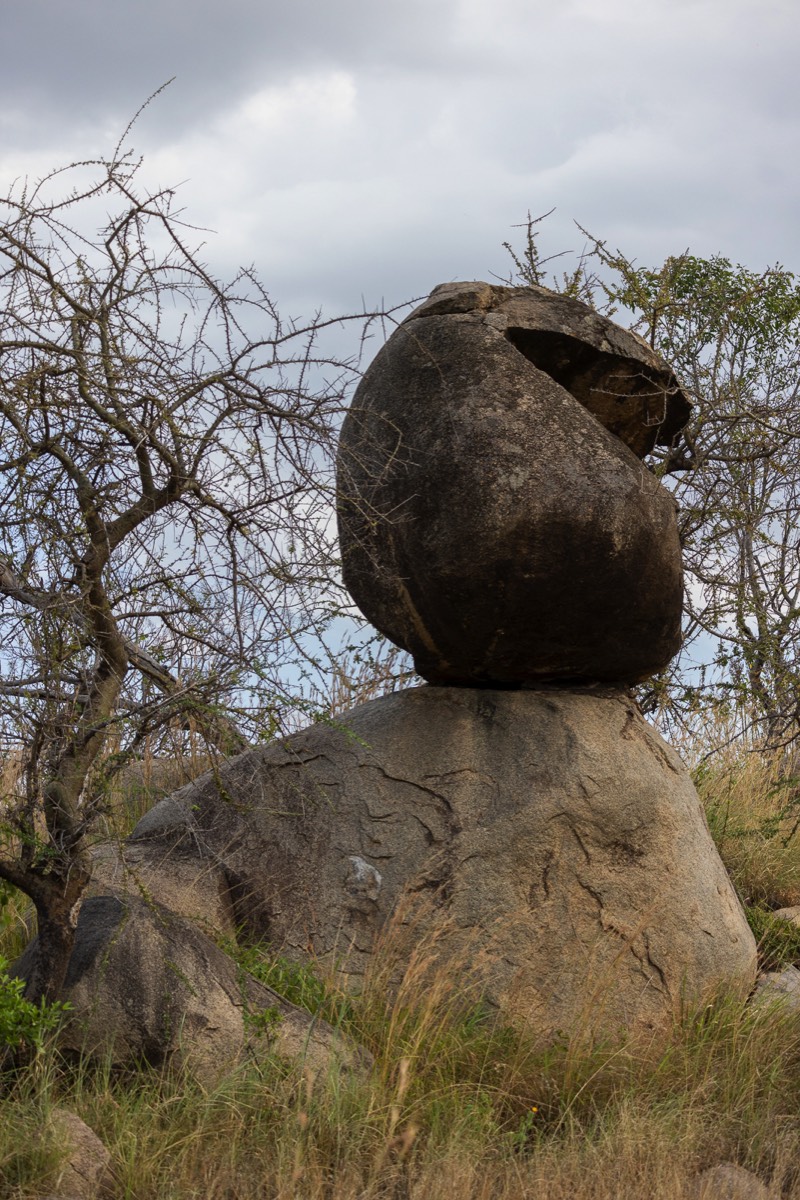
The landscape in this location was quite different from the first campsite as we were nestled below a hill dotted with smooth rock boulders known as kopi. The unique aspect of a walking safari is that you are alone in a wilderness. If the five of you stop and stay quiet, you have a moment to experience the world without human noise and distraction. So this is what we did; we sat separately for ten minutes to absorb the sounds and movements around us. I looked up to find a dikdik staring at me before it hurriedly ran away. And Lawrence said the rock he was on was squeaking from something inside (probably a rather scared mongoose).
On our last morning we were driven to the Seronera airstrip to be collected by a guide from the Dunia Camp. But on the way we had a game drive and saw three interesting sights. The first was the sight of hundreds of zebra heading off in the same direction. I think these were the tail end of the Great Migration as the zebras tend to follow the wildebeest and we had learnt that the wildebeest had already moved on before we arrived too late to see them.
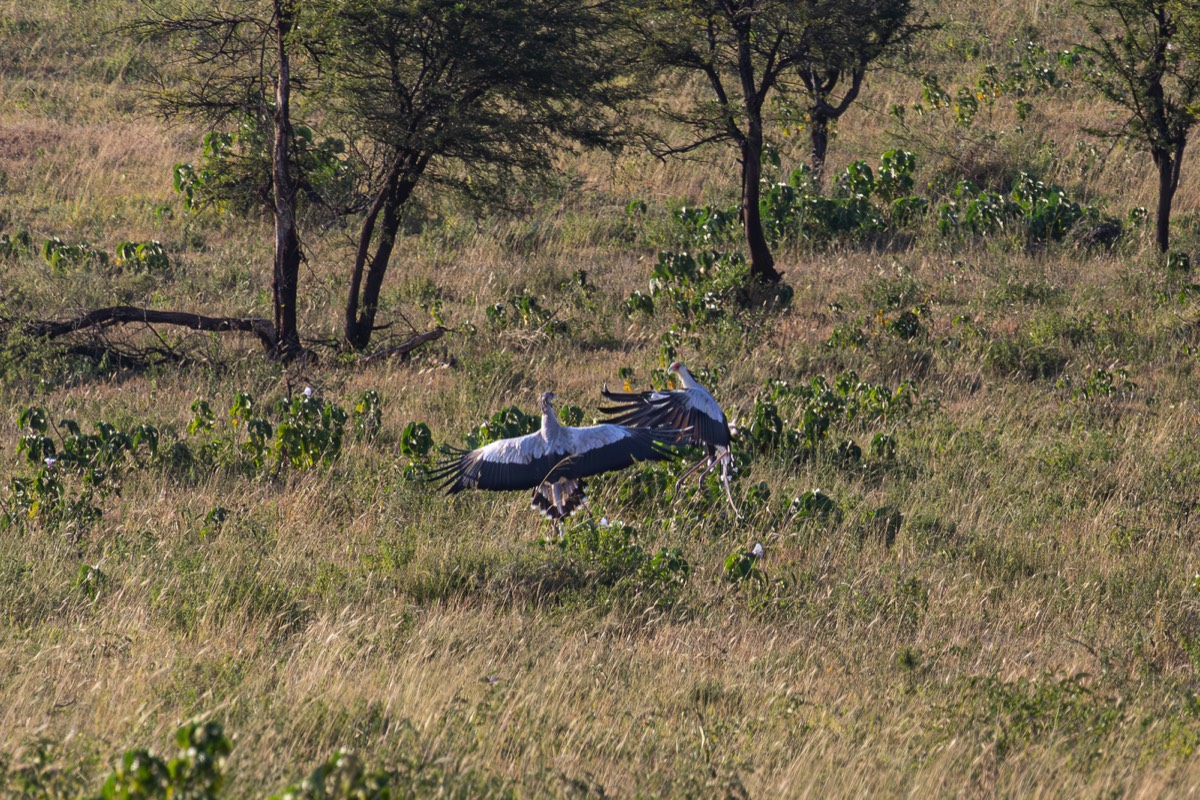
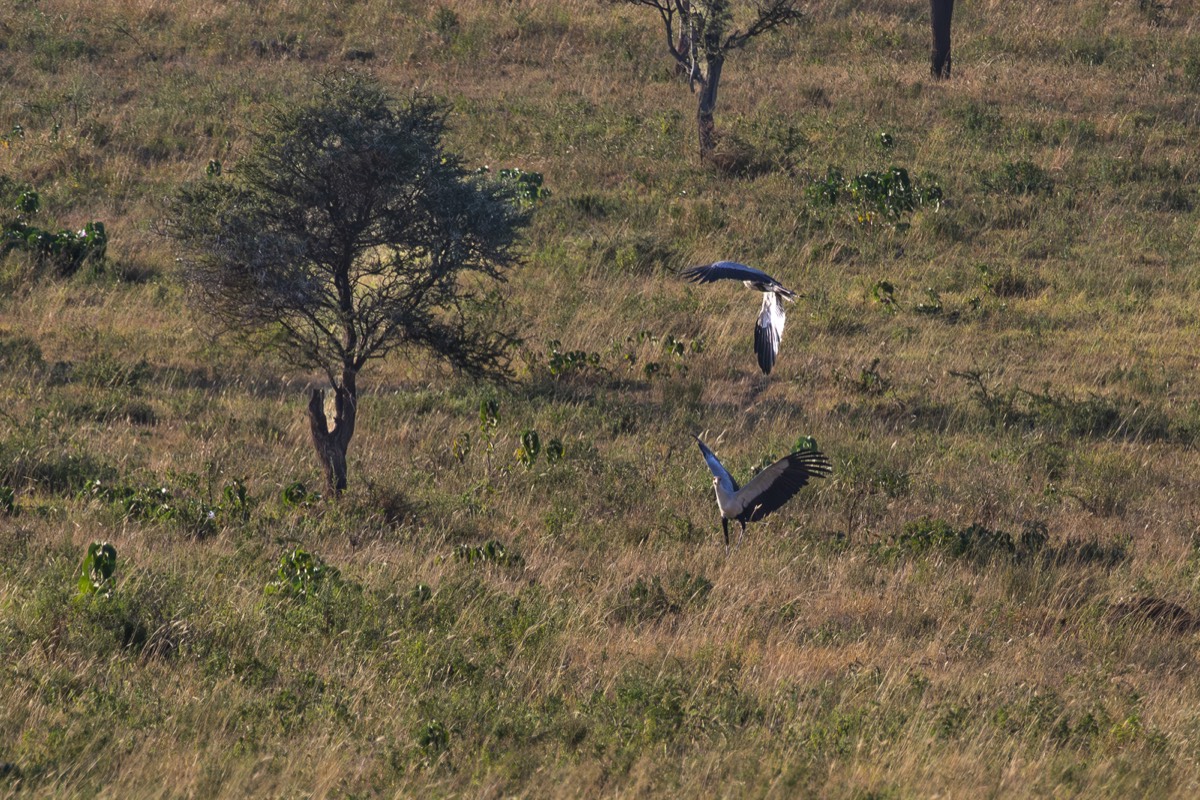
The second sight was a pair of secretary birds doing an arial courtship dance, sadly a bit too far away for my camera but interesting to watch none the less.
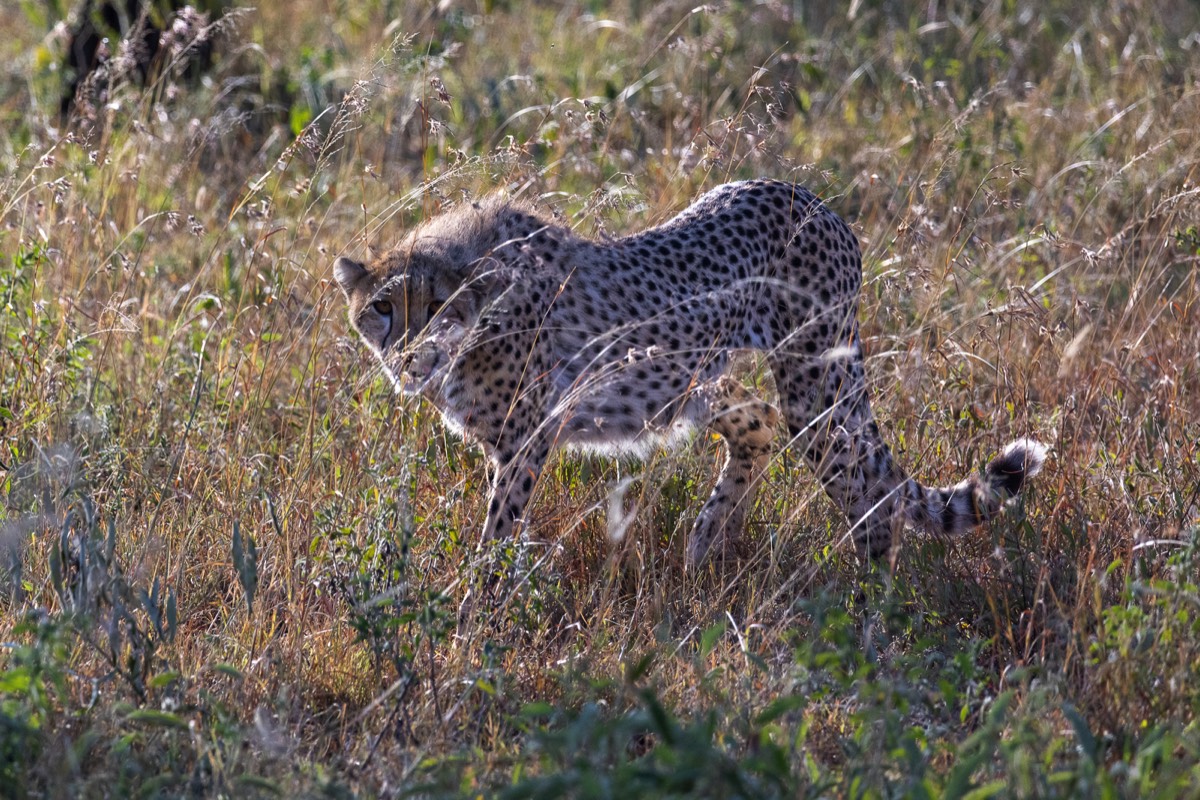
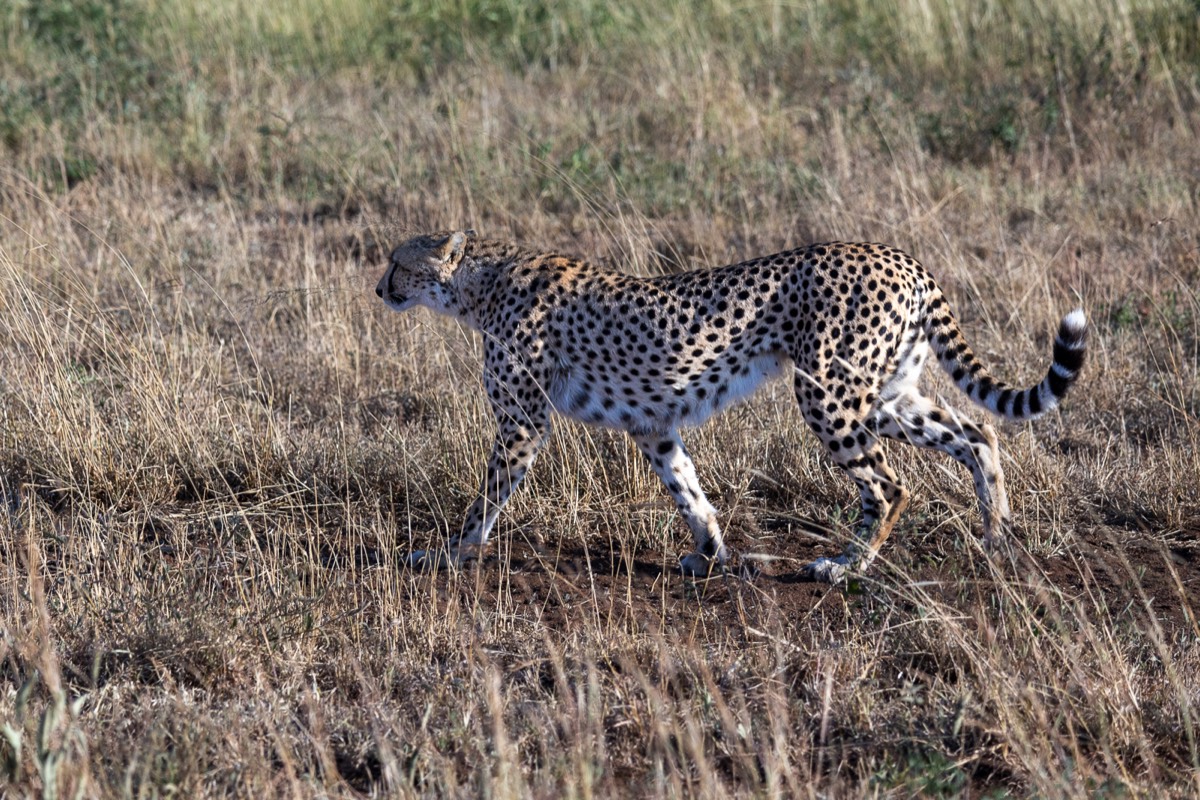
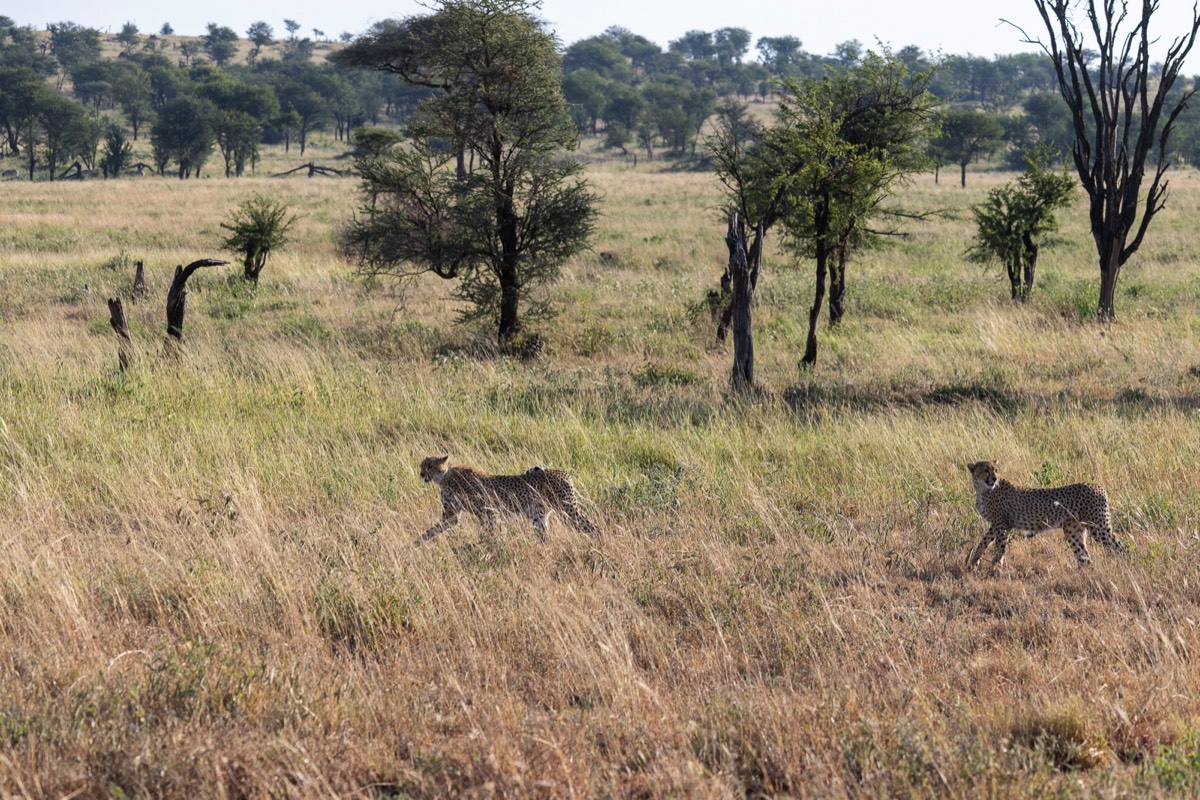
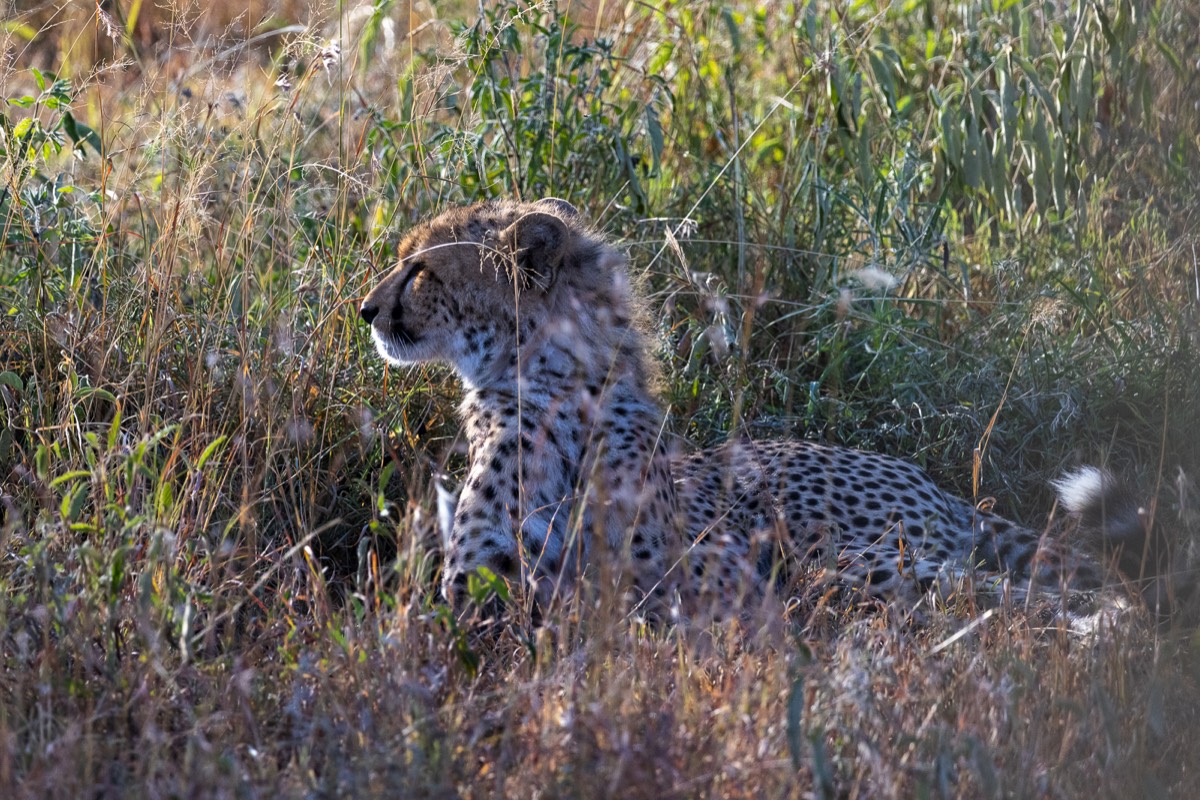
And our third treat was the sight of a family of cheetahs where one of the youngsters had a failed attempted at chasing some impala.
So would I recommend a walking safari? Absolutely yes, but do it with a company like Wayo who are well trained, professional, and a lovely bunch of guys.