
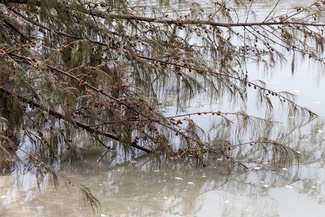
The way the beaches and sky interact provides for plenty of photo opportunities. And beacuse the sea is so shallow, you can get a lovely mirror-like effect. The public beaches along Jalan Air Papan are no well kept and no amenities, so these are favoured by the locals. The recent monsoon had formed a new trench in the sand and left fallen casuarina trees with their heads in the sand.


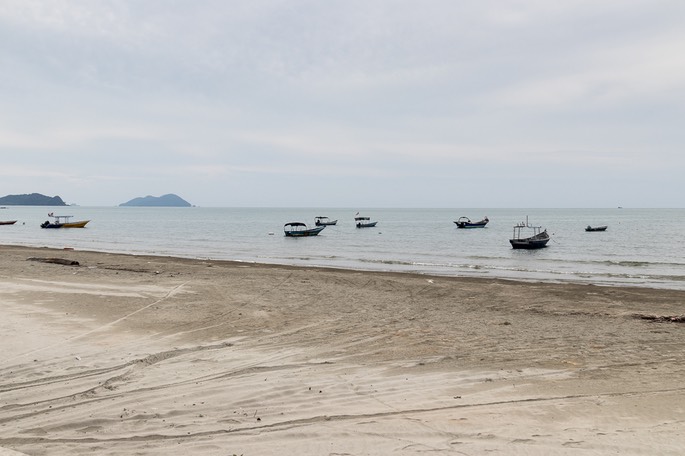
The beach in front of the Sukalayar Resort is also enjoyed by locals and is a berthing place for local fishing boats.
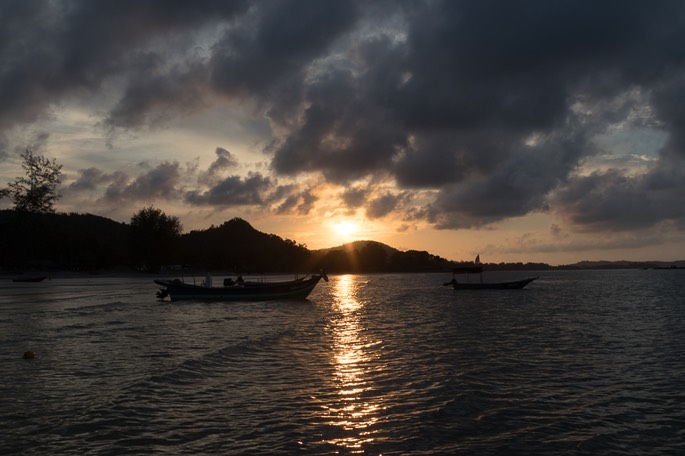
As the sun goes down here, the shoreline lights up, but you have to get in the water to get the best photos!


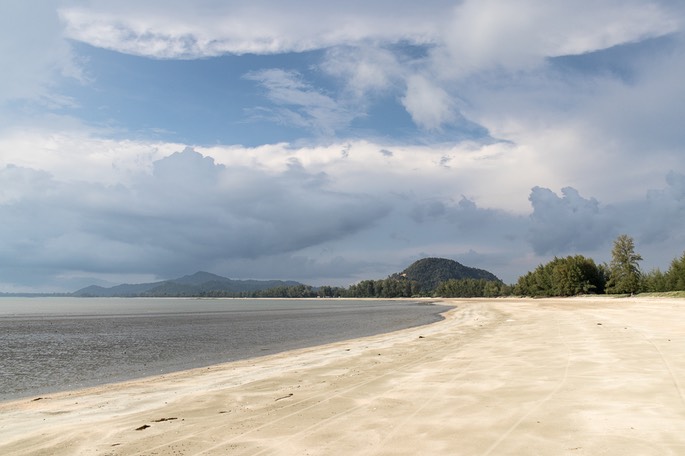
At the beach near the mangrove forests, there was a storm brewing in the distance so the clouds were heavy with anticipation.
There are still fishermen who work this area, setting crabs nets far out in the distance.


At this distance, the sand looks absent of life, but get close up and it is heaving with tiny animals which scuttle away as soon as they hear/sense your presence. You know they were there by what they left behind……..

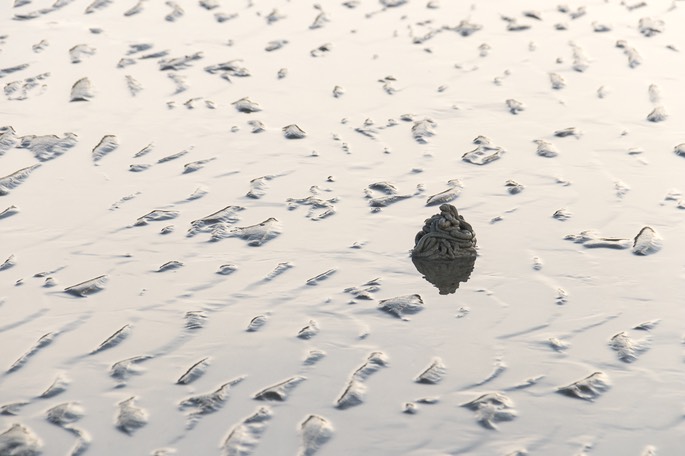


These worm holes above came in large and small forms. Near the mangrove trees were masses of these sand hills, all no more than 2 inches tall.

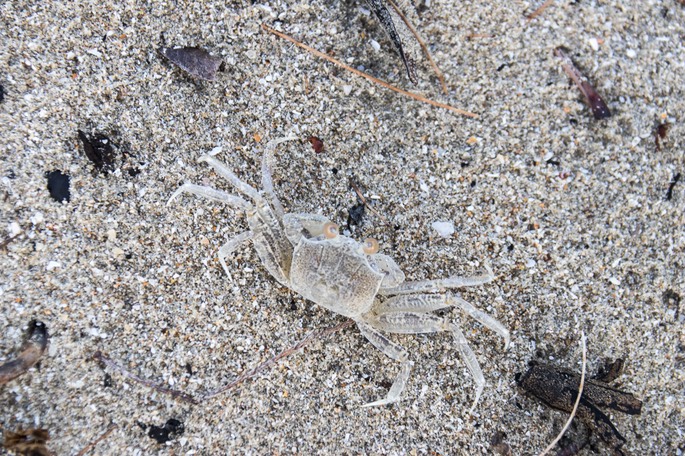
I could not put anything near these items to give you a sense of scale because the animals just disappeared when I tried this. Here is an almost invisible crab, with orange eye stalks. It is about 3 inches wide and moved very very fast indeed.
And here is the shell of a much larger, but dead, Horseshoe crab. The body of this creature was about 12 inches long.

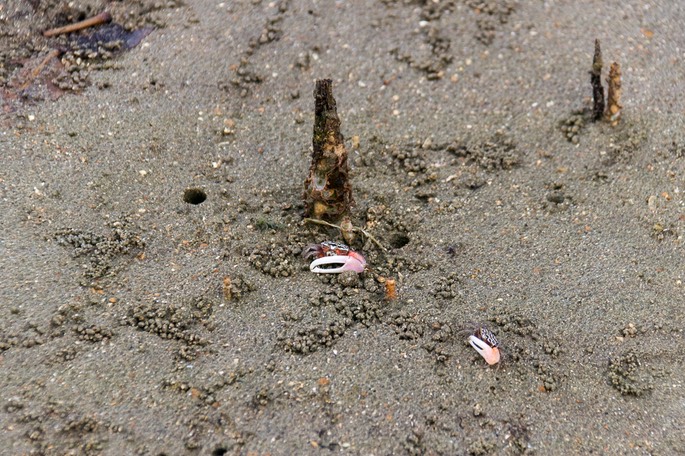
The tiniest crabs, with bodies about 0.5 inches across, and the hardest to photograph were these tiny fiddler crabs. They have one pink outsized claw, much bigger then their white and black body, and they dart down tinto their burrows before you even see them. The trick to getting a photo is to simply stand still for long enough for the crabs to think you have gone away. Then out they come and start waving their large claws at each other.
The coastline at Air Papan has many more accommodation options than Penyabong, but it is also much more commercialised. Here too there are no large hotels, mostly chalets and homestays. It does though look like a seaside resort, with foodstalls, shops selling buckets and spades, a lifeguard station, and toilets/showers. The sand is more golden here and looks less like mud flats.
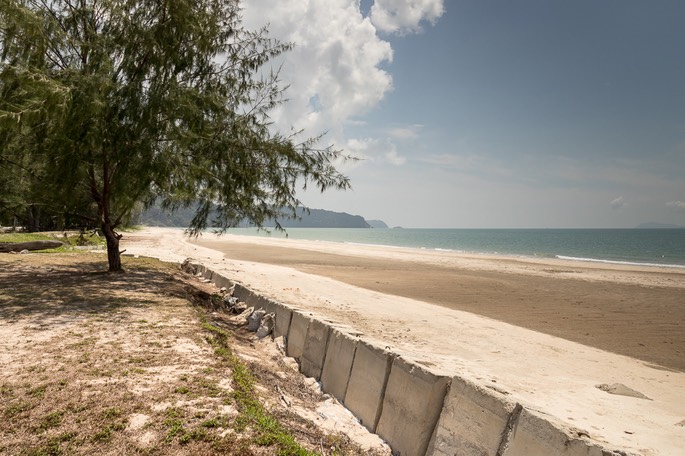
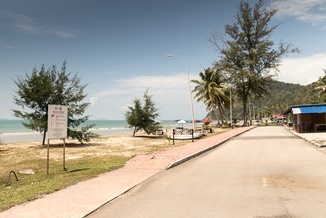
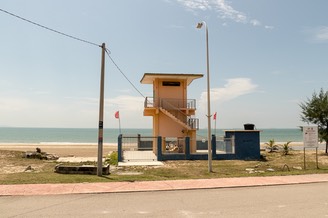
All these beaches have slightly different characters but few have shade for you to sit under. So, get up early for a beach combing walk, avoid the midday sun, then return late afternoon for more beach walking or swimming and finally enjoy watching the sunset before settling down for dinner.
Click here to return to Return to Penyabong.
Click here to return to Travels in Malaysia 2020.
Click here to return to Helen Gray’s homepage.