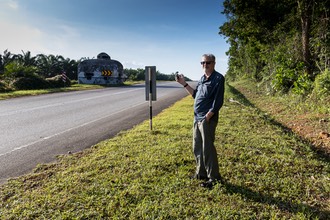
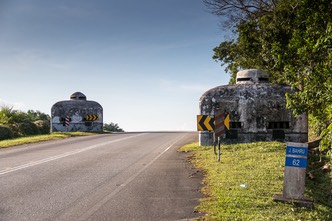
Our first goal today (22nd July 2020) was to meet up with our friends Hanis and Faizal, and their children, at Penyabong for breakfast, as we would be travelling together for the first five days up to Terengganu. So it was an early start and a journey along Route 3 north out of Johor Bahru towards Kota Tinggi; one of my favourite morning drives! North of Kota Tinggi you get to see real countryside, and these old military bunkers by the roadside. They were part of the defenses built by the British in WW2. Below right you can see Lawrence having finished a bit of commentary for our daily vlog. (For those who are interested in such things, all our vlogs were recorded using this tiny Pocket Osmo camera.)
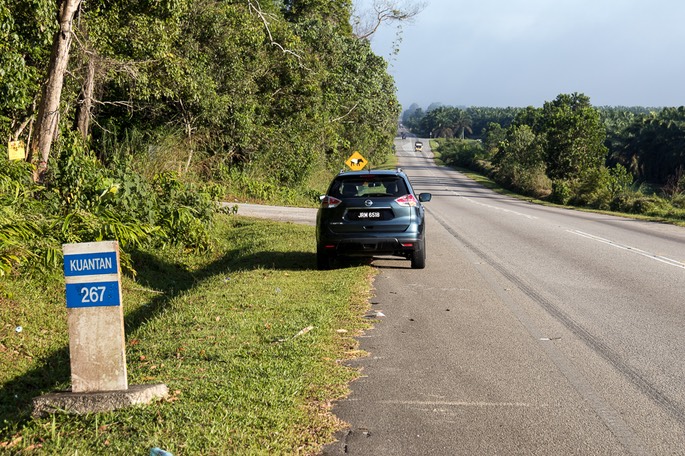
As the road sign says, we still had 267 km to go today, and we had to watch out for tapirs crossing the road, so we couldn’t stop for long.
Just after passing through Mersing, we turned right to join the coastal road and stopped at Dataran Kembara to see the sea. This coastline here is beautiful in the early morning sun.
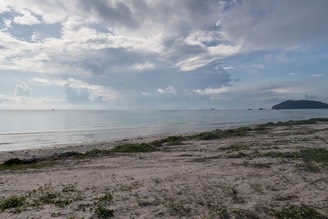
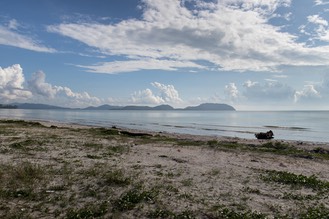
Then it was on to Tanjung Penyabong for a breakfast of roti chanai and kueh bakar with our travelling companions.
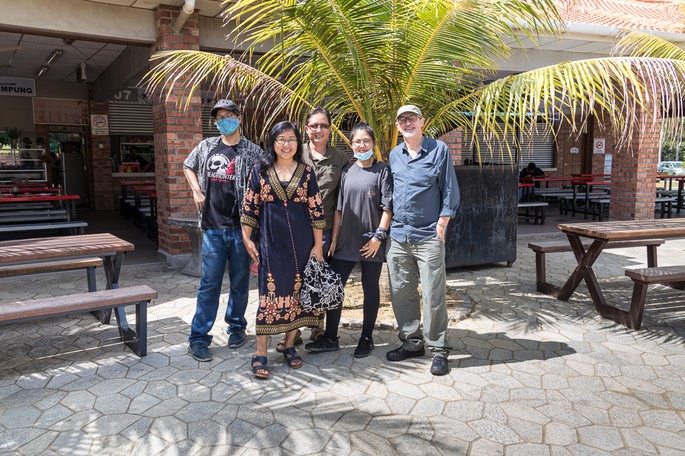
We arrived in Pekan, the Royal City of Pahang, at about 2 pm on a baking hot day, and parked in the shade by the Masjid Sultan Ahmad Shah. Pekan is considered as the cradle of Malay civilisation and was famous for its tin and gold, giving rise to the name of the Golden Chersonese for the Malay Peninsula. The British took over in 1887 and installed a Resident to try and bring order and efficiency to the rule of the Sultan and his chiefs.
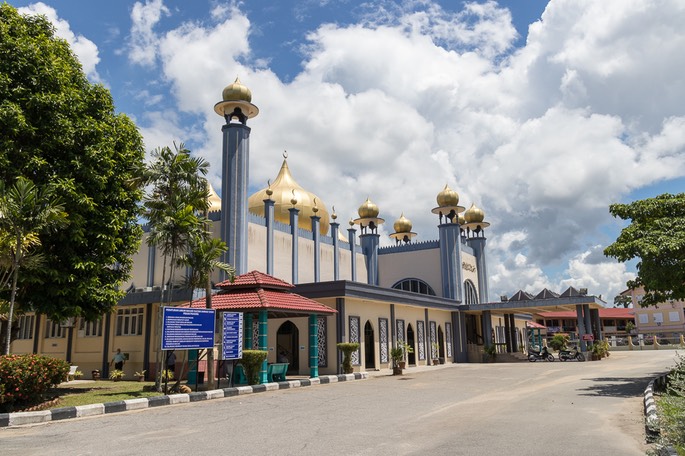
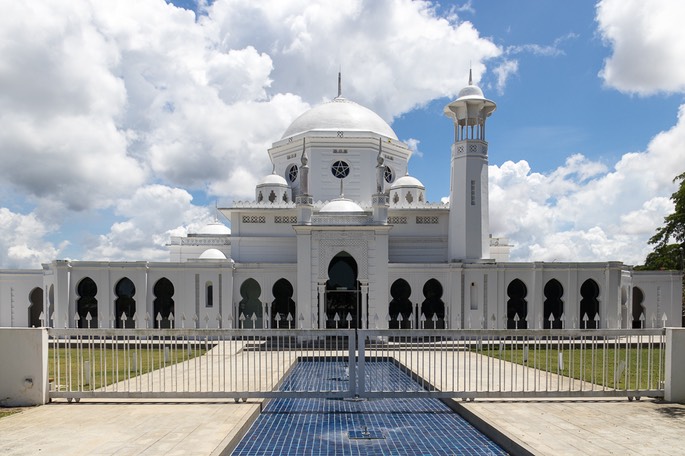
I had planned a circular walk around the heritage area of Pekan, but things did not quite go to plan! Because we were travelling during the RMCO period, it was uncertain whether museums etc would be open. I had called the Sultan Abu Bakar Museum beforehand so I knew it was closed (for renovation), but calls to other museums went unanswered or the phone was put down on me, so we decided to assume everything was open unless we discovered otherwise. The beautiful white mosque below is the Sultan Abdullah Mosque which houses a museum. We couldn’t find a way in to the museum, so Hanis asked the security guard who insisted it was open and directed us to the gate. Well, it wasn’t open.
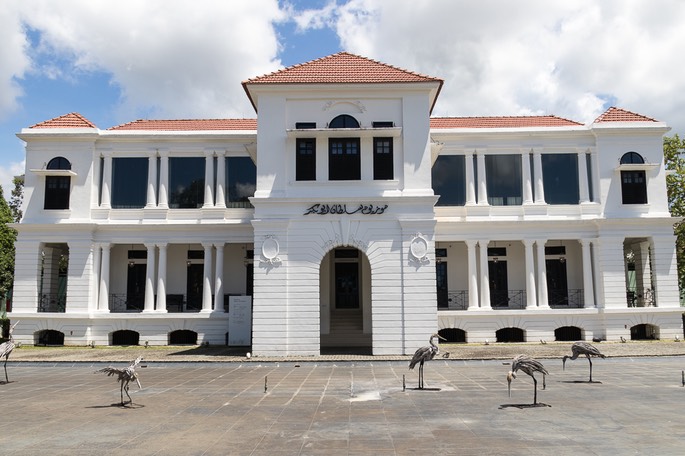
So, we continued our walk which next took us to the Sultan Abu Bakar Museum, housed in what had been the official residence of the British Resident of Pahang in the late 1920’s. As with many such buildings in Malaya, this became the officers' quarters for the Japanese military during the Japanese occupation. In 1965 it became a formal palace for the Sultan of Pahang and the location for important state ceremonies. Eventually it was abandoned to be brought back to life as a museum. Since we were not able to go inside, you can get a glimpse of what it is like by clicking here.
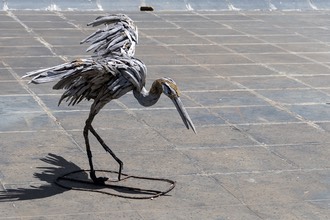
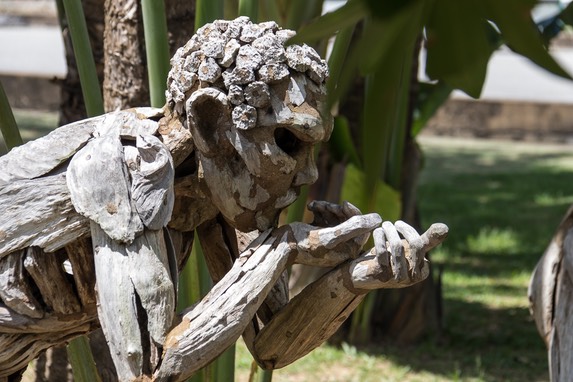
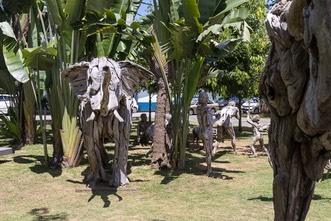
Apparently these wonderful wooden sculptures of cranes would normally have their feet in water, serving as a reflecting pool in front of the museum.
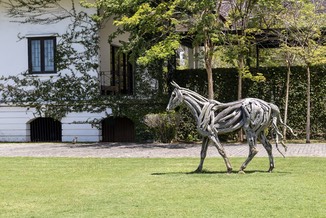
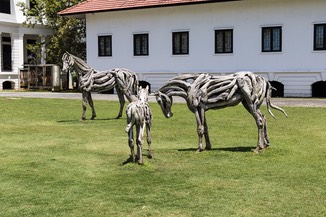
There were many similar sculptures around this site, all made from drift wood. I have yet to find the name of the sculptor but I believe this style was used since the use of wood in wood carvings is famous along the east coast.
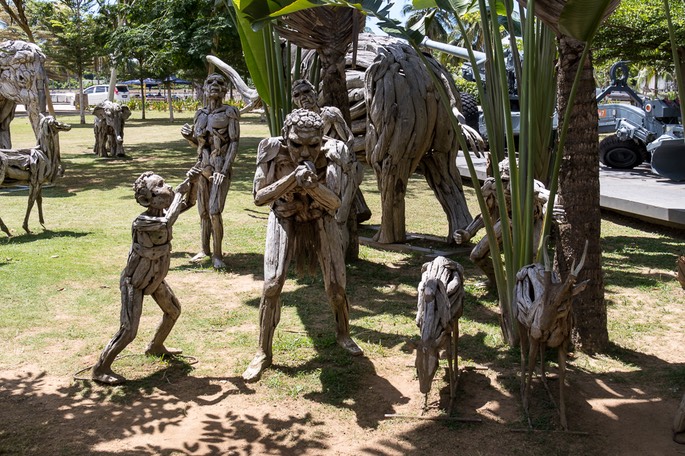
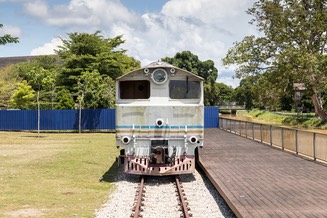
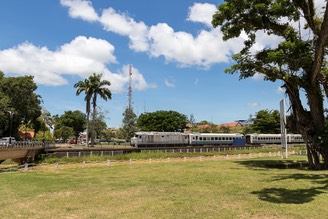
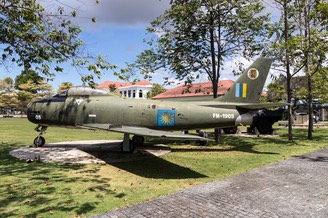
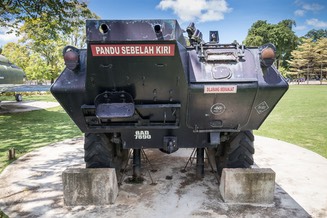
Next to the museum was a railway carriage, and some military hardware. Pekan is actually the home to Malaysia’s largest military vehicle manufacturer (DefTech); is this beacuse Pekan is also the home town of Najib Razak, Malaysia’s former Prime Minister?
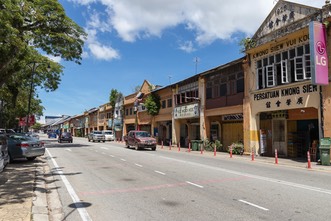
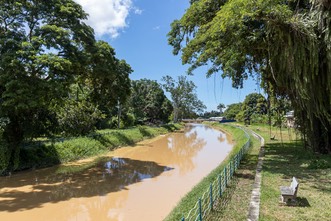
Just passed the Sultan Abu Bakar Museum, and across from the river, are rows of Chinese shop houses. As you can see, the river was rather full and this was the case everywhere on this journey.
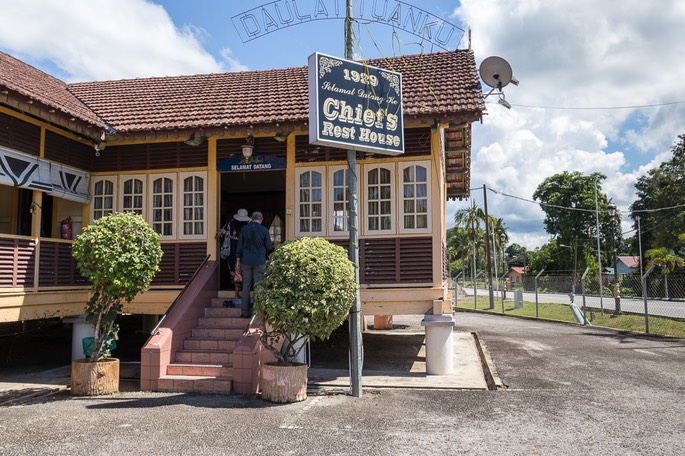
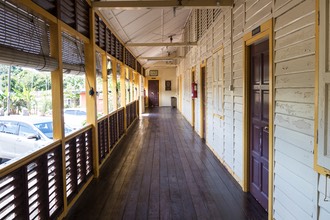
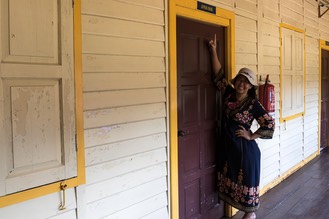
Our next destination was the 1929 Chief’s Rest House, which was used as accommodation for local chiefs when visiting the Sultan of Pahang. Each chief had his own room, and Hanis was thrilled to see the Janda Baik room, as this is where she has her business. The rooms, with their wooden floors and shuttered windows, were cool and smelled of old English homes. The building is still owned by the Sultan, and visitors can stay here, but I think the receptionist was happy to keep it unoccupied.
On the road outside this building was a arch of elephant tusks (photo below right); a symbol associated with a Sultan. In order to get to the Chief’s Rest House, we had a little walk which took the long way around passing lots of interesting buildings. If you pass a blue and white building in Malaysia, you instantly know it is a Police Station. Pekan had two of these, this old-style building (shown below left) and an enormous multistory building behind.
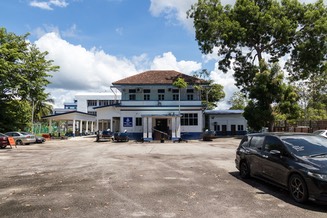
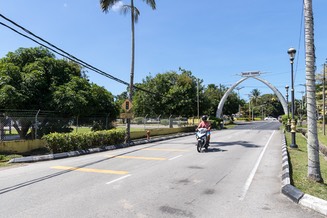
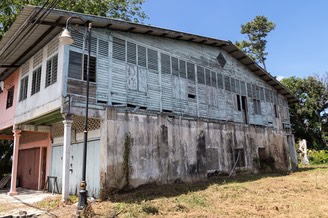
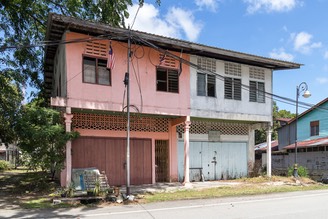
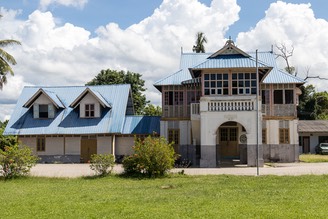
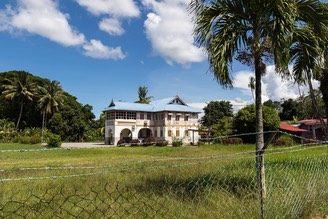
Here follows a random collection of photos of interesting buildings, of which Pekan has many!
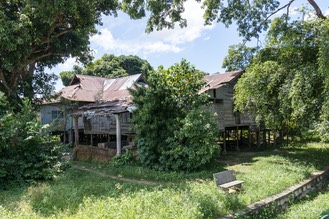
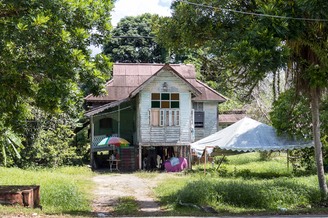
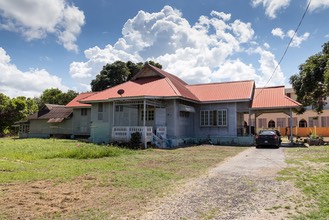
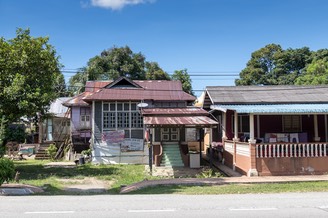
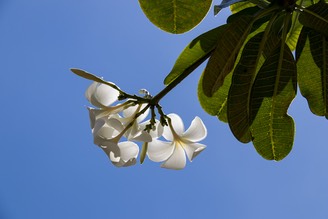
Thought for the day……. if you are planning to drive up from Johor Bahru to the coastal resorts of Kuantan and beyond, I would thoroughly recommend a stop in Pekan. Even with the museums being closed, this was still a charming town to walk around and explore.

By 4:30 pm we had arrived in Kuantan, the capital city of Pahang. We stayed in the Hyatt Regency Hotel which had a beautiful setting by the coast. Then it was off in search of dinner, and being in Kuantan, we had to have seafood. Hanis had found a recommendation for Muhibbah Seafood, but we were beginning to doubt this as we drove down tiny roads on the backside of rows of shops.
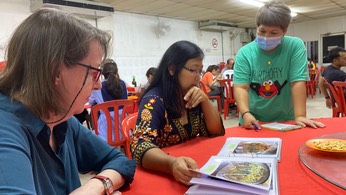
We eventually found the restaurant and had wanted to sit outside, but the smell of sewage changed our minds. While the internal decorations of the place were unspectacular, the food in this Chinese Restaurant more than made up for other deficiencies. The dishes were varied, freshly cooked, and delicious.
We returned to the hotel feeling sated and tired after a long and full day. But now we had to put together the day’s vlog before retiring for the night; and so began the routine for our journey around Malaysia.
Here is a slide show of the photos taken on Day 1:
Click here to return to The Great Malaysian Road Trip.
Click here to read Lawrence Gray’s account of some of The history of Pekan.
Click here to return to Travels in Malaysia 2020.
Click here to return to Helen Gray’s homepage.