
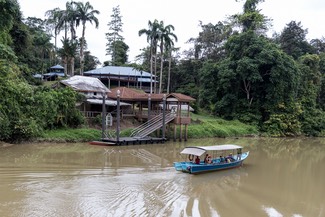
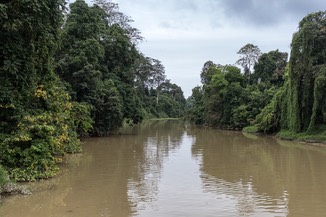
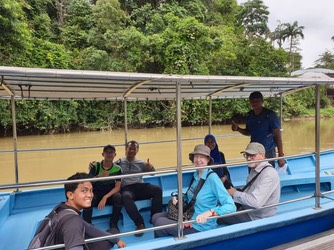
The Niah Caves were a 1.5hr drive north from our hotel, and apparently just a 1.5hr row in a long boat to the South China Sea. I say this because you enter the caves through primary rainforest and wonder how anyone found the caves in the first place. Well, I guess in those days they would have been travelling down the river which still flows passed the caves. As a visitor today, you first have a very short boat ride across the river, and a reminder not to swim across!

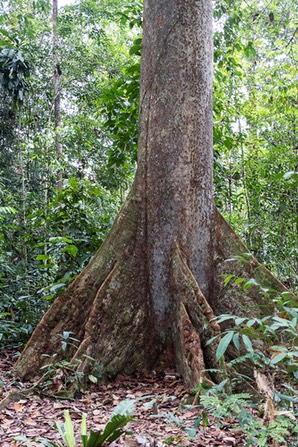
Then it’s a very long walk through the forrest/jungle, passing some quite majestic giant tapang trees. Their buttress-like external roots make them look like rockets as the trunks soar way up high to the top of the canopy. The smell of the forest was also impressive, dominated by the smell of pandanus plants.

There are plenty of smaller objects to admire, and some which I did not see until I looked at the photo! I thought I was taking a photo of tree fungi, but look to the right and there is a beautiful snail as well.

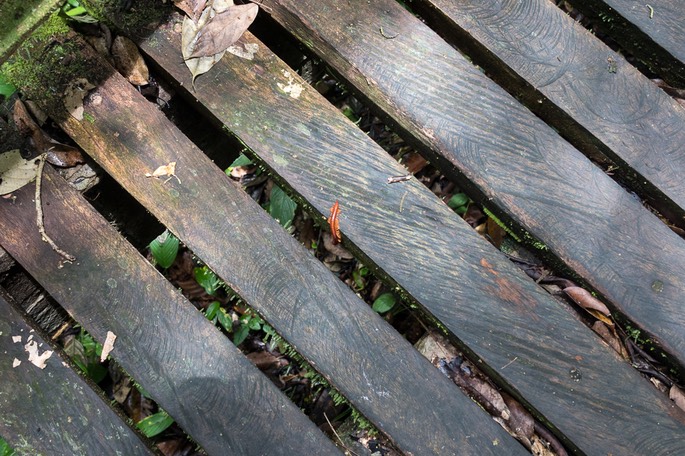
The handrail was alive with creatures as well, with many of these bright orange millipedes, some of which were busy copulating!

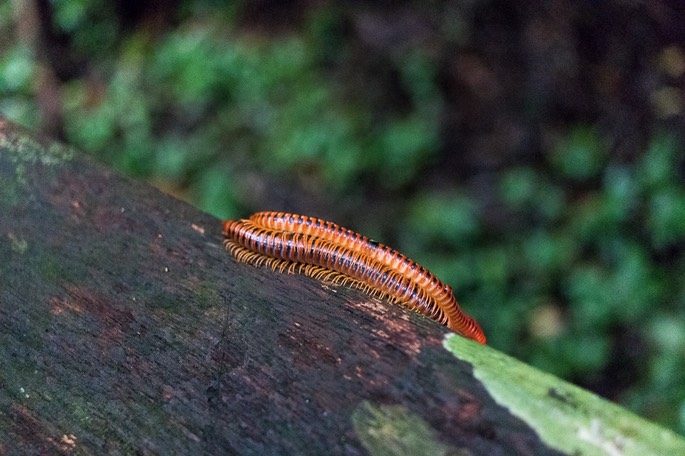
You can get a sense of the size of these creatures here. It was fun to see how the many legs moved in a highly coordinated wave-like motion.
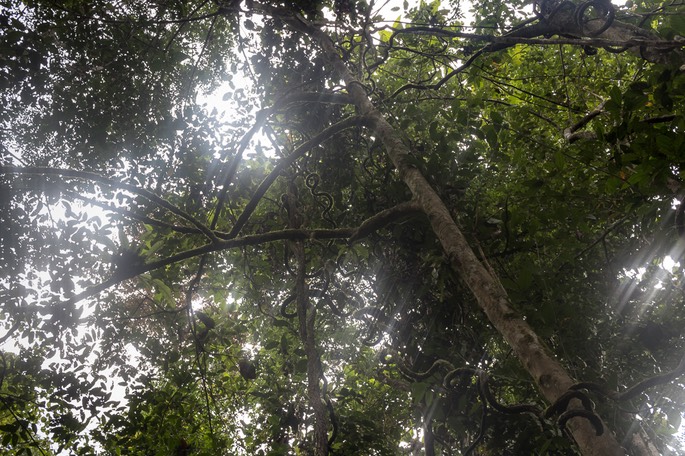
Looking upwards also gave something interesting to look at.
It took more than an hour to walk to the first cave (Traders Cave). There is evidence of human settlement here with the discovery of 40,000 year-old human remains, making this site one of the oldest in Southeast Asia. It is renowned for the discovery of ‘death-ships’, boat-shaped coffins lodged into the rock face of the cave. I believe these have been moved to a museum in Kuching. More recently, this cave system has been used to harvest birds’ nests and guano (for fertiliser). You can still see the cables used by the guys who climb to the roof of the caves to harvest the birds’ nests. I was not able to photograph any of the swifts flying around, but the black areas in the cave ceiling are where the birds had their nests.


Walking further into the cave system, we saw evidence of excavations at the entrance to the Great Cave, but no sign of current activity.

Please note that there is no manmade lighting in these caves, but each of the three main caves has a window or two on the world where the tropical sunlight floods in.


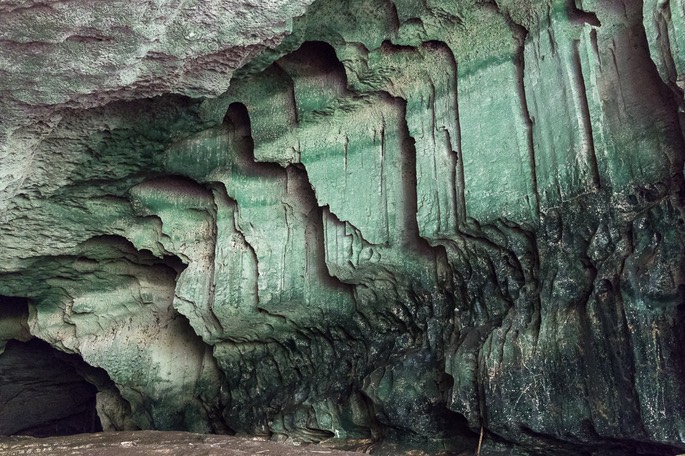
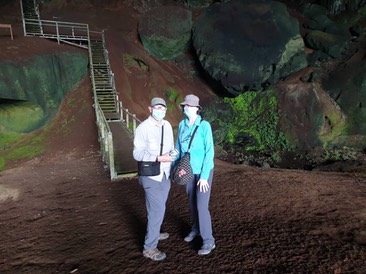
The photo above was taken in the Great Cave. It had taken us two hours to walk this far, and Lawrence and I decided to sit on the bench and enjoy this view while the younger ones went off for another hour to the Painted Cave. To get there, you have to walk in total darkness on slippery planks until you get through to another huge sunlit cave (you can hire torches at the park entrance). In the Painted Cave they had previously discovered many more of the death-ships and some ancient paintings on the cave walls, which sadly were quite hard to see so I am glad I did not venture further. Afterall, we still had to walk all the way back to the ferry/car. Because our eyes had got more used to the dark, I seemed to see much more on the return walk out of the caves. I don’t think I had even noticed the green colouring on the way in.

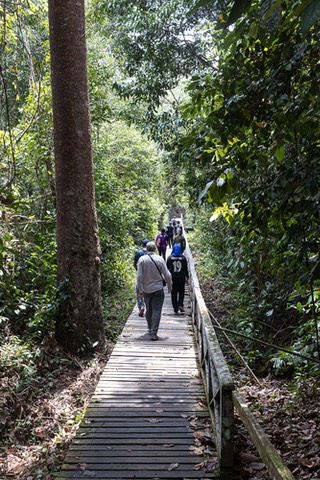
I think everyone was quite exhausted on the return walk through the forest; there was little conversation and no more selfies! Just before the first cave entrance was a stall selling cold drinks, and a new toilet system, both of which were much in demand. Our clothes were drenched in sweat and I think most of us slept on the way back to the hotel.

Click here to return to Off to Bintulu.
Click here to return to Travels in Malaysia homepage.
Click here to return to Helen Gray’s homepage.