
Today I travelled with a group of Malaysian Red Crescent (MRC) volunteers around the district of Pontian on the southwest coast of Johor. There were no special events today, but this will give you another glimpse into the various activities of the National Committee for Community Services.

MRC offers help to Malaysians who seem to have been forgotten by the rest of society. This lady was living in rather poor conditions in a rundown house, so some MRC volunteers and the Amal Team Johor (an NGO that helps the needy) were organised to help repair the house and put in a better concrete floor. Just a few relatively small changes to her living environment to make things more pleasant and easier for her. This lady’s brother was here today helping out.
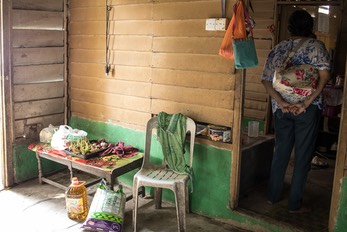
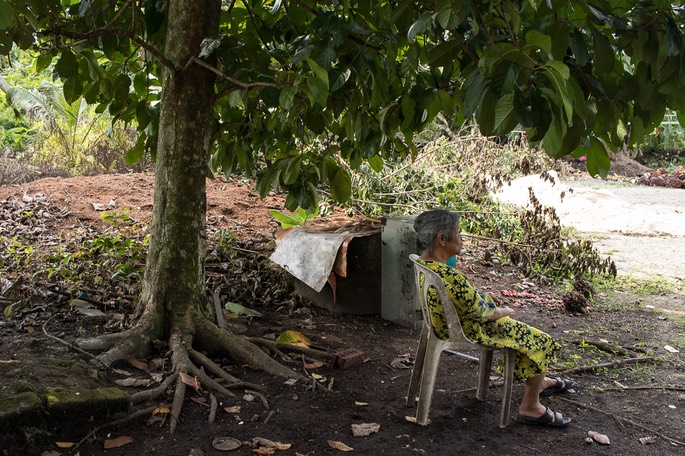
But the one advantage of living in the countryside, is that many old people still have their ‘home’ and a bit of land. I say ‘home’ because legal issues may mean that land they thought was theirs may have been assigned or taken over by others, and they may get kicked out. Such incidents are not unknown here in Malaysia. Still, for now she can sit outside under the shade of a tree and enjoy Malaysia’s greenery. Just a brief walk around her house shows how productive this land is. There were coconut trees and jack fruit trees with enormous fruits.

Many small landowners have planted oil palms and the fruits are collected and taken away by a larger company for processing. One such collector turned up this morning and he very efficiently stuck a metal stick into a head of fruit and lopped into the back of the lorry.
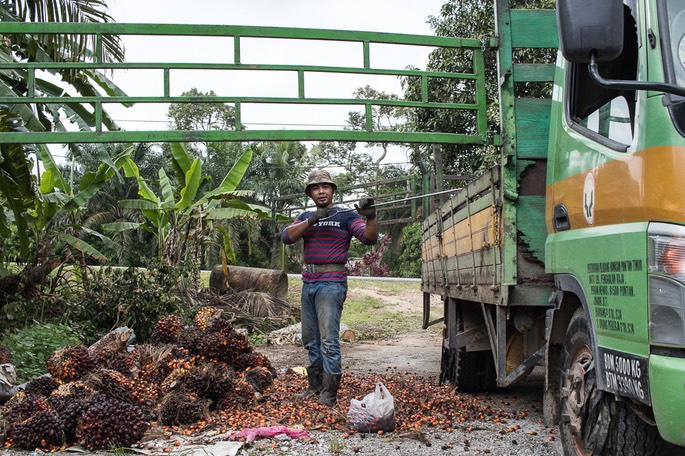

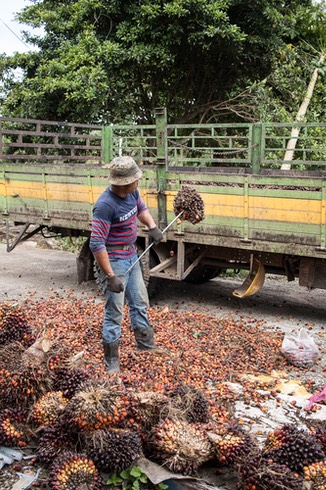
In the past, Johor made its money from rubber and then from pineapples and now from oil palms. Tapping rubber trees was very labour intensive as they had to be tapped twice a day. Pineapples fruit just once a year and then the plant has to be removed and the field replanted. Again, a very labour intensive process. Now although oil palm trees take at least four years to mature and fruit, they will produce fruit for another 20 years. And, oil palm plantations are much less labour intensive to manage. It’s easy to see why this caught on. The downside of the palm oil industry though has been the wholescale destruction of the rainforest to make way for huge industrial scale plantations. And, not only has this meant the loss of habitat for endangered species of animals, but also the loss of habitat for the Orang Asli, the people who still live in the forests of Malaysia.
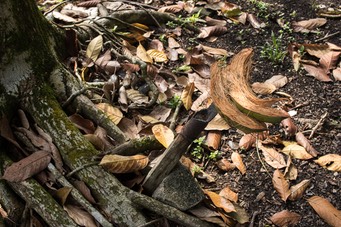
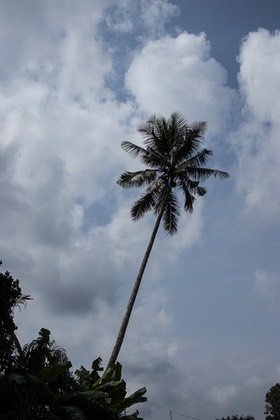
The forests of Malaysia are vibrant places and will readily devour extraneous artefacts……..

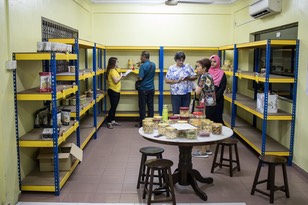
Our next stop was the Cookie Factory located along Jalan Johor as you come into Pontian from the north. The factory shop is open to the public only during Ramadan and the Chinese New Year. Cookies make ideal gifts during Ramadan (i.e., now) so we stopped to sample and buy.
As we were driving near Gelang Patah, a local bread factory was contacted to see if they had any rejects for MRC. If a loaf of bread has been sliced oddly or does look ‘right’ it can’t be sold even though it is perfectly edible. So we made a slight detour and picked up some bread which would be used later to feed the homeless. This day's work was not yet over for the MRC volunteers, but it was time for me to return home.
Click here to return to Travels in Malaysia 2019.
Click here to return to Helen Gray’s homepage.
Click here to see more about the activities of the Malaysian Red Crescent.